
I remember sitting in my home office at 2 AM, three years ago, surrounded by coffee mugs and crumpled receipts. My accounting software told me I’d had a banner month with a 20% net margin. But when I checked my business checking account, I barely had enough to cover the next payroll run. It felt like a punch in the gut. How could the numbers be so right and the reality be so wrong? I was doing the work, making the sales, and yet the cash was a ghost. It turns out, I wasn’t failing at business; I was failing at organization. My ledger was a mess of half-truths and vague labels that smoothed over the ugly parts of my spending.
The Day My Profit and Loss Statement Lied to My Face
That night, I realized my bookkeeping secrets weren’t secrets at all—they were just bad habits. I had a Chart of Accounts (COA) that was about as useful as a map with no street names. Everything was dumped into General Expenses or Miscellaneous. I was hiding my own costs from myself without even trying. This is a trap most of us fall into because we want to keep things simple. But simplicity in your ledger often leads to complexity in your stress levels when tax filing season rolls around. If your COA isn’t granular enough, you aren’t seeing the leak. You might be overpaying for software or missing the fact that your shipping costs have doubled. It’s exactly why your current P&L doesn’t reflect your real cash position. You’re seeing the what but completely missing the why.
Is a Super Detailed Ledger Actually Worth the Hype?
You might be thinking, I don’t have time to categorize every paperclip, and my accountant charges by the hour. I get it. I used to think that a complex COA was just a way for expensive CPA services to justify their fees. I was wrong. The reality is that according to a study by U.S. Bank, 82% of small businesses fail due to poor cash flow management, and you simply cannot manage cash flow if your categories are hiding the truth. Early on, I made the mistake of putting all my freelancers into one bucket. I didn’t distinguish between marketing help and product fulfillment. When I needed to cut costs, I didn’t know which one was actually driving revenue and which was just a luxury. I was flying blind. You need to know why your current chart of accounts is hiding your best margins before you make another strategic move. Have you ever looked at your year-end report and wondered where ten thousand dollars went, even though everything is supposedly accounted for?
Your Miscellaneous Category Is Where Profits Go to Die
When you stop grouping everything together, you start seeing the reality of your overhead. A proper COA acts like a high-definition camera for your business finances. Without it, you’re looking at a blurry Polaroid and trying to guess the details. Setting up a real structure isn’t just about being a math nerd; it’s about survival. By breaking down your costs into specific, actionable categories, you stop the bleeding before it becomes a crisis.Once you accept that your current setup is working against you, the path forward requires a bit of digital demolition. You cannot build a skyscrapers on a foundation of sand, and you certainly can’t build a scaling business on a ‘Miscellaneous’ category.
Strip Your Ledger Down to the Studs
The first thing I did when I finally hit my breaking point was to export every single transaction from the last twelve months into a massive spreadsheet. It was painful, but necessary. To truly move forward, you have to learn how to clean up a messy ledger before an audit notice arrives at your door. I spent an entire weekend manually flagging every recurring expense. I found a $99-a-month subscription for a project management tool I’d abandoned in 2021. That’s nearly $1,200 a year just leaking out of my pocket because I didn’t have a clear view. You should take this time to perform a similar deep dive and audit your own tech stack for ghost subscriptions that provide zero ROI. 
Don’t Let Your Bank Feed Lie to You
We’ve been sold a dream that ‘automation’ means we don’t have to look at our books. That is a dangerous lie. My automated feeds were creating havoc; every time I moved money between my business checking and my tax savings account, the software saw it as ‘income’ and then an ‘expense.’ I was essentially doubling my perceived revenue on paper, which would have been a disaster for my tax liability. You must understand why your automated bank feeds create duplicate invoices and phantom entries. If you use payment processors, the situation is even more precarious. I once realized my books were recording the ‘Gross’ amount of a sale as revenue without accounting for the 3% processing fee. I was paying taxes on money I never actually received. It is vital to focus on fixing the Stripe to QuickBooks sync before taxes break your budget. When you stop letting Stripe fees eat your net profit margins by categorizing them correctly as an expense, your real income suddenly becomes clear.
Your Monthly Close Is a Non-Negotiable Meeting
You wouldn’t skip a meeting with your biggest client, so why do you skip the meeting with your own money? I used to wait until March to look at the previous year, which is like trying to drive a car while only looking in the rearview mirror. Now, I treat the ‘Monthly Close’ as a sacred ritual. This is where you reconcile every account and ensure your balance sheet actually balances. Many owners ignore this, but the real cost of neglecting your monthly close process is a lack of agility. You can’t pivot if you don’t know you’re sinking until six months too late. By following a checklist for closing your books in record time, you turn a daunting task into a manageable habit. This level of discipline is what makes tax filing simplified when the end of the year finally rolls around. You aren’t hunting for receipts or wondering why your cash is low; you already have the answers in your ledger.Let’s dig deeper into the biggest lie told in the entrepreneurial world: that automation replaces the need for a CFO mindset. I see it all the time with business owners who think that because they have a fancy dashboard, they are ‘covered.’ The truth is that automation without a human audit is just a faster way to make massive mistakes. For instance, most owners think that as long as they are profitable, their tax bill is just a percentage of the bottom line. But that ignores the ‘phantom income’ created by non-deductible expenses or loan principal payments. You might be paying taxes on money that left your bank account months ago. This is why your entity selection is probably costing you extra tax—you’re operating under a structure that doesn’t fit your actual cash movement.
Stop Treating Your Accountant Like a Fire Extinguisher
Most people only call a professional when they smell smoke, usually around mid-March. But maximizing your tax filing efficiency in 2025 isn’t about what you do in April; it’s about the decisions you made last July. If you treat your CPA like a once-a-year data entry clerk, you are missing out on the actual value: strategy. A true pro will tell you when you’re over-liquid or when your debt-to-equity ratio is scaring away potential lenders. 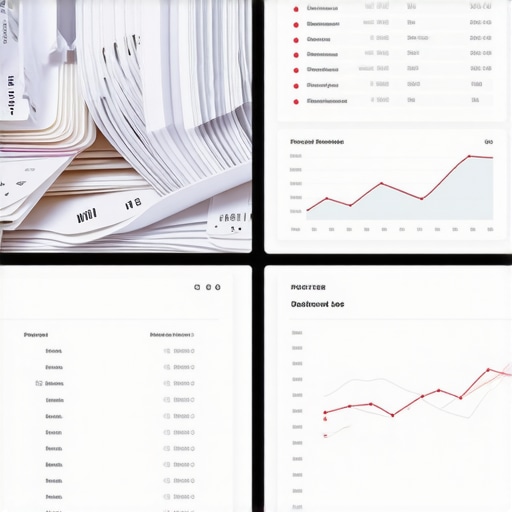
The Credit Card Points Trap You’re Likely Falling For
One massive ‘oops’ factor I see constantly is the allure of personal credit card points for business spend. I get it; you want that free trip to Hawaii. But why using personal credit cards for business is a tax nightmare becomes clear the second you face an IRS auditor. When you commingle funds, you pierce the corporate veil, putting your personal assets at risk. It’s not just a bookkeeping headache; it’s a legal liability. If you’ve ever thought, ‘I’ll just reimburse myself later,’ you are opening a door that is very hard to close once the Department of Labor or the IRS starts knocking.
Does Accrual Accounting Actually Make Sense for Your Current Revenue?
For most small businesses, cash basis is the default because it’s easy. But if you have inventory or high-value contracts, cash basis is lying to you. A study by the Small Business Administration (SBA) highlights that financial literacy, specifically understanding the difference between cash on hand and earned revenue, is a primary differentiator for businesses that survive past the five-year mark. If you are waiting for checks to clear to see if you can afford payroll strategies to streamline business operations this year, you’re already behind. Transitioning to accrual might feel like overkill, but the shift from cash to accrual for growing agencies is often the only way to get an honest look at your real burn rate. Have you ever fallen into the trap of thinking a high bank balance meant you were safe, only to be surprised by a tax bill? Let me know in the comments.I have been exactly where you are—staring at a healthy bank balance while knowing deep down that at least a third of it belongs to the government. The only way I finally stopped that cycle of anxiety was by investing in a tech stack that does the heavy lifting while I stay in the driver’s seat. If you are still manually entering data or relying on memory, you need to learn how to transition from a spreadsheet to professional software before your growth completely outpaces your ability to track it. I personally swear by Dext for receipt capture because its OCR (Optical Character Recognition) is lightyears ahead of manual entry. It doesn’t just read the total; it extracts the specific vendor and tax amount, which prevents the human errors that usually lead to audit red flags. According to the IRS Internal Revenue Manual (IRM) Section 1.11.2, electronic records must be readily available and accurate, and manual entry simply cannot compete with the reliability of a direct digital trail.
Stop hand-typing data and start scaling
The secret to staying organized isn’t more software; it’s a better workflow. You need to implement the move to automate accounts payable without losing control. I use tools like Bill.com to set up approval hierarchies. This means a manager can approve a purchase, but I still sign off on the actual cash leaving the bank. It protects your liquidity while offloading the admin work. As we look toward the future, I predict we are moving toward continuous audit systems. Instead of checking your books monthly, AI-driven plugins will flag anomalies the second they happen—like a five-hundred-dollar software charge that is actually a personal travel expense. This is why you should audit your own tech stack for ghost subscriptions now, so you aren’t paying for tools that your new automated systems will eventually replace. 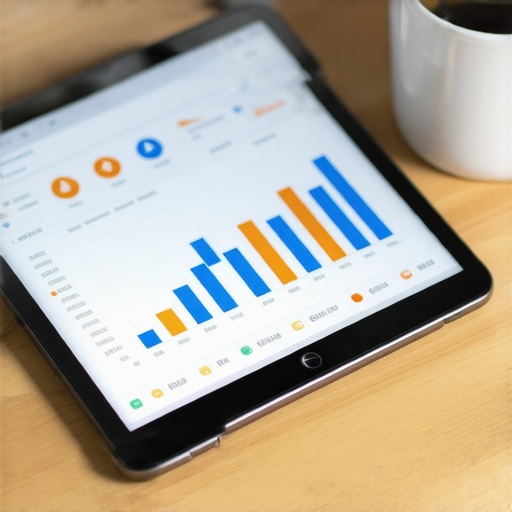
How do I maintain accurate books as my team grows?
Staying clean for the long haul also means looking ahead at your liabilities. You should focus on the move to simplify your quarterly estimated tax payments by using a dedicated tax-holding account. I set mine to automatically sweep 25% of every incoming payment. It is a psychological win because I never see the money I owe as my own spending money. This setup makes maximizing your tax filing efficiency in 2025 a breeze because the cash is already waiting and accounted for. If you are ready to stop the guessing game, my biggest tip for today is this: Go into your banking app right now and set up a secondary Tax sub-account. It will take you five minutes, but it will save you five months of anxiety next spring.
The Hard Truths About What Actually Scales a Business
Looking back at my 2 AM realization, I wish someone had told me that the numbers are simply a story of your effort. If the story is messy, the ending will be too. Here are the core insights that changed everything for me:
- Profit is not the same as cash: You can be wildly successful on paper and still go bankrupt if you do not watch your liquidity.
- Your Chart of Accounts is a map: If it does not show you exactly where the money is going, it is time to redraw the boundaries and stop the leaks.
- Transparency is your best defense: You should learn the move to protect startup assets from personal debt before you ever need an attorney.
- Automation is a tool, not a savior: Always verify why your automated bank feeds create duplicate invoices to keep your reports honest and your taxes accurate.
The Tools That Keep My Financial Engine Running
To maintain the standard I have set, I rely on a specific ecosystem that removes human error. I personally use digital receipt capture because manual entry is the enemy of scale. For the heavy lifting, I always recommend finding tax filing simplified through a professional team that sees beyond the spreadsheet. I also keep a strict rule: never go more than 30 days without performing the real cost of neglecting your monthly close process analysis. These are not just good ideas; they are the mechanics of a healthy, growing company.
Take Control of Your Financial Narrative Today
You have the power to change how you view your business wealth right now. It starts with one reconciled transaction and one correctly categorized expense. When you stop hiding from your ledger, you start building a foundation that can actually support your dreams. Do not wait for another sleepless night to reveal the bookkeeping secrets that actually matter for your bottom line. You have done the hard work of building a business; now do the smart work of protecting it. Which part of your financial tracking feels the most overwhelming right now—the receipts, the tax planning, or the software sync? Let me know in the comments below.