

I will never forget the cold sweat that broke out when my first CPA asked me to explain a $47.99 charge at a local hardware store that was sandwiched between two client invoices. I could not remember if it was for a new office shelf or a garden hose for my backyard. That moment of stuttering—of realizing I had absolutely no clue where my personal life ended and my business began—was my wake-up call. I thought I was being efficient by keeping everything in one place, but in reality, I was building a ticking tax bomb. If you have ever felt that same dread while staring at a messy bank statement, you are not alone. Today, we are going to fix your financial foundation so you never have to play financial detective again.
Stop Treating Your Business Bank Account Like a Personal Piggy Bank
Early in my journey, I made the classic blunder: I used my personal credit card for a quick business software subscription because my business card was in the other room. It seems small, but the hidden cost of using personal credit cards for growth isn’t just high interest rates—it is the absolute chaos it creates for your tax filing. When your money is a tangled web, your CPA has to spend hours untangling it, which is exactly why your bookkeeper and tax preparer need to talk long before the April deadline. If your accounts aren’t structured to reflect your actual operations, you are likely missing out on deductions simply because you cannot prove they weren’t personal expenses. According to the IRS, maintaining separate accounts is one of the primary ways to maintain the corporate veil and protect your personal assets from business liabilities. Have you ever had to scramble at midnight to find a receipt for a transaction you barely remember?
Does having four different bank accounts actually make life easier?
I used to think that more accounts equals more problems. I was wrong. The skepticism is real—who wants to manage multiple logins? But the truth is, a structured bucket system is the ultimate bookkeeping secret every small business owner should know. It turns your bank statement into a living, breathing tax report. Instead of guessing how much you owe the government, the money is already sitting in a dedicated account, untouched and ready. We are going to dive into exactly how to set this up without losing your mind or your Saturday afternoons.
Build Your Financial Fortress with Four Specific Buckets
The first step to financial clarity is moving away from the “one big pile” mentality. Think of your bank accounts like the rooms in your home; you wouldn’t cook dinner in the shower, so why are you paying your mortgage from the same account you use to buy office supplies? To truly protect your assets, you need to establish four distinct buckets. This isn’t just about organization; the reason you should never mix personal and business credit cards or accounts is to prevent the IRS from questioning the legitimacy of your entire operation.
The Engine Room for Daily Operations
Your first account is your Operating Account. This is where all your revenue lands and where all your business-related bills are paid. It acts as the heart of your business. I remember a time when I tried to bypass this by paying a vendor directly from a client payment that hadn’t even cleared yet. It created a reconciliation nightmare that took three weeks to untangle. Now, I let everything flow into ‘Ops’ first. This creates a clean paper trail that makes tax filing simplified because your bookkeeper only has to look at one source for your overhead costs.
Stop Fearing the IRS with a Dedicated Tax Vault
The second bucket is the Tax Account, and it is non-negotiable. Every time a client pays you, immediately transfer 25% to 30% into this account. Do not touch it. It is not your money; it belongs to the government. Before I implemented this, I used to treat my bank balance as my “spending power.” I once celebrated a $15,000 month by upgrading all my office furniture, only to realize later that $4,500 of that was owed in quarterly estimates. I had to take out a high-interest loan just to pay the tax man. By automating this transfer, you maximize your tax filing efficiency in 2025 by ensuring the funds are already there when your CPA calls.
Pay Yourself Without Triggering an Audit
The third bucket is for your Owner’s Draw or Salary. Many entrepreneurs treat their business account like an ATM, withdrawing $100 here and $500 there. This is a red flag for auditors. Instead, transfer a set amount on a fixed schedule (like the 1st and 15th) to your personal bank account. Learning how to categorize owner draws without hurting your books is the difference between a professional operation and a hobby. When you move money in bulk, it’s easy to label and track, which keeps your personal life from bleeding into your business ledgers.
The Secret to a 10-Minute Monthly Close
Finally, the fourth bucket is your Profit Account. Even if it’s just 1% of your revenue, moving money into a dedicated profit hold changes your psychology from “surviving” to “thriving.” Once these buckets are in place, you need a routine. Spend 15 minutes every Friday morning reviewing the transfers. This simple habit forms the core of the checklist for closing your books in record time at the end of the month. When the data is already sorted into the right buckets, there is no mystery to solve, only a business to grow.Everyone tells you to automate every single part of your finances to save time. In my experience, blind automation is the fastest way to double your CPA bill. There is a common myth that if the bank feed is green and ‘matched’ in your software, your books are accurate. This is a dangerous assumption. I have seen countless entrepreneurs realize too late that why your automated bank feeds create duplicate invoices is often a sync error that inflates your income on paper, leading you to pay taxes on money you never actually made. If you are not verifying these matches, you are essentially flying a plane with a broken altimeter. Have you ever fallen into this trap where your software said one thing but your bank balance said another? Let me know in the comments. 
Is your payroll software missing these local tax credits?
One of the most expensive mistakes I see during a growth spurt is the ‘nexus’ oversight. You hire a great developer in another state, click a button in your payroll app, and assume you are compliant. However, the real impact of hiring out of state on your tax bill goes far beyond just withholding income tax. You might be inadvertently creating a sales tax nexus or failing to register for local business licenses. According to the Journal of Accountancy, multi-state compliance errors are among the top reasons for unexpected IRS penalties in small-to-medium enterprises. Automation helps, but why your automated sales tax tool still requires human eyes is the nuance that keeps you out of a desk audit.
The S-Corp Distribution Trap You Didn’t See Coming
If you have transitioned to an S-Corp to save on self-employment taxes, you have probably heard the term ‘Reasonable Compensation.’ The common (and wrong) advice is to pay yourself the lowest salary possible to maximize tax-free distributions. This is a massive red flag. The IRS is increasingly using data analytics to flag owners whose salaries don’t match their industry standards. Understanding the truth about s-corp reasonable compensation is vital because if they reclassify those distributions as wages, you will owe back taxes, interest, and hefty penalties. Another ‘oops’ factor is failing to update your records when things change; why your fixed asset ledger is probably outdated usually comes down to small purchases that were never properly capitalized, causing you to miss out on significant depreciation benefits.
Why Your P&L Doesn’t Match Your Tax Return
It is a jarring moment when your bookkeeper sends a report showing a healthy profit, but your tax preparer says you owe much more. This usually happens because your internal reporting is stuck on a cash basis while your complexity requires accrual. I often explain to clients why your cash basis reporting is hiding your true debt, as it fails to account for the bills sitting on your desk. To bridge this gap, you need a proactive relationship where why your bookkeeper and tax preparer need to talk becomes a monthly ritual rather than a year-end scramble. When these two experts align, you can use strategies like payroll strategies to streamline business operations this year, turning your financial data from a source of stress into a competitive advantage.
Stop Letting Your Ledger Turn Into a Ghost Town
I have learned the hard way that a financial system is not a ‘set it and forget it’ machine. You can have the most expensive software in the world, but if you don’t look at it for three months, you are effectively flying blind. The biggest threat to your growth isn’t a low-revenue month; it is the real cost of neglecting your monthly close process. When you wait until December to look at January’s transactions, you’ve lost the context that makes those expenses deductible. I now block off the first Friday of every month for what I call my ‘Financial Hygiene Hour.’ This single habit is the secret to reducing your year-end audit prep time from weeks of stress to just a few clicks. During this time, I perform a ‘Subscription Scrub.’ I highly recommend you how to audit your own ledger for duplicate software subscriptions at least once a quarter; I recently found three different AI tools charging me $30 a month for the exact same features.
How do I maintain financial accuracy as my team grows?
Scaling is where the wheels usually fall off the wagon. Adding your first employee or contractor changes your liability profile instantly. You need to implement top payroll management tips for growing businesses in 2025, which starts with moving away from manual spreadsheets. I use a combination of Gusto for payroll and Dext for receipt capture. Why? Because manual entry is the enemy of accuracy. I found that finding 3 ways to reduce your payroll processing time—specifically through automated tax filings and direct deposit scheduling—freed up five hours of my life every month. If you are hiring remotely, don’t forget to use the checklist for verifying employee work locations in a hybrid model. Failing to track where your staff actually sits can lead to nasty state tax surprises that your CPA cannot simply ‘fix’ after the fact.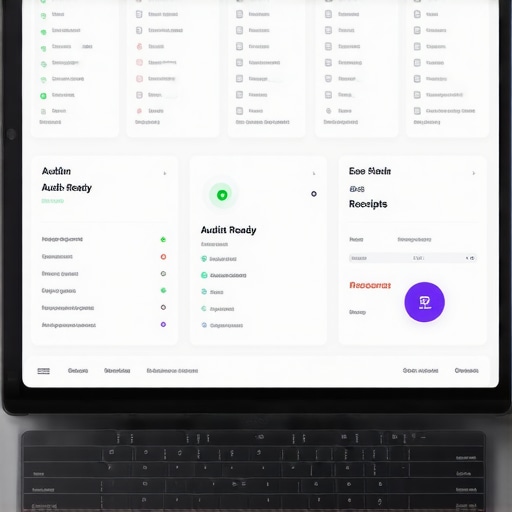
The Tech Stack That Actually Plays Nice Together
The most common mistake I see is ‘app overload.’ More tools do not equal better books. In fact, the truth about why your expense automation keeps failing is usually because of ‘sync lag’ between mismatched platforms. I strictly follow the rule of ‘Direct Integration Only.’ If an app doesn’t have a native connection to my ledger, I don’t use it. You should look for the move to sync your payroll with your general ledger automatically so that every wage, tax, and benefit payment is mapped to the right account without you touching a keyboard. According to IRS Revenue Procedure 97-22, any electronic storage system you use must maintain ‘complete and accurate’ records that can be easily retrieved for an audit. This means your ‘digital shoebox’ needs to be as organized as a physical one. Looking ahead, I predict that by 2026, generative AI will be able to perform real-time forensic audits on your books every single night, spotting errors before you even wake up. For now, take ten minutes today to run a subscription audit on your last bank statement—it is the fastest way to put ‘found money’ back into your operating account. If you hit a snag, you can always contact us to help untangle the mess.
The Hardest Lesson I Learned About Professional Support
Tax season isn’t just a stressful week in April; it’s a 365-day narrative that you are writing every time you swipe a card. I used to think I was being frugal by DIY-ing my ledger, but I eventually realized I was paying a “complexity tax” in the form of missed deductions and late-night anxiety. When I finally embraced bookkeeping secrets every small business owner should know, I stopped viewing my CPA as a once-a-year expense and started seeing them as a strategic partner. I also learned that understanding why your s-corp distribution strategy is triggering red flags usually comes down to simple documentation errors that could have been fixed in five minutes during a monthly review.
My Personal Toolkit for Financial Sanity
I rely on a tight stack to keep things moving. For managing my team, following top payroll management tips for growing businesses in 2025 meant moving to a platform that handles multi-state compliance automatically. But the most important tool isn’t software—it’s communication. Understanding why your bookkeeper and tax preparer need to talk has saved me more in penalties than any tech tool ever could. If you want to maximize your tax filing efficiency in 2025, start by centralizing your receipts in one digital spot and scheduling a fifteen-minute financial hygiene check-in every Friday morning.
#IMAGE_PLACE_HOLDER_E#
Reclaim Your Weekends Starting Today
Setting up these four buckets and cleaning your digital house takes a few hours upfront, but the peace of mind it provides is priceless. You didn’t start your business to spend your Saturdays chasing down receipts or fearing a letter from the IRS. By leveraging professional CPA services and automating the mundane parts of your finances, you finally get to focus on what you actually love: building your vision. If the mess feels too big to handle alone, don’t hesitate to contact us to get your foundation back on solid ground. Your future self will thank you for the clarity you create today. What’s the one transaction on your current bank statement that you’re absolutely dreading explaining to your accountant? Let me know in the comments below!