

I remember three years ago, sitting cross-legged on my office floor, literally drowning in a sea of faded, curled-up thermal paper. It was April 14th. My coffee was stone-cold, and I was frantically trying to decipher a gas receipt that looked like a blank strip of paper. I felt like a total fraud. I was running a legitimate company, yet my accounting system was a dusty Nike shoebox under my desk. That night, I realized a hard truth: I had lost nearly $2,000 in legitimate deductions simply because I couldn’t prove they existed. I even fell into the trap of using personal cards for business lunches because I figured I could just sort it out later. Spoiler alert: I never did.
Why I Finally Burned My Shoebox of Paper Receipts
The moment of clarity didn’t come from a spreadsheet; it came from frustration. Chasing paper is a losing game. Ink fades, paper tears, and let’s be honest, we all lose that one crucial receipt from the big hardware store run in July. I used to think tax filing simplified was just something clever marketers said, but it’s actually about the tools you put in place before the tax man knocks. By switching to a digital-first approach, I stopped fearing the mail and started actually understanding my cash flow. According to the IRS Revenue Procedure 97-22, digital images of receipts are perfectly acceptable as long as they are highly legible and stored securely. This was a game-changer for me. Have you ever looked at a stack of receipts and felt your blood pressure rise just thinking about the data entry? You aren’t alone.
Is it actually safe to trust an app with my financial data?
I get it. Putting your entire financial life into a cloud-based app feels like handing over your house keys to a stranger. I was terrified of a data breach or the app simply disappearing with my records. But here is the reality: your shoebox is far less secure. A single coffee spill or a small house fire can wipe out years of documentation. Modern apps use bank-level encryption that is significantly more robust than your home filing cabinet. Plus, when you know how to document business meals so they survive an audit, having that proof timestamped and geo-tagged is your best defense against an IRS inquiry. Today, I’m sharing the exact three-app stack that saved my business and my sanity, so you never have to crawl around on your office floor again.
Building your digital fortress one receipt at a time
The very first thing I had to do—and this is non-negotiable—was learn how to keep personal and business expenses separated for good. I used to think I could just ‘tag’ things in my head, but by the time I sat down at my laptop, I couldn’t remember if that $42 at Target was for printer ink or a new set of towels. If you mix your funds, you aren’t just making your life harder; you’re inviting the IRS to look into your personal life during an audit. I spent three weeks untangling a single month of transactions back in 2021 because I bought a lawnmower on my business credit card. It was a nightmare that cost me more in accounting fees than the mower was worth. Don’t be like me; open a dedicated business checking account today and never look back.
The three-app stack that finally ended the chaos
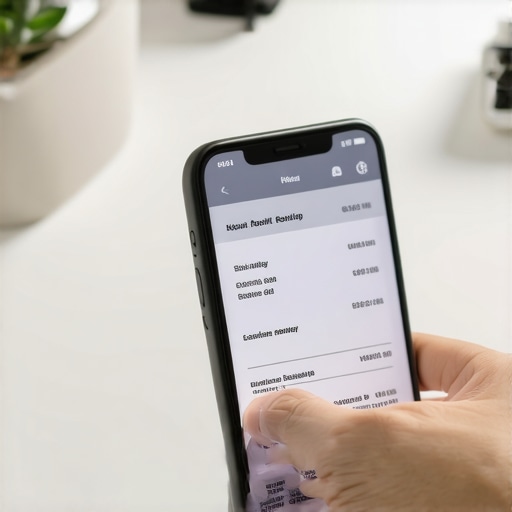
You don’t need a dozen different tools to stay compliant. You need a capture tool, a ledger, and a payment processor. My ‘Capture’ tool is a mobile app that scans receipts the second the cashier hands them to me. No more waiting until Friday. If it doesn’t get scanned before I start the car, it usually gets lost under the seat. My ‘Ledger’ is a cloud-based accounting system where everything lives. Finally, for my team, I implemented specific payroll strategies to streamline business operations this year, ensuring that every salary payment and tax withholding is automated. This stack ensures that the paper trail that protects your business during a surprise audit is built in real-time, not frantically recreated three years later.
Fix your messy chart of accounts before it breaks you
If your list of categories looks like a grocery list, you’re doing it wrong. I once had a category for ‘Office Snacks’ and another for ‘Coffee.’ My accountant nearly had a stroke. You need to follow exact steps to fix a messy chart of accounts yourself so that your data actually tells a story. When your categories are streamlined, you can see at a glance if you’re spending too much on software or if your marketing ROI is tanking. I remember realizing I was spending $600 a month on ‘miscellaneous’ items. When I finally broke that down, I found three recurring subscriptions for software I hadn’t used in two years. Clean accounts equal found money.
Stop wondering why your bank statement and ledger don’t match
This was the hardest lesson for me to learn: your bank balance is not your actual balance. I used to get so frustrated when my books showed I had $5,000, but my bank app said $4,200. There is a specific reason why your bank statement and ledger don’t match every month, usually involving outstanding checks or processing delays from vendors like Stripe or PayPal. One time, I thought I had a massive cash influx, only to realize I hadn’t accounted for the merchant fees being deducted at the source. Now, I reconcile my accounts every Sunday morning. It takes twenty minutes because the apps do the heavy lifting, but it gives me total control over my financial reality. You cannot run a business on ‘vibes’ and bank app screenshots; you need a reconciled ledger to make real decisions.
Everyone thinks buying a $99 software package is the ultimate hack to save money. I used to be that person. I thought, “Why pay a pro when the algorithm does it for me?” But here is the contrarian truth: DIY software is built for the masses, not for your specific growth trajectory. It often overlooks the high-level strategy required for complex business models. For example, I found out the hard way that why DIY tax software is missing these three specific deductions, which ended up costing me more in the long run than any professional fee ever would. A computer program won’t tell you when you are being too aggressive or when you are leaving money on the table; it just checks boxes based on the data you provide, which might be flawed to begin with.
The dangerous myth that software replaces a strategist
There is a massive oops factor that most founders miss until it is too late: the Strategic Partner gap. A basic bookkeeper or a software subscription keeps you organized, but they are not looking for tax-saving pivots. Understanding the real difference between a bookkeeper and a strategic partner changed how I viewed my monthly overhead. If your current support is just data entry, you are essentially flying blind. According to a study by the American Institute of CPAs (AICPA), businesses that engage in proactive tax planning rather than reactive filing can significantly reduce their effective tax rate. If you are only talking to a professional in April, you have already lost the game.
Is my S-Corp salary actually low enough to trigger an audit?
This is a sophisticated trap for those who have reached a certain level of success. You might switch to an S-Corp to save on self-employment taxes, but then you take a tiny salary and massive distributions to maximize savings. The IRS is very aware of this tactic and specifically looks for reasonable compensation. I have seen founders get hit with massive penalties because why your S-Corp salary might be too low for the IRS-2 is a question they couldn’t answer with data. It is not just about picking a number out of a hat; it is about having a documented justification for your pay scale based on industry standards.

Convenience is often the enemy of compliance
Another huge mistake? Relying on convenience over structure. We live in a world of instant payments, but the tax trap of paying employees through Venmo or Zelle is a real threat to your corporate veil. If you are not using a proper payroll system, you are creating a paper trail that is nearly impossible to defend during a surprise inquiry. I have learned these bookkeeping secrets every small business owner should know through trial and error, but you do not have to. When you bypass formal systems for the sake of speed, you lose the audit protection that those systems provide. Have you ever fallen into the trap of using personal payment apps for business expenses? Let me know in the comments—I would love to hear your stories or help you untangle the mess before the next tax season hits.
Once you move past the initial shame of the shoebox and the panic of missing deductions, the real challenge begins: not letting the chaos creep back in. I used to think that a clean set of books was a destination I would eventually arrive at, but I was wrong. It is a rhythm. If you do not have a system that runs while you sleep, you are just one busy week away from another desk full of paper. Today, I am obsessed with the ‘twenty-minute touchpoint.’ This is the time I spend every Friday morning verifying that my automated feeds are actually doing their job.
Keep your ledger clean without losing your weekends
The secret to keeping my sanity is knowing how to streamline your month-end close using automation. I do not manually enter transactions anymore. My bank, credit cards, and payment processors are all linked directly to my ledger. However, automation is not a ‘set it and forget it’ solution. You still need to know how to spot the errors in your automated bank feed because, believe me, they happen. Sometimes a double-swipe at a terminal looks like two distinct charges to the computer, and if you are not looking, you are paying for that mistake twice. I use a tool that flags ‘duplicate-likely’ transactions automatically, which saves me hours of manual cross-referencing.

Trust but verify when you give others the keys
As my team grew, I realized I could not be the only one with eyes on the money. This was terrifying. But the solution was not to hoard control; it was to implement specific permissions. I learned that why your accountant needs access to your POS system data is about more than just tax filing—it is about verification. By giving my strategic partner ‘read-only’ access to the raw data, they can reconcile my sales against what actually hits the bank. This acts as a natural deterrent for errors and is one of the biggest secrets to protecting your business from internal theft. When people know the system is being watched by a pro, they are much more careful with how they handle company funds.
How do I keep my bookkeeping from falling apart as I scale?
The biggest mistake I see founders make as they scale is treating their books like a secondary priority. In the future, I predict we will see a total shift toward ‘Continuous Auditing.’ According to the Journal of Accountancy, the industry is moving away from the ‘annual look back’ and toward real-time financial oversight. This means the gap between a transaction happening and an accountant reviewing it will shrink to almost zero. If you are not building toward this now, you will be left behind by competitors who know their exact margins every single day. This is where the real difference between a bookkeeper and a strategic partner becomes obvious. One records the past; the other helps you build the future.
Maintaining your momentum is about having a ‘health check’ protocol. I recommend you try a ‘Quick Audit’ this week. You do not need to be a CPA to find the leaks. I use a simple system on the third of every month to check for negative cash balances or uncleared checks that have been sitting for more than 30 days. It is about being proactive so that when you finally look at how to maximize your tax filing efficiency in 2025, there are no surprises waiting for you. A clean ledger is not just for the IRS; remember that why your balance sheet is the key to your next loan often comes down to how consistently you have maintained your records over the last twenty-four months. My challenge to you: don’t wait for a crisis to look at your numbers. Spend 30 minutes today and learn how to audit your own books in 30 minutes or less to catch the small leaks before they sink your ship.
What I Didn’t Expect When I Stopped DIYing My Taxes
Reflecting on the shift from a shoebox to a streamlined digital system, a few things surprised me. First, I realized that the anxiety of an audit isn’t about doing something wrong; it is about the inability to prove you did it right. Once I had a clear system, that weight vanished. Second, I learned that why your P&L statement is making you feel broke despite sales often comes down to timing and non-cash expenses that only a pro helps you see. Lastly, I found that I was more willing to take calculated risks when my data was accurate. Knowing your numbers isn’t just for compliance; it is for confidence.
#IMAGE_PLACEHOLDER_E#
The Essential Survival Kit for Modern Business Owners
If you are ready to graduate from the ‘shoebox phase,’ I highly recommend a few specific tools. You need a robust capture app like Dext or Hubdoc to kill the paper trail instantly. For your ledger, stick to cloud-based standards like Xero or QuickBooks so your team can collaborate in real-time. But most importantly, you need a guide. Before you jump in, review the checklist for every business owner before their first CPA meeting to ensure you are asking the right questions from day one. I also found that understanding the real cost of internal bookkeeping versus outsourcing helped me realize that my time was better spent on sales than on data entry. If you have taken personal funds to keep things afloat, make sure you know how to properly document a loan from a shareholder so you do not create a tax mess later.
Turn Your Financial Data into a Competitive Advantage
The journey from chaotic receipts to a digital fortress is the most profitable move I ever made. It is not just about surviving tax filing; it is about learning how to maximize your tax filing efficiency in 2025 while having the clarity to scale without looking over your shoulder. You deserve to run your business without the constant fear of a missing receipt or an unexplained bank discrepancy. Start small—digitize one month of records, hire a strategist, and watch how your perspective on growth changes when the fog of bad data finally lifts.
Have you ever found a receipt years later and realized you missed out on a massive deduction? Let me know in the comments below!