
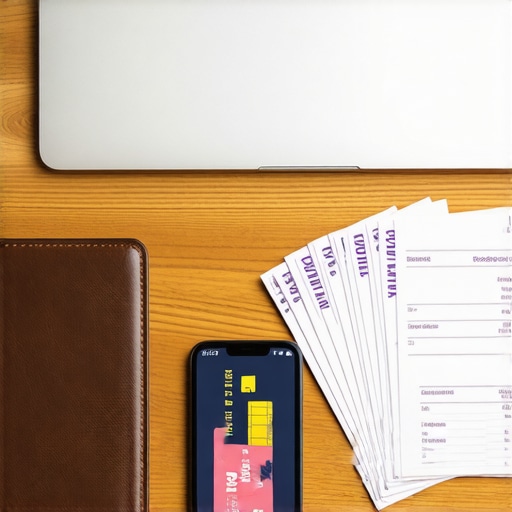
I remember the sinking feeling in my gut when I landed back in New York after a three-week stint in Tokyo and London. I opened my briefcase, and a literal avalanche of crumpled, multicolored receipts fell out onto my desk. Some were in yen, some in pounds, and several were just faded thermal paper that I couldn’t even read anymore. I spent three whole days—time I should have spent closing new deals—trying to reconstruct a narrative for my bookkeeper. It was a mess. That’s the moment I realized that winging it on international trips isn’t just stressful; it’s a direct threat to your bottom line. Today, I’m going to show you exactly how I fixed my process so you can focus on your business goals abroad, not on whether you accidentally separated your personal and business expenses correctly in a Parisian cafe.
Why International Travel Usually Breaks Your Bookkeeping
The problem isn’t the travel itself; it’s the friction of different currencies and the lack of a system. When you’re juggling time zones and jet lag, manual expense tracking is the first thing to fail. Early in my career, I made the amateur mistake of thinking I could just remember what each expense was for. Spoiler alert: you won’t. One $400 charge in Zurich ended up being a mystery for six months because I didn’t document the business purpose immediately. I ended up paying taxes on money I shouldn’t have, all because I didn’t want to stop for sixty seconds and snap a photo. This is exactly why it’s vital to document business meals as they happen. Have you ever stood in a hotel lobby frantically trying to remember the name of the consultant you just treated to lunch? If you’ve felt that panic, you’re not alone. I’ve been there, and it’s a quick way to ensure your multi-currency accounts become a tangled web of errors. It’s not just about the money; it’s about the mental real estate that these loose ends occupy. When you are overseas, your focus should be on the market you are expanding into, not on whether you can find a currency converter for a receipt that’s currently dissolving in your pocket.
Is keeping this level of detail actually worth the hassle?
You might think that missing a few receipts won’t hurt, but the IRS is particularly picky about foreign travel. According to IRS Publication 463, travel expenses must be supported by adequate records, and estimates are generally not allowed. One bad audit could cost you significantly more than the price of a fancy dinner. By the time you get to your first CPA meeting after a big trip, you want to be handing over a clean digital file, not a shoebox of mysteries. We’re going to dive into the exact habits that turn this nightmare into a five-minute daily routine, ensuring your tax filing remains simplified and your bank balance remains accurate. Believe me, the peace of mind knowing your books are tight while you’re at 30,000 feet is worth every second of setup.
Build a Digital Bridge Before You Board
To survive international travel without a bookkeeping headache, you have to treat your smartphone like a portable accounting department. The biggest mistake is waiting until you get home to deal with the paper. Instead, you need a system that acts like a filter, catching expenses before they ever reach your wallet. Before I leave the country, I ensure my accounts are ready for a different kind of volume. I’ve learned that you should stop chasing receipts and use these three apps instead to automate the capture process. Think of these apps as your digital net; if you don’t catch the data the moment it’s generated, it’s likely gone forever. In London two years ago, I had a dinner at a small, cash-only pub. I knew that if I tucked that receipt into my pocket, it would be a blur of ink by the time I crossed the Atlantic. I snapped a photo immediately, tagged it as a business meal, and the software handled the currency conversion. That sixty-second habit saved me a $240 deduction that would have otherwise vanished.
The One-Minute Rule for Real-Time Capture
The secret to a stress-free return is what I call the One-Minute Rule. Whenever you pay for something—whether it’s a train ticket in Berlin or a coworking space in Singapore—you have exactly sixty seconds to document it. If you wait until the end of the day, you’ll forget the ‘who’ and the ‘why.’ Modern tools offer the fix for messy receipts using modern scanning apps, allowing you to categorize the expense while the waiter is still processing your card. This isn’t just about record-keeping; it’s about protecting your future self from a massive manual workload. 
Keep Your Ledger Ready for Multiple Currencies
When you are operating in yen, euros, and dollars simultaneously, your standard spreadsheet will fail you. You need a system that understands foreign exchange (FX) rates in real-time. If your ledger doesn’t support this, you’ll end up with a ‘plug’ figure at the end of the month that makes your financial statements look like a work of fiction. Managing multi-currency accounts in your ledger requires a proactive approach to exchange rate fluctuations. I remember a trip to Zurich where I ignored the FX adjustments for two weeks; my profit and loss statement looked great until I realized the Swiss Franc had surged, and I was actually over-budget by 15%. This is why having tax filing simplified through a professional service can prevent these exchange rate traps from ruining your margins.
Verify Every Automated Entry
Don’t trust your bank feed blindly. While automation is great, international transactions are notorious for having delayed posting dates or hidden fees. You must know how to spot the errors in your automated bank feed, especially when a foreign bank and your domestic bank are trying to talk to each other. Often, why automated expense categorizing is failing your books is due to the generic descriptions provided by international vendors. A charge labeled ‘SRV-LON’ might be your hotel, but your software might think it’s a software subscription. Spend five minutes each morning at the hotel cafe reviewing the previous day’s feed. It keeps the data clean and ensures you won’t spend your first day back in the office playing detective with your own bank statement.
While technology makes it easier to track expenses, there is a dangerous myth that automation is a panacea for international bookkeeping. Many founders believe that if they simply connect their feeds, the software will handle the heavy lifting. In my experience, this ‘set it and forget it’ mentality is exactly why automated expense categorizing is failing your books. Algorithms don’t understand the context of a foreign tax treaty or the nuance of a VAT refund. I’ve seen businesses lose thousands in recoverable taxes because their software simply dumped every European transaction into a generic ‘Travel’ bucket. To truly maximize your tax filing efficiency in 2025, you need a human eye to verify that your digital tools aren’t creating a ‘black box’ of data that will be impossible to decipher during an audit.
The ‘Workcation’ Trap That Most Founders Miss
Here is a specific ‘oops’ factor I see constantly: the remote team tax liability. You might think it’s a great perk to let your lead developer work from a villa in Tuscany for three months, but you are likely creating a ‘permanent establishment’ or nexus issue. According to a study by the American Institute of Certified Public Accountants (AICPA), many businesses are unaware that having an employee perform services in another jurisdiction can trigger local payroll tax obligations and corporate filing requirements. This is the hidden tax cost of your remote teams’ workcations that can turn a simple trip into a multi-year legal headache. If you haven’t reviewed payroll strategies to streamline business operations this year with a focus on geographic nexus, you’re essentially flying blind.

How do you handle payroll when your team is crossing borders?
Advanced readers often ask how to maintain compliance without suffocating their growth. The answer lies in sophisticated payroll management tips for growing businesses that include ‘threshold monitoring.’ You need to know exactly how many days an employee can work in a specific country before you are required to register. This isn’t just about taxes; it’s about the liability shift when your 1099 workers act like w-2s in foreign jurisdictions. If you get this wrong, the penalties often exceed the original tax amount. Before you approve that next international remote work request, ensure tax filing is simplified by having clear internal policies. Have you ever fallen into this trap or discovered a surprise tax bill after a team member’s trip? Let me know in the comments. If you’re currently facing these hurdles, it might be time to contact us to secure your global operations.
Your spreadsheet is a liability on international soil
I’ve seen too many brilliant founders try to manage a three-country expansion using a Google Sheet and a prayer. The reality is that why your manual spreadsheet accounting is costing you more than a cpa becomes painfully obvious the moment you hit your first foreign exchange (FX) variance. I personally use Dext (formerly Receipt Bank) integrated directly with my ledger because it doesn’t just ‘read’ the numbers; it pulls the exact exchange rate from the date of the transaction. Most generic apps use the date the bank clears the charge, which can be three days later and several points off. When you are moving thousands of dollars, that spread matters. By using a specialized stack, you are discovering bookkeeping secrets every small business owner should know regarding global cash flow protection.
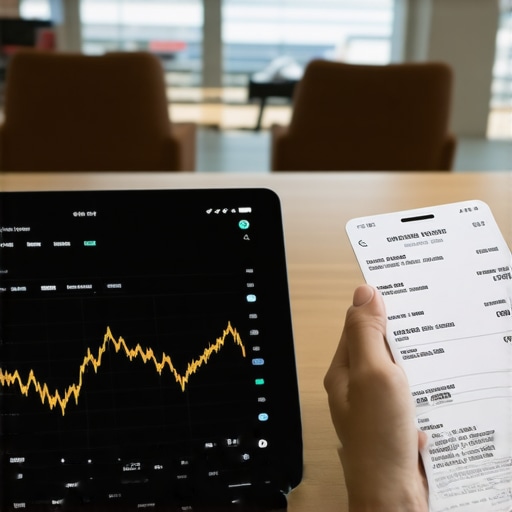
How do I maintain this precision over several months?
The secret isn’t a complex software suite; it’s a religious commitment to the monthly close. I treat the first Monday of every month as a non-negotiable audit of my own activities. I follow the checklist for closing your books every month to ensure that no ‘phantom’ subscriptions or international transaction fees are slipping through the cracks. This habit is exactly how you manage the secret to scaling your business without increasing audit risk. If you can’t explain a charge from ninety days ago while sitting in a comfortable office, you certainly won’t be able to explain it to an auditor two years from now. I also suggest referencing the OECD’s guidance on Permanent Establishment (PE) risks; their recent reports on the digitalization of the economy suggest that tax authorities are becoming much more aggressive about tracking where ‘value’ is created. If you’re closing deals in London, the UK might want a piece of that revenue regardless of where your LLC is registered.
Real-time tax logic is the future of travel
In the next few years, I predict we will see AI-driven ‘Nexus Guardians’—software that tracks your GPS data and alerts you the moment you are five days away from triggering a tax residency requirement in a new jurisdiction. We are moving away from retrospective tax filing and toward real-time compliance. To stay ahead of this, you need to maximize your tax filing efficiency in 2025 by adopting tools that prioritize geographic data. Don’t wait for the end of the fiscal year to realize you’ve accidentally created a tax presence in Singapore. My best advice? Try the 24-hour sync rule: every international transaction must be reconciled within one day of it happening. It sounds tedious, but it’s the difference between a clean exit and a messy audit. If this sounds overwhelming, don’t hesitate to contact us to get your international strategy sorted before your next flight.
The Three Global Growth Lessons I Had to Learn the Hard Way
Traveling the world for business sounds glamorous until you’re staring at a foreign tax notice you can’t translate. One of the biggest shifts in my mindset was realizing that my business exists wherever I am working, not just where my HQ is located. This means being hyper-aware of how payroll strategies to streamline business operations this year must account for local laws. Another ‘lightbulb’ moment was discovering that currency fluctuation isn’t just a rounding error; it’s a potential drain on your net profit that needs to be tracked daily. Finally, I learned that a proactive relationship with a professional ensures tax filing is simplified regardless of which continent you’re on. It turns out that ‘future you’ will always appreciate the sixty seconds you spend scanning a receipt today.
My Go-To Toolkit for Borderless Business
If you want to stay organized, you need a stack that talks to itself. I swear by Dext for capturing foreign receipts because it pulls the correct FX rates automatically. I also recommend keeping the OECD Tax Database bookmarked to stay informed on international tax standards. For those managing a team, using a platform that specifically addresses top payroll management tips for growing businesses in 2025 is vital for staying compliant across borders. Lastly, I suggest implementing a quick 30-minute self-audit every week while you’re traveling to catch errors before they snowball.
#IMAGE_PLACEHOLDER_E#
Take Off with Total Financial Confidence
Global expansion is the ultimate test of your business systems. By mastering these bookkeeping secrets every small business owner should know, you aren’t just staying compliant; you’re building a foundation that can support unlimited growth. Don’t let the fear of a messy ledger keep you from exploring new markets. With the right tools and a disciplined routine, you can focus on making an impact in new cities while your finances remain rock solid. If you find yourself overwhelmed by the complexity of international filings, feel free to contact us to get an expert eye on your global strategy. Have you ever been surprised by a tax rule or a currency fluctuation while working abroad? Let me know in the comments below!