

I remember the exact moment the tax fog finally cleared. I was sitting in my home office, surrounded by crumpled receipts and three different open browser tabs, trying to figure out why my bank balance felt so high while my stomach felt so empty. It was June 14th—the day before the second-quarter deadline—and I was paralyzed. I had no clue if the five thousand dollars I had set aside was a safe bet or a ticket to an audit. I had made the classic rookie mistake: I was treating my business checking account like a personal piggy bank and a tax escrow all at once. It was a disaster waiting to happen, and it is exactly why your quarterly tax estimates are always off when you do not have a reliable system in place. Today, I am going to show you the one tactical move—a simple shift in how you handle your ledger—that stops the guessing game forever. We are not talking about complex software or expensive consultants; we are talking about a fundamental shift in how you view every dollar that enters your business. [image]
Stop Letting the IRS Rent Space in Your Head
When I first started out, I thought I was being smart by just saving twenty-five percent in my head. Spoiler alert: Your brain is a terrible filing cabinet. I would see a healthy balance, buy a new piece of equipment, and then realize three weeks later that I had just spent the government money. It is a painful lesson, but the reason your estimated tax payments are never accurate is usually tied to this lack of physical separation. I learned the hard way that mental accounting is just a fancy word for guessing. According to the IRS, they assessed over 4.5 billion dollars in underpayment penalties for individuals in 2022—money that could have stayed in business owners pockets if they had just planned better. By implementing a dedicated tax reserve account, you create a visual boundary that protects your operating cash. Have you ever felt that sinking feeling when you realize you have accidentally spent your tax budget on a new laptop or a marketing campaign?
Is a separate tax account really worth the extra admin?
I get it. You are already juggling a million things, and adding another bank account feels like one more chore to manage. But consider this: why your business bank account structure matters for taxes is not just about compliance—it is about your peace of mind. When you automate a percentage of every incoming payment to go into a hidden do not touch account, the quarterly deadline becomes a non-event. It is just a simple transfer, not a financial tragedy. If you want to maximize your tax filing efficiency in 2025, you have to stop fighting your own psychology and start using systems that make the right choice the easiest one to make.
Stop Playing Red Light Green Light with Your Cash Flow
To break the cycle of tax-day panic, you have to treat every dollar that enters your business like it’s already been split into piles. Think of your main business account as a temporary staging area, not a permanent home. The moment a client payment clears, a portion of that money needs to vanish. I recommend setting a flat percentage—usually between 25% and 30% for most freelancers and small LLCs—and moving it immediately. If you wait until the end of the month to see what is ‘left over’ for taxes, you have already lost. The leftovers are usually zero because business expenses have a way of expanding to fill the available space. This is one of the most vital bookkeeping secrets every small business owner should know: profit is what you have after the government takes its share, not before.
The 24-Hour Rule for Every Incoming Dollar
I’ll never forget the $12,000 project fee that hit my account in October three years ago. I felt like a king for exactly forty-eight hours until my mentor asked if I’d accounted for my self-employment tax. That ‘king’ feeling evaporated when I realized $3,600 of that money was effectively radioactive—I couldn’t touch it without getting burned later. Now, I follow a strict 24-hour rule. Within one business day of any deposit, I manually trigger a transfer to my tax sub-account. By doing this, you ensure that why your business bank account structure matters for taxes becomes a functional reality rather than just a theory. It acts as a financial moat, protecting your personal life from business liabilities. 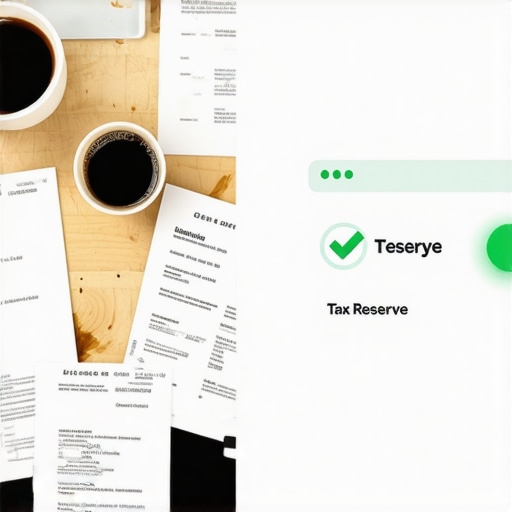
Scrub Your Data Before the Deadline Hits
A separate account is only half the battle; the other half is making sure the numbers inside your ledger actually reflect reality. If you are seeing high profits but your bank account is empty, you likely have ‘ghost’ income or unrecorded expenses floating around. I spent a frantic weekend last March trying to figure out why my software showed I owed $15,000 when my internal math said $10,000. It turned out I had been double-counting my stripe transfers. Learning how to fix the double counting error in your shopify integration or other payment gateways is crucial. If your data is dirty, your tax estimate will be wrong, no matter how much you save.
Sync Your Systems to Prevent Data Gaps
Most owners ignore their books until the week taxes are due, but that is a recipe for overpayment. You need to verify that your bank feeds are actually pulling in every transaction correctly. This is exactly why your bank feeds still fail and how to fix the data gap before it turns into a nightmare. If you are employing a team, ensure your payroll strategies to streamline business operations this year include an automatic sync with your general ledger. When your payroll, sales, and tax accounts speak the same language, you stop being a frantic data entry clerk and start being a CEO who actually understands the reason your profit margin isnt what you expected. Consistency in these small, boring steps is what separates the businesses that thrive from those that get crushed by a surprise IRS bill.Most entrepreneurs think that buying a software subscription is the same as having a tax strategy. It is a dangerous myth that keeps you in a perpetual state of financial reactive-mode. In my experience, the automated age of bookkeeping has actually made errors more frequent because users assume the software is ‘fixing’ things behind the scenes. This is exactly why DIY tax software is missing these three specific deductions: algorithms cannot ask you about your long-term business goals or the context of a purchase. They only see the data you feed them, and if that data is tainted by the reason you should never mix personal and business credit cards, you are essentially handing the IRS a roadmap to an audit during a routine check. 
Stop Trusting the Automation Gods
The ‘Oops’ factor for most growing businesses is the reliance on automatic categorization. I have seen countless ledgers where a $5,000 equipment purchase was tagged as an office expense, immediately wiping out a tax benefit that should have been depreciated over years. This nuance is where tax filing simplified how a CPA service can save you money becomes clear. Professionals catch the ‘hidden’ errors that software glosses over. If you are not looking at your books with a critical, human eye, you are likely leaving thousands on the table. Have you ever fallen into the ‘software will fix it’ trap only to find a mess at year-end? Let me know in the comments.
Is your S-Corp salary putting a target on your back?
If you have moved beyond a simple LLC, the rules of the game change entirely. Many owners assume they can pay themselves a tiny salary and take the rest as distributions to avoid self-employment tax. However, the truth about S-Corp reasonable compensation is that the IRS uses sophisticated data analytics to flag low-salary, high-distribution owners. A study by the Government Accountability Office (GAO) found that billions of dollars in tax revenue are lost annually due to misreported officer compensation in S-Corporations, making this a top priority for IRS enforcement. This is exactly why your s-corp distribution strategy needs a mid-year reset to ensure you are staying within the safe harbor rules while still maximizing your take-home pay.
The Mid-Year Reset That Protects Your Assets
Waiting until December to look at your profitability is a recipe for a massive tax bill you cannot pay. Sophisticated owners perform a deep-clean of their ledger every June. This allows you to identify why your balance sheet is still showing negative cash even if your P&L says you are profitable. Often, the culprit is unrecorded debt payments or owner draws that were not properly categorized. By identifying these gaps early, you can adjust your quarterly estimates and avoid the underpayment penalties that hit so many freelancers. If these nuances feel overwhelming, it might be time to contact us and see how a dedicated partner can turn your books from a liability into a growth tool.Once you have the mindset right, you need a toolbox that does not feel like a second job. I have tried every ‘revolutionary’ fintech app on the market, but I keep coming back to a core stack of QuickBooks Online paired with Dext for receipt capture. The magic happens when you learn how to automate your accounts payable without losing control by setting up approval workflows that do not require you to manually sign every check. If you are still typing in numbers from a PDF, you are wasting time that should be spent on sales. I also make it a point to properly categorize software subscriptions for true profit data because those $29-a-month tools eventually turn into a $1,000-a-month leak if you do not watch them. According to the 2024 State of Finance Automation report by Bill.com, businesses that automate their financial workflows save an average of 50% more time on manual tasks than those who rely on legacy processes—that is half your week back.
How can I stay on top of this without losing my Sunday?
I survive by the ‘Friday 15.’ Every Friday at 3:00 PM, I spend fifteen minutes doing a final sweep of my books. I reconcile the week’s transactions, check for any how to fix duplicate transactions in your cloud ledger that might have popped up from a sync error, and ensure the move to sync your payroll with your general ledger automatically actually occurred without a hitch. This ritual prevents the ‘mountain of dread’ from forming in your inbox. If you let your bookkeeping sit for a month, it becomes a project; if you do it weekly, it is just a chore like taking out the trash. 
Why Data Editing is the New Bookkeeping
Looking ahead, I see the role of the business owner shifting from a ‘data entry clerk’ to a ‘financial editor.’ AI and machine learning are already handling 90% of the raw data categorization, but you still need to be the one who spot-checks for logic. This is where top payroll management tips for growing businesses in 2025 become vital; you are managing sophisticated systems, not just counting pennies. Eventually, the real difference between a bookkeeper and a strategic partner will be their ability to help you interpret what the software is telling you about your future, rather than just reporting on your past. If you want to scale, you have to stop looking in the rearview mirror. Try this right now: set a recurring calendar invite for 15 minutes this Friday. Don’t look at it as admin; look at it as the time you spend ensuring your profit stays in your pocket instead of the government’s.
Why I Stopped Treating My Ledger Like a Junk Drawer
Reflecting on my own journey, the biggest shift wasn’t learning how to use software; it was realizing that my books were a reflection of my mental state. When I finally decided to how to clean up a year of messy bookkeeping in one week, the weight off my shoulders was immediate. I learned that ignoring a receipt is just delayed stress, and that the secret to lowering your tax bracket legally starts with having organized data, not just a lucky guess in April. It is a hard pill to swallow, but your business can only grow as large as your financial systems allow it to be. My lightbulb moment was realizing that the time spent on admin isn’t lost time—it is protected profit.
The Stack That Keeps Me Sane Every Month
I do not believe in overcomplicating things. For my day-to-day, I rely on a simple trio: QuickBooks for the foundation, Dext for capturing every single scrap of paper, and a professional perspective to bridge the gaps. This combination ensures that I am never caught off guard by a surprise payroll adjustment or a missed deduction. If you are tired of the DIY struggle, I highly recommend looking into professional CPA services that handle the heavy lifting while you focus on your craft. I also swear by the habit of reading up on bookkeeping secrets every small business owner should know to stay ahead of the curve.
Building a Business That Does Not Keep You Up at Night
The peace of mind that comes from a reconciled account is worth every penny of investment. You deserve to focus on the work you love without the ghost of an IRS audit looming in the background. Whether you are refining your own system or you are ready to contact us for a professional overhaul, the goal remains the same: clarity, confidence, and control. Your future self will thank you for the fifteen minutes you spend on your books this Friday. Success in business is not just about how much you make, it is about how much you keep. Have you ever had a moment where an organized ledger saved your business from a major mistake? Let me know in the comments below!