

I sat there with a cold cup of coffee, staring at my bank account. It said I had twenty grand. I felt rich. I felt like I could finally take that weekend trip I had been putting off. Then I opened my physical mail—yes, the actual envelopes—and saw the invoices for the inventory I had bought thirty days ago. My stomach dropped. I did not have twenty thousand dollars; I had a debt problem disguised as a positive balance. That was the day I realized that my [image_placeholder] was more than just a preference; it was a survival skill. I learned the hard way that [why your cash basis reporting is hiding your true debt](https://smartcpaservices.com/why-your-cash-basis-reporting-is-hiding-your-true-debt) was not just an accounting theory, but a reality that almost sank my company.
Your Bank Statement Is Not a Financial Plan
If you are running a growing business, relying on cash-basis accounting is like trying to drive a car while only looking at the rearview mirror. It tells you where you have been, but it says absolutely nothing about the brick wall you are about to hit. I made the mistake of thinking that as long as the money coming in was higher than the money going out, I was safe. I was wrong. I was ignoring the timing of my obligations and the matching of my expenses to my revenue. This is why [the shift from cash to accrual for growing agencies](https://smartcpaservices.com/the-shift-from-cash-to-accrual-for-growing-agencies) is such a pivotal moment. Today, I am going to walk you through how to stop guessing and start knowing your real numbers by making the move to accrual reporting without the typical headache.
Is Accrual Accounting Actually Worth the Extra Effort?
I get it. You are busy. You are probably thinking that you barely have time to check your emails, let alone learn a new way to track your money. But here is the thing: the time you save using cash basis is usually spent in a blind panic once a quarter when you realize you owe the IRS or a vendor money you do not have. According to the Financial Accounting Standards Board (FASB), accrual accounting is the primary method that allows a business to accurately match revenue and expenses within the same period, providing a much clearer picture of financial health. When I finally decided to [fix my chart of accounts](https://smartcpaservices.com/why-your-current-chart-of-accounts-is-hiding-your-true-costs-2), I realized the extra work was just the price of admission for real growth. Have you ever felt that sinking feeling when a supposedly profitable month turned out to be a disaster once the bills arrived? I would love to hear if you have been stuck in that same cash-basis trap.
The First Step Is Admitting Your Ledger Is a Mess
Before we dive into the technical buttons you need to click in your software, we have to talk about the reality of your data. Most people try to switch to accrual while their current books are a total disaster zone. I tried this once, and it was a catastrophe because I had [duplicate invoices in my workflow](https://smartcpaservices.com/the-move-to-fix-duplicate-invoices-in-your-workflow) that I had not caught for months. If your data is messy, switching to accrual will just give you more sophisticated lies. You can [neglect your monthly close process](https://smartcpaservices.com/the-real-cost-of-neglecting-your-monthly-close-process) no longer if you want this to work. We need a clean slate. If you are feeling overwhelmed already, it might be time to [reach out to a professional](https://smartcpaservices.com/contact-us) to help clear the deck before we transition.
Stop Guessing and Start Recording Invoices Early
The heart of accrual accounting is the ‘matching principle.’ You want your expenses to show up in the same month as the revenue they helped create. When I first started, I would wait until I actually paid a vendor to log the expense. This led to massive swings in my monthly reports that made it impossible to forecast accurately. To get this right, you must learn how to fix a ledger that has not been balanced in months by back-dating those entries to when the service was actually rendered. I remember a specific July where I thought I had cleared fifteen thousand dollars in net profit. I was ready to celebrate. But because I had not recorded a twelve thousand dollar subcontractor bill that was sitting in my inbox, my ‘wealth’ was an illusion. By the time I paid it in August, my August numbers looked like a disaster. 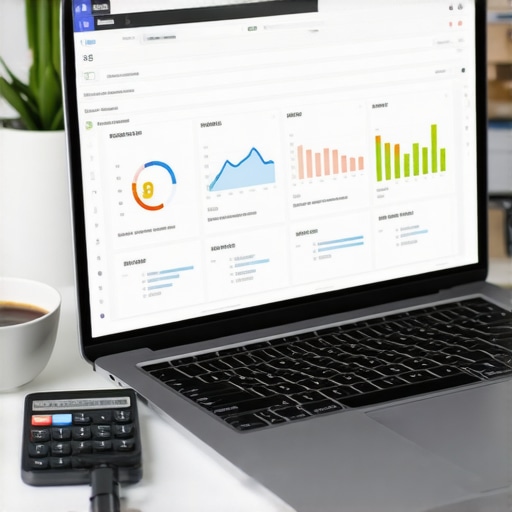
Stop Treating Invoices Like Suggestions
On the flip side, you have to record your revenue when you earn it, not just when the client decides to pay. If you finish a project on the 20th, send the invoice and record the revenue immediately. That income belongs to the month the work was performed. If you wait for the check to clear, you are falling back into cash-basis habits. I once had a client who took ninety days to pay a significant invoice. Under cash basis, my business looked like it was starving for three months and then suddenly hit the lottery in month four. Under accrual, I could see that we were performing consistently, which gave me the confidence to hire a new account manager even while the bank account looked low. This is one of those bookkeeping secrets every small business owner should know to keep their sanity.
Align Your Payroll with Reality
Payroll is the largest line item for most service businesses, yet it is the most common place where accrual reporting falls apart. If your team works the last week of December, but you do not run the payroll until January 5th, a cash-basis report says you had a very profitable December. That is a lie. You need to the move to sync your payroll with your general ledger automatically so that those wages are ‘accrued’ or recognized in the month the work happened. This avoids the ‘rollercoaster’ effect where one month looks great and the next looks like you are going out of business. It ensures that when you look at your P&L, you are seeing the true cost of the labor used to generate that month’s revenue. Automating this step is non-negotiable for growth.
The Monthly Close Keeps You Honest
You cannot just ‘set it and forget it’ with accrual accounting. You need a rhythm. Every single month, you have to reconcile your bank accounts and check for unrecorded liabilities. This is where you catch things like the move to automate accounts payable without losing control which prevents manual data entry errors from skewing your data. I used to think a ‘close’ was just for big corporations, but once I implemented the checklist for closing your books in record time, I finally felt like I was in the driver’s seat of my company. No more surprises, no more ‘forgotten’ bills, and no more staring at a bank balance that does not tell the whole story.Most people assume that once they’ve integrated their bank feeds, the hard work is over. I’m here to tell you that’s exactly when the real danger begins. The biggest lie in the SaaS accounting world is that ‘automation equals accuracy.’ It doesn’t. In my experience, the truth about why your expense automation keeps failing is often tied to the lack of context in the software’s rules. If you aren’t careful, why your automated bank feeds create duplicate invoices will turn your clean ledger into a swamp of double-counted revenue and missed liabilities. One specific trap I see seasoned founders fall into is the ‘Tax-Basis Trap.’ They think that because their books are ‘ready for the CPA,’ they are actually seeing the health of their business. This is a massive mistake. A tax-ready set of books is designed to minimize liability, not to provide a strategic roadmap. For instance, the red flags in your depreciation schedule the IRS hates aren’t just about compliance; they often hide the true cost of asset replacement. According to the American Institute of CPAs (AICPA), professional judgment is still the missing link in roughly 25% of automated financial entries that require manual adjustment to comply with GAAP standards. You cannot automate the nuance of a complex transaction.
Does Your Inventory Method Quietly Inflate Your Tax Bill?
If you are holding stock, your accounting choice can be the difference between a thriving cash flow and a massive surprise at tax time. I’ve seen businesses struggle because they didn’t realize why your inventory method is inflating your taxable income. They were using FIFO (First-In, First-Out) during a period of rising costs, which made their margins look great on paper—and their tax bill even ‘greater.’ Switching to a more nuanced approach requires more than a software toggle; it requires maximizing your tax filing efficiency in 2025 by looking at the economic reality of your warehouse, not just the spreadsheet. 
Stop Letting Your Inventory Method Skew Your Reality
The ‘Oops’ factor here is usually the assumption that your software ‘knows’ what you’re doing. It doesn’t. It only knows what it’s told. If you’ve ever felt like your dashboard is lying to you, you aren’t alone. This is particularly true if you are dealing with multi-state issues; why your state sales tax nexus is growing faster than you think can catch even the most diligent business owner off guard. Have you ever fallen into this trap where the automation made things worse instead of better? Let me know in the comments—I’d love to help you spot where the wires are getting crossed. If the mess feels too big to untangle, you can always contact us to get back on track and ensure your growth isn’t built on a foundation of bad data.To truly scale, you have to move past the manual ‘check-the-bank-account’ method and build a tech stack that actually functions as a cohesive ecosystem. I remember the exact moment I realized my manual data entry was holding us back; it was a Tuesday night, and I was three hours deep into a reconciliation that still didn’t balance because of a simple transposition error. That’s when I finally looked into how to transition from a spreadsheet to professional software, and it was like someone had finally turned the lights on in a dark room. If you are using platforms like Stripe or Shopify, the automated data flow is often where the wheels fall off if you don’t monitor the mappings. You have to prioritize fixing the stripe to quickbooks sync before taxes break your accounting logic and leave you with thousands of dollars in ‘uncategorized’ limbo.
Ditch the Spreadsheet Before it Drowns You
Modern software isn’t just a convenience; it’s your primary defense against the human error that leads to IRS audits. But even the best software can be cluttered by ‘ghost’ fees and redundant subscriptions that you forgot were even active. I now make it a non-negotiable habit to how to audit your own tech stack for ghost subscriptions every six months. It’s amazing how many forty-nine-dollar-a-month tools you stop using but keep paying for because the charge is buried in a sea of other transactions. This isn’t just about saving a few hundred bucks; it’s about financial hygiene. When your profit and loss statement is clean, you can actually start planning for long-term security, like making 3 moves to secure your retirement while scaling a business. 
How can you maintain a spotless ledger month after month?
The secret to long-term success isn’t working harder during tax season; it’s having a repeatable, weekly rhythm. I follow the checklist for closing your books in record time religiously because it prevents the ‘snowball effect’ of bad data. According to the Journal of Accountancy, firms that implement standardized, real-time closing procedures reduce their exposure to reporting errors by nearly 40% because the paper trail is validated while the transactions are still fresh in everyone’s mind. This proactive approach also ensures you can maximize your tax filing efficiency in 2025 because your CPA won’t spend ten hours just trying to figure out what your office expense category actually contains.
Why Real-Time Data is Your Best Scaling Asset
When you reach the point of hiring, you cannot wait thirty days to see if you can afford the new salary. You need the move to sync your payroll with your general ledger automatically so your burn rate is updated the moment the direct deposit hits. I also suggest the move to automate accounts payable without losing control, which allows you to schedule payments for the future without them surprising your bank balance later. Looking ahead, I predict that AI-driven continuous accounting will soon replace the traditional monthly close entirely, offering predictive insights into cash flow gaps before they happen. For now, my best advice is this: go into your accounting software right now and check your ‘Uncategorized Expenses’ folder. If there are more than ten items in there, you have a workflow problem, not a math problem. Fix that sync today, and you will find that tax stress becomes a thing of the past.
What Most Founders Forget When They Scale Their Finance
Reflecting on my own journey, the move from cash to accrual wasn’t just a change in software settings; it was a total financial mindset shift. First, I had to accept that a “profitable” month on paper didn’t mean I could go buy a boat. Second, I realized that why your current PL doesnt reflect your real cash position is often due to timing, not performance. Lastly, I learned that manual work is the enemy of growth. By making the the specific move to lower your self-employment tax legally, I started treating my business like a professional entity rather than a high-stakes hobby.
The Stack That Actually Keeps Me Sane
If you are ready to move forward, you do not need to reinvent the wheel. I personally rely on three main pillars. First, a robust accounting platform is essential for that accrual transition. Second, I highly recommend using dedicated payroll systems that integrate directly with your ledger; it saves hours of manual entries. Third, and most importantly, never underestimate the power of tax filing simplified how a cpa service can save you money. A professional set of eyes can spot the move to lower your corporate tax rate legally that a software algorithm will always miss. These aren’t just tools; they are the foundation of your financial peace of mind. #IMAGE_PLACE_HOLDER_E#
Start Thinking Like the CEO Your Business Deserves
You did not start your business to become a full-time bookkeeper, but you did start it to build something lasting. Financial clarity through accrual reporting is how you protect that dream. Do not let the fear of a messy ledger stop you from growing. Whether you are cleaning up 2024 or prepping for next year, the best time to fix your data is right now. If the thought of reconciling months of backlogged data makes your head spin, feel free to contact us to get a professional handle on your bookkeeping and tax filing before the next deadline hits. Have you ever found a massive surprise in your bank account that your reports did not warn you about? Let me know in the comments below!