

I’ll never forget the cold sweat I felt when my accountant pointed out a massive discrepancy in my tax filing. Everything in my dashboard looked clean. The bank feed was humming along, matching transactions left and right. But beneath that polished surface, my automation had been quietly wreaking havoc. It had categorized a major client refund as a ‘miscellaneous expense,’ effectively hiding a hole in my revenue. That’s the danger of modern bookkeeping tools; they give us a false sense of security while we sleepwalk into an audit. In this post, I want to pull back the curtain on why trusting your software blindly is a recipe for disaster and how you can reclaim control over your numbers.
The Stealthy Mistakes Hiding in Your Dashboard
We’ve all been told that AI and bank feeds are the end of manual data entry. While that’s mostly true, software lacks context. It doesn’t know that ‘Amazon’ could be a new printer or a pack of diapers you accidentally bought with the business card. I see business owners spotting errors in their automated bank feeds all the time, and usually, it’s because they stopped looking at the details. Early in my journey, I learned the hard way that I had to stop letting my bookkeeper categorize miscellaneous expenses because I thought ‘Uncategorized’ was a safe bucket for later. Spoiler: it never gets fixed later. Those little automated rules we set up? They are the silent killers of clean ledgers. I once set a rule to automatically categorize anything from a specific vendor as ‘Software Subscriptions.’ Months later, I realized I’d bought a $2,000 piece of hardware from them that should have been capitalized as an asset. Because I wasn’t reviewing the feed, my tax deductions and depreciation schedules were a total mess. According to research by Gartner, the average financial impact of poor data quality on organizations is a staggering $12.9 million per year. Even at a smaller scale, these tiny errors snowball into massive headaches that cost you more than a professional service ever would. Think about your payroll for a moment; automation can easily miss a one-time bonus or misapply a tax credit if the feed isn’t monitored. When you rely solely on the machine, you’re not just risking a few dollars—you’re risking your ability to make sound decisions based on real, accurate data.
Is total automation actually worth the risk?
You might be wondering if you should just go back to paper ledgers and manual spreadsheets. Don’t worry, I’m not suggesting that. But you have to realize why automated expense categorizing is failing your books when left completely on autopilot. If you don’t have a human eye verifying the work, you end up with errors that make your profit and loss statement unreliable. Have you ever looked at your P&L and felt like the numbers just didn’t match the reality of your bank account? Tell me, have you ever caught a weird software error that almost cost you a fortune? Trust me, catching these things now is much better than explaining them to the IRS. We are going to dive into the specific human checks that will save your sanity and your bank account.
Audit Your Books Before the IRS Does It for You
To stop the bleeding, you need a recurring ‘Human-in-the-Loop’ workflow. Think of your accounting software like a high-end GPS; it can tell you where to go, but it won’t see the ‘Road Closed’ sign that was put up ten minutes ago. You are the driver. The first thing I do every Tuesday morning is a manual ‘sanity check’ of the bank feed. I remember a month where my software helpfully matched a $1,200 software renewal to a generic ‘utility’ category because the vendor name was slightly truncated. If I hadn’t looked, that deduction would have been misclassified, making my tax filing much more complicated later. You have to spot the errors in your automated bank feed by clicking into the transaction details, not just hitting ‘match.’
Master the Art of the 30-Minute Self-Audit
Don’t wait for year-end to realize your ledger is a mess. Set a timer for 30 minutes once a week. Your goal isn’t to fix everything perfectly, but to flag the ‘weird’ stuff. I once found that my Stripe integration was double-counting sales because I had both the bank feed and the direct Stripe integration active. This is why you need to know how to reconcile stripe fees without losing your mind; otherwise, you’re paying taxes on money you never actually cleared. During these sessions, look specifically at your ‘Uncategorized’ and ‘Miscellaneous’ buckets. If they are growing, your automation is failing. I spent three hours last year helping a client clean up your chart of accounts without deleting data because they had 50 different sub-categories for ‘Office Supplies’ created by various auto-rules.
Verify Payroll Outside of the Dashboard
Payroll is the most dangerous area for automation neglect. I’ve seen systems miss a tax jurisdiction change simply because an employee moved and updated their address in the HR portal, but the accounting sync broke. You should cross-reference your total monthly payroll debit from your bank statement against the reports inside your provider’s platform. Following top payroll management tips for growing businesses in 2025 means realizing that ‘set it and forget it’ is a myth. I once had a client who overpaid payroll taxes for six months because a ‘smart’ feature applied a state credit they weren’t eligible for. We only caught it during a manual review of the liability account.
Treat Your Chart of Accounts Like a Living Document
Your business evolves, and your ledger should too. If you’ve switched from a service-based model to selling products, your old categories might not make sense anymore. Use the exact steps to fix a messy chart of accounts yourself to merge redundant categories. When I started my first consulting gig, I had one category for ‘Marketing.’ By year two, that was useless. I needed to see the difference between ad spend and software tools. If I hadn’t updated the structure, my P&L would have been a blurry snapshot instead of a high-definition video of my finances.Many entrepreneurs believe that if their balance sheet matches their bank statement, they are ‘audit-proof.’ I hate to be the bearer of bad news, but that is just the tip of the iceberg. True expertise in bookkeeping isn’t about matching numbers; it’s about spotting the structural flaws that automation ignores. For example, a common belief is that taking the biggest possible deduction right now is always the smartest move. However, when you look at the truth about section 179 deductions for small businesses, you might realize you are trading a tax break today for a significantly higher tax bracket tomorrow. Strategic tax filing simplified means looking three years ahead, not just three months. Have you ever fallen into this trap of chasing immediate deductions without a long-term plan? Let me know in the comments.
Stop Thinking of Bookkeeping as a Tax Chore
Most business owners treat their books like a report card they only check at the end of the semester. In my experience, the most successful founders use their ledger as a dashboard for growth. If you are only reconciling to keep the IRS happy, you are missing the bookkeeping secrets every small business owner should know about cash flow management. One major ‘oops’ factor I see constantly is the use of peer-to-peer payment apps. It seems convenient, but the tax trap of paying employees through venmo or zelle creates a nightmare for 1099 compliance. The IRS has significantly increased its focus on these informal payment methods. According to the IRS 2024 Strategic Operating Plan, they are leveraging new data analytics to identify businesses that bypass traditional payroll systems. 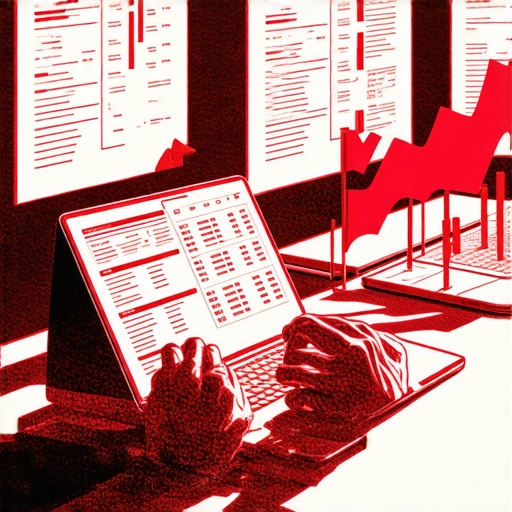
Could your S-Corp salary be a red flag for the IRS?
This is a sophisticated question many growth-stage founders miss. They switch to an S-Corp to save on self-employment taxes but then pay themselves a ‘reasonable’ salary that is far too low. Understanding why your s-corp reasonable salary calculation might be wrong is critical; if the IRS deems your salary insufficient, they can reclassify your entire distribution as wages, hitting you with back taxes and massive penalties. You need to balance your distributions with a salary that actually reflects your role.
Avoid the Stealth Costs of a Remote Workforce
In 2025, ‘workcations’ are the new norm, but they are a bookkeeping landmine. Many owners don’t realize that having an employee work from another state for just a few weeks can trigger ‘nexus’—meaning you might suddenly owe payroll taxes or even sales tax in a state where you have no physical office. You must account for the hidden tax cost of your remote teams workcations before they leave. Furthermore, you should constantly check for hidden gaps in your general ledger that lead to filing delays, such as unrecorded liabilities or stale checks. To truly maximize your tax filing efficiency in 2025, you need to transition from reactive data entry to proactive financial architecture. This is where a professional CPA service proves its value, not by just filing forms, but by preventing these high-level errors before they become permanent records.I’ve experimented with dozens of apps, but I always come back to a core ‘holy trinity’ of tools. For me, it’s not just about the accounting software; it’s about the bridge between the expense and the ledger. You need to stop chasing receipts and use these three apps instead like Dext or Hubdoc to create a permanent digital audit trail. These tools don’t just ‘read’ data; they store the image of the receipt, which is your only real shield during an IRS inquiry. If you are still manually entering data from a crumpled piece of thermal paper, you are wasting at least five hours a week that could be spent on sales. I personally use a ‘zero-touch’ workflow where my Amazon Business account is directly synced to my ledger, though I still take five minutes to how to categorize amazon business purchases without the headache of separating my home office supplies from my client gifts. This level of granularity is what separates a business that survives an audit from one that gets buried in back taxes. 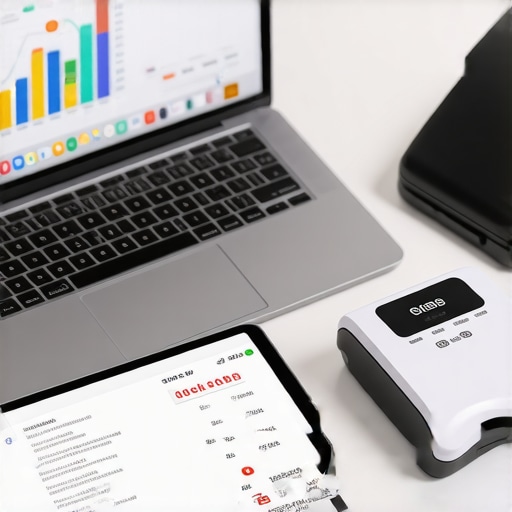
The Tech Stack That Actually Scales With You
Many founders start with a basic payroll setup, but why your payroll providers basic plan is hurting your growth becomes obvious once you hit ten employees. You need a system that handles multi-state filings and local taxes automatically. I’ve seen too many people try to ‘hack’ their way around this by using the cheapest tier available, only to end up with a five-figure bill from a state they didn’t even realize they had a presence in. According to the American Institute of Certified Public Accountants (AICPA), ensuring your service providers provide a SOC 1, Type 2 report is a critical step in verifying that their internal controls over financial reporting are actually reliable. Don’t take the software company’s marketing at face value; verify their compliance.
How do I keep my records from falling apart during a growth spurt?
Maintaining clean books during a scaling phase requires a ‘Month-End Close’ ritual. This isn’t just for big corporations. You should follow a specific checklist for closing your books every month to ensure no transaction is left hanging. This includes reconciling every single account—not just checking—and reviewing your P&L against your budget. If you find yourself skipping this, it’s time to how to streamline your month-end close using automation tools that flag discrepancies for you. Looking ahead, I predict that ‘predictive reconciliation’ will become the norm, where AI anticipates your tax liability in real-time. However, this will only increase the demand for human oversight. As the tech gets faster, the errors get bigger. The real secret to scaling your business without increasing audit risk is having a human expert—a proactive CPA—who reviews the machine’s work once a quarter. Don’t wait for tax season; go into your accounting software right now and see if your ‘Uncategorized Expenses’ account is over $500. If it is, you have a data integrity problem that needs fixing today.
The Hardest Lesson I Learned About Trusting My Dashboard
For years, I thought that if the software didn’t flag an error, the error didn’t exist. The hardest lesson I learned is that automation is great at math but terrible at logic. Software can reconcile a million transactions, but it won’t tell you if you are fundamentally overpaying for a service or if your 1099 workers are shifting into a risk zone where the liability shift when your 1099 workers act like w-2s becomes a legal nightmare. I realized that a dashboard is just a mirror of your habits; if your habits are messy, your dashboard will just be a polished version of that mess. True financial health comes when you stop viewing your books as a static record and start seeing them as a conversation between you and your CPA. If you find yourself constantly confused by your own reports, it might be time to look for the red flags that suggest your accountant isn’t proactive enough to guide you through these digital pitfalls.
My Essential Toolkit for Financial Clarity
To keep my sanity intact, I rely on a small but mighty stack of resources. First, I highly recommend you stop chasing receipts and use these three apps instead like Dext or Hubdoc to ensure every deduction is backed by a digital image. Second, I constantly refer back to the bookkeeping secrets every small business owner should know to remind myself that cash flow is the only metric that truly pays the bills. Finally, don’t underestimate the power of professional CPA services. Even the best software can’t replace the strategic oversight of someone who understands how to maximize your tax filing efficiency in 2025. I trust these tools because they move the needle from ‘compliance’ to ‘profitability.’
Your Future Self Will Thank You
Taking control of your finances today is a gift you give to your business three years from now. By implementing proper payroll oversight and leaning on smartcpaservices to verify your automation, you are building a foundation that can actually scale. Don’t let the fear of a messy ledger stop you from starting; the most important step is simply to look at the numbers with a critical eye. When you combine the speed of technology with the wisdom of human experience, tax filing stops being a season of stress and starts being a routine part of your success story. Have you ever caught a massive software error in your bank feed just before it became a disaster? Let me know in the comments below.