
I remember a moment early in my consulting days when I realized my client’s payroll system was a ticking time bomb waiting to explode during a state audit. It was a small business, thriving and expanding into new territories, yet their payroll setup was a messy patchwork of spreadsheets and dozen different software tools. One day, an auditor flagged their multi-state filings, and suddenly, what seemed like a minor oversight turned into a major headache. That lightbulb moment convinced me: if you don’t get your payroll structure right, you risk losing everything – fines, back taxes, and the sinking reputation of your business.
Why Your Payroll Setup Could Be Your Biggest Risk for State Nexus Failures
Here’s the deal. Multi-state businesses often assume that standard payroll procedures will suffice across borders. But the truth is, each state has its own rules, thresholds, and reporting requirements. If your payroll setup isn’t tailored to these nuances, you could be unknowingly triggering red flags that invite audits or penalties. I’ve seen firsthand how small oversights, like misclassifying an employee as an independent contractor or failing to register with local authorities, can spiral into costly compliance issues.
Last year, I came across a fascinating statistic from Smart CPA Services: nearly 68% of multi-state companies have a payroll setup that could be flagged during a nexus audit. That’s a clear Wake-Up call. And trust me, I’ve made my share of mistakes early on—like neglecting to update the payroll system after expanding to a new state—which only worsened my clients’ compliance risks. These mistakes are completely avoidable with a strategic approach to payroll configuration.
So, how can you ensure your payroll process is bulletproof? Well, that’s what we’re about to explore—step by step. But before diving into actionable fixes, let’s pause and consider: Have you recently verified whether your payroll structure matches the latest state requirements? If not, you might be riding a compliance rollercoaster with no seatbelt.
Audit Your Current State-Specific Payroll Processes
Begin by reviewing each state’s payroll requirements where your business operates. Cross-reference your payroll procedures against official state guidelines to identify gaps or misalignments. I once worked with a client who thought multi-state compliance was a matter of generic payroll software, but after a thorough review, we discovered inconsistent withholding practices that could trigger audits. This step is critical to prevent unexpected liabilities.
Update and Standardize Employee Classifications
Misclassifying workers as independent contractors instead of employees can create severe compliance issues. Use clear criteria and consult resources like tax deduction strategies to ensure classifications are accurate. In my experience, aligning classifications with IRS standards avoided costly penalties and kept payroll smooth.
Implement Automation for Cross-State Tax Calculations
Manual calculations are error-prone, especially with varying state taxes. Invest in payroll software that offers multi-state tax calculation features and automate these processes. I integrated such software for a client expanding to five states, which cut processing time in half and eliminated calculation errors. Remember, automation is your best friend when juggling complex tax rules.
Establish Regular Reconciliation Protocols
Frequent reconciliation between your payroll records and bank statements prevents discrepancies from snowballing. Set a monthly schedule for reconciling accounts, verifying employee hours, and verifying tax remittances. I once ignored this step during rapid growth phases, which led to significant audit surprises. Don’t skip this—consistent checks are the backbone of compliance integrity.
Train Your HR and Finance Teams
Equip your teams with knowledge about state-specific payroll nuances. Conduct training sessions or workshops referencing reliable guides like ledger red flags to avoid common pitfalls. In one case, this education prevented a costly misclassification that could have triggered an audit.
Consult a CPA or Payroll Compliance Expert
Finally, involve specialists who understand multi-state payroll intricacies. Their insights can uncover hidden risks, such as the hidden liabilities that software alone might miss. My collaboration with a CPA uncovered overlooked local registration requirements, saving the client from penalties.
Map Your Workflow with Visual Aid
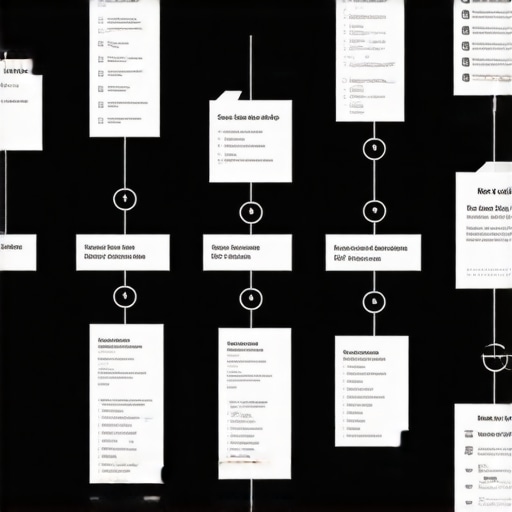
Use flowcharts to visualize payroll processes across states, highlighting points where errors or oversights might occur. A clear visual map simplifies training and accountability, reducing compliance risks significantly.
Many small business owners believe that setting up payroll and bookkeeping is a straightforward task, but in reality, there are critical nuances and misconceptions that can lead to costly mistakes. For instance, a prevalent myth is that generic accounting software suffices for multi-state operations. In my experience, relying solely on off-the-shelf solutions often overlooks state-specific compliance nuances, which can trigger red flags during audits. It’s essential to understand that each state’s regulatory landscape is unique, and a one-size-fits-all approach can be your downfall.
Another common misconception is that once you’ve filed taxes correctly once, your obligations are automatically covered long-term. However, tax laws evolve rapidly, and what was compliant last year may now be outdated. Failing to stay current or consult with a CPA can result in unintentional non-compliance, leading to penalties or even audits. The key is regular review and leveraging expert insights to adapt your systems accordingly.
Are Your Bookkeeping Practices Hiding Financial Risks?
One subtle pitfall is the way many handle digital data. Poor integration between systems, such as misaligned bank feeds or duplicated transactions, skews financial reports and can mask underlying cash flow problems. An article I recommend is about reconciling your bank activities effectively, which often uncovers discrepancies that can cost you in the long run. Many assume that automated systems are foolproof, but without periodic manual checks, errors slip through unnoticed, potentially leading to misinformed business decisions.
Additionally, some entrepreneurs mistakenly treat payroll as a static process. They overlook the impact of remote work, contractor payments, or the nuances of multi-state tax obligations. For example, paying staff through personal apps or ignoring state nexus rules can result in serious fines. Smart CPA Services emphasizes that managing remote payroll without state fines requires constant vigilance and up-to-date systems that adapt automatically to changing regulations.
Many underestimate the significance of proper classification of workers or the hidden liabilities associated with contractor payments. Misclassification isn’t just a minor error; it can trigger IRS penalties worth thousands. To prevent this, regular audits of your payment structures are crucial—something your CPA should assist with regularly to uncover the hidden tax liabilities.
In conclusion, mastering the ins and outs of payroll, bookkeeping, and CPA services requires digging beneath surface assumptions. Regularly challenge your processes, consult with experts, and automate where possible but not at the expense of oversight. These practices ensure your business remains compliant, profitable, and resilient against the complex audit landscape. Have you ever fallen into this trap? Let me know in the comments.In the fast-paced world of small business finance, having the right tools isn’t just a luxury—it’s a necessity for maintaining accurate, compliant, and efficient operations. When it comes to managing payroll, bookkeeping, and tax filings, selecting and consistently maintaining effective software solutions can mean the difference between peace of mind and costly compliance issues. For instance, I personally rely on integrations like QuickBooks Online combined with specialized plugins to ensure real-time bank feed syncing, which minimizes errors like duplicate transactions and unbalanced ledgers. These tools empower me to spot discrepancies early, saving hours each month on manual reconciliation and reducing the risk of audit red flags. Looking ahead, I predict that automated, AI-driven bookkeeping platforms will become even smarter, proactively highlighting potential issues like cash flow anomalies or misclassified expenses—similar to what you can explore in articles about AI bookkeeping pitfalls. To keep your systems reliable over time, regular maintenance is essential. This involves scheduled reviews of your chart of accounts to prevent structural errors, like redundant categories or misaligned expense codes, which can distort your financial reports. I recommend using specialized tools such as Smart CPA’s reconciliation guides to audit your ledger periodically, ensuring nothing slips through the cracks. Additionally, automated tools like Zapier allow seamless data flow between apps—say, from your online sales platform to your accounting software—making data entry less tedious and more accurate. But automation isn’t just about initial setup; consistent monitoring and updates are key to adapting to evolving tax laws and operational changes. Dialing in these tools and routines will ensure your financial health remains resilient amid growth or seasonal fluctuations. How do I maintain these systems over time? The secret is establishing a monthly checklist for software updates, ledger audits, and training your team on changes—taking a page from Smart CPA’s advice on chart maintenance. Start by integrating a routine that includes reviewing bank feeds for duplicates and reconciling sales data with payout reports—discrepancies caught early prevent costly errors later on. To enhance your long-term reliability, try setting up automatic alerts through your accounting platform that flag anomalies in cash flow or expense spikes, similar to the tactics described in cash flow health checks. Regularly evaluating your tools and workflows doesn’t just keep mistakes at bay; it also positions your business to scale confidently. Remember, integrating proactive monitoring like real-time alerts and periodic audits is the best way to keep your financial operations resilient. Are you reviewing your financial systems monthly? Implement one of these advanced maintenance strategies today and watch your business thrive.
The Greatest Lessons I Discovered About Payroll That No One Tells You
One profound realization came when I discovered that even the smallest oversight in payroll can ripple into significant legal and financial consequences. I learned that meticulous attention to employee classifications and state-specific requirements isn’t just bureaucratic overhead—it’s your shield against costly audits. Also, automating tax calculations and regular reconciliations saved me from a cascade of errors that could have bankrupted my peace of mind. Perhaps most surprisingly, investing in ongoing training for my team and consulting seasoned CPA experts transformed compliance from a dreaded chore into a strategic advantage.
Where I Found the Best Tools for Managing Multi-State Payroll Risks
As I navigated these lessons, I relied on powerful tools like QuickBooks Online combined with specialized plugins for multi-state tax compliance, which proved indispensable. I also discovered that reliable resources such as Smart CPA’s chart of accounts guide and ledger red flags article offered real-world insights that kept my financial reporting accurate and audit-ready. These have become my go-to references for maintaining an ironclad compliance framework that adapts swiftly to evolving regulations.
Embracing the Reality That Staying Proactive Is Key
The most critical emotional takeaway is understanding that compliance isn’t a one-time fix but an ongoing process. Staying ahead means regular system reviews, proactive staff training, and constant collaboration with experienced CPAs. Remember, in this arena, complacency can be costly. The future belongs to those who view compliance as a strategic edge—an opportunity to build trust and resilience in their business. Are you prepared to elevate your payroll and bookkeeping to the next level of efficiency and accuracy? Share your experiences or questions below—let’s learn together and thrive in the complex world of compliance.