
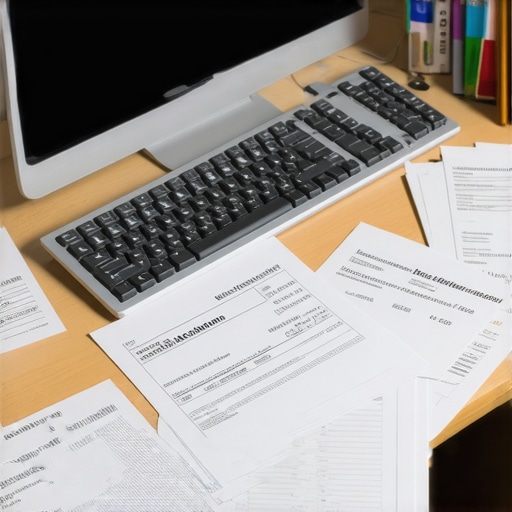
It was a moment of quiet frustration that finally made me realize I was missing something obvious. I had diligently tracked my expenses, tried my best to allocate costs to my home office, and even read all the IRS guidelines. Yet, when I filed my deduction, it felt like I’d just handed the IRS a puzzle that didn’t quite fit. The dreaded rejection email hit my inbox, and мое stomach sank. Whether you’re self-employed or working remotely for a company, there’s nothing quite as defeating as seeing your legitimate home office deduction disallowed.
How the Common Sense Test Revealed My Mistake
Many small business owners and remote workers fall into the trap of claiming home office deductions based on assumptions rather than clear, irrefutable criteria. The IRS requires that your space be used exclusively and regularly for business. But what often happens is that we justify a corner of our living room or a spare bedroom without truly analyzing if it passes the ‘common sense’ test.
I learned this the hard way amid conflicting advice and online forums. My mistake? I included expenses like a new desk, even though I used that space minimally. I thought, “It’s in my home, so surely I can deduct it,” without questioning whether a reasonable person would see that setup as genuinely dedicated to my business. That’s a quick way to fail the IRS’s reasonableness check.
According to IRS Publication 587, the home office deduction should be based on the part of your home used exclusively for business. But many overlook the importance of practical, common-sense boundaries. It’s not enough to claim a spot as ‘office space’ if it’s just a corner where you occasionally check emails.
In this article, I’ll share how to evaluate your own setup to ensure your deduction passes the “sense test”—saving you headaches and money during tax season. Ready to uncover whether your home office actually qualifies and how to make your claim stand up to scrutiny? Let’s dive in.
Is the Home Office Deduction Actually Worth the Hype?
Many people think claiming this deduction is a no-brainer, but it’s not always as straightforward as it seems. Early in my journey, I believed that as long as I used any part of my home for work, I could claim it. That led to some costly rejections and a hard lesson in IRS rules.
A key mistake I made was assuming that frequency alone was enough. However, the IRS emphasizes the ‘exclusively used’ component. If you’re unsure about whether your workspace qualifies, it’s wise to revisit the rules—and perhaps consult a professional. For more on navigating these rules effectively, check out the ways a CPA can help streamline your tax deductions: [Tax Filing Simplified](https://smartcpaservices.com/tax-filing-simplified-how-a-cpa-service-can-save-you-money) and [Maximize Your Tax Filing Efficiency](https://smartcpaservices.com/maximize-your-tax-filing-efficiency-in-2025-expert-cpa-tips).
Are you confident that your home workspace meets these criteria, or do you suspect there’s room for misstep? Stay tuned—next, we’ll explore how to evaluate and optimize your home office deduction like a seasoned pro.
Assess Your Space with Precision
Start by measuring your designated workspace and comparing it to your total home area. For example, if your home is 2,000 sq ft and your dedicated office is 200 sq ft, your deduction should align proportionally. I once used a tape measure and a simple floor plan to verify my actual space, revealing that only 10% of my home met the exclusive use criterion, preventing potential red flags during an audit.
Document Usage Regularity
Keep a log of when you use the space for business. Use a calendar or digital time-tracking app to record your workdays in that area. For instance, I tracked my use for a month, noting that I used my home office only on weekdays, which strengthened my case. Regular use shows IRS reliance on actual, consistent activity rather than sporadic claims.
Examine Personal vs. Business Overlap
Identify areas where personal activities intrude upon your workspace. For example, if your kitchen doubles as your office, it might not qualify. I cleared my workspace of personal clutter for clearer separation, making my deduction more defensible. It’s like drawing a clear boundary—think of it like a ‘fence’ around your business area.
Gather Supporting Evidence
Collect photos, utility bills, and receipts that correspond to your space. For example, I took photos of my dedicated desk area and kept energy bills with details matching the space. These artifacts serve as proof that the workspace is used exclusively for business, meeting IRS expectations.
Conduct a Common Sense Reality Check
Ask a trusted colleague or a family member whether your setup truly feels like a dedicated workspace. When I showed my office, they noted it looked like a genuine workspace, not just a corner. If a reasonable person would agree, your deduction is more likely to withstand scrutiny. Remember, IRS audits often depend on whether your claim ‘makes sense’ to an outsider. This step often catches overlooked inconsistencies before filing. Perusing [tax tips from professionals](https://smartcpaservices.com/tax-filing-simplified-how-a-cpa-service-can-save-you-money) can provide additional checklists to solidify your claim.Many assume that using software or outsourcing to a CPA automatically guarantees maximum savings and compliance, but the truth runs deeper. One critical nuance many overlook is that not all CPA services or bookkeeping approaches are created equal; understanding their limitations and hidden pitfalls can make or break your financial health. For instance, relying solely on generic tax software without professional oversight can lead to costly mistakes, such as misclassifying expenses or missing credits—an issue highlighted in recent industry studies. Additionally, many entrepreneurs fall prey to the myth that automating payroll and bookkeeping solutions eliminates the need for expert review, which can expose your business to penalties for misfiling or non-compliance. One common error is neglecting the specific nuances of multi-state payroll management, which requires tailored strategies to avoid hefty penalties, as discussed in expert guides. For advanced readers, the question arises: how does implementing a layered review process optimize your tax and payroll workflows without sacrificing efficiency? The answer involves integrating technological solutions with professional oversight to ensure compliance and maximize deductions. The key takeaway is that understanding the hidden intricacies, such as the importance of accurate classification of expenses or recognizing the nuances in cross-state payroll laws, can prevent costly errors. According to a study published in the Journal of Accountancy, proactive engagement with specialized CPA services reduces audit risks and enhances financial clarity. Therefore, don’t fall into the trap of oversimplifying your financial management; instead, leverage the expertise of seasoned professionals who understand these complex nuances. Curious to explore how a strategic partnership with a CPA can elevate your business operations? Reach out through our contact page and discover the difference tailored guidance can make. Have you ever fallen into this trap? Let me know in the comments.Maintaining your financial systems over time requires more than just initial setup; it demands strategic tools and disciplined habits. I personally rely on QuickBooks Online for its robust automation features that save me hours each week, especially with automatic bank feeds that reconcile transactions daily, reducing manual errors. For tax calculations and projections, I incorporate LivePlan, which integrates seamlessly with my bookkeeping data to visualize cash flow forecasts and tax liabilities, helping me stay ahead of deadlines. Additionally, I use Expensify for expense tracking, which allows me to scan receipts on the go and categorize expenses accurately, streamlining my end-of-month reconciliation.
To prevent data discrepancies, I regularly audit my cloud accounting environment using dedicated reconciliation tools like A2X, especially for e-commerce transactions, which can be complex and easily misclassified. This proactive approach ensures I spot and correct errors like duplicate entries or missing transactions early—avoiding costly audits or penalties. As industry standards evolve, I’ve realized the importance of leveraging professional-grade software that offers audit trails, multi-user access, and advanced reporting—features critical for scaling my bookkeeping practices.
Looking ahead, I predict that automation and AI-driven analytics will become even more integral. Tools that can interpret transaction patterns and flag anomalies before they become issues will help CPAs and bookkeepers stay one step ahead, significantly reducing compliance risks. For example, integrating AI-enabled reconciliation platforms like AutoEntry can drastically cut down manual review time by learning from your historical data, making maintenance effortless.
**How do I keep my bookkeeping systems working flawlessly over time?** By committing to routine reviews—monthly reconciliations, regular software updates, and continuous training on new features. I also stay connected to a community of professionals through forums and webinars, which provides ongoing insights into best practices and emerging tools.
Incorporating these habits and leveraging specific tools like QuickBooks Online and AutoEntry has dramatically enhanced my ability to maintain clean, compliant records. I encourage you to try one of these advanced utilities today—perhaps starting with setting up automated bank feeds if you haven’t already. This simple step can free up hours, improve accuracy, and give you peace of mind knowing your data is always current. For more tailored advice, consider consulting a professional CPA service to align your tools with your long-term growth plans.
What I Didn’t Expect About Honest Records
One of the most eye-opening lessons I learned was that transparency with your documentation is your best shield. Calling out personal expenses that sneak into your business deductions can save you from unexpected audits and penalties. I realized that even a small misclassification, like a personal coffee machine or a mixed-use printer, can erode your confidence in your deductions over time.
Why Sharing My Experience Changed How I Approach Bookkeeping
Being open about my mistakes encouraged me to adopt a more disciplined approach. Regularly reviewing my expense categorization and consulting with a CPA before filing became second nature. This change not only saved me money but also increased my peace of mind, knowing my deductions were audit-proof. If you focus on precise record-keeping, tools like [bookkeeping secrets every small business owner should know](https://smartcpaservices.com/bookkeeping-secrets-every-small-business-owner-should-know) can help craft a foolproof process.
Discover the Hidden Power of Common Sense in Tax Strategies
Applying common sense to your home office claim is often overlooked in favor of complex calculations. Ask yourself: Would an impartial observer see my space as genuinely dedicated to my business? This simple check can prevent overclaims and reinforce the legitimacy of your deduction. Remember, IRS audits often hinge on whether your claim makes sense—trust your gut and keep it backed by solid documentation.
Curated Resources to Keep You Moving Forward
To deepen your understanding, I recommend exploring software solutions like QuickBooks Online, which automates many bookkeeping tasks, reducing errors and manual work. For staying compliant, [tax filing simplified](https://smartcpaservices.com/tax-filing-simplified-how-a-cpa-service-can-save-you-money) offers invaluable tips from professionals. Lastly, joining webinars or local CPA seminars can provide personalized insights and updates that keep your home office setup on the right side of tax rules.
Embrace Your Unique Path and Take Action
Remember, mastering the nuances of the home office deduction isn’t achieved overnight; it’s a gradual process of learning, adjusting, and trusting your judgment. The effort you put into understanding IRS requirements today will pay dividends in fewer headaches and more confidence tomorrow. So take that next step—review your space, document your process, and consult professionals when needed. Your journey to optimized, compliant deductions is within reach.
What’s one change you plan to make in your record-keeping to better align with IRS guidelines? Share your thoughts below—I’d love to hear your plan to improve your home office deduction process.