

I remember sitting at my kitchen table three years ago, staring at a 400-page PDF of ‘verified’ business trips, feeling like I’d absolutely nailed my tax preparation. My mileage app was humming, my GPS was active, and I was ready to claim a deduction that would make my bank account sing. But when I actually sat down with a professional to review the data, my heart sank. Half of those trips were classified as ‘commutes’—which the IRS strictly forbids you from deducting—and several others were missing the actual business purpose, the ‘why’ that makes the deduction legal. I was leaving thousands of dollars on the table while simultaneously painting a target on my back for an audit. I thought the tech was doing the heavy lifting, but in reality, it was just creating a messy digital paper trail that offered no real protection. If you have ever blindly trusted your phone to handle your write-offs, you might be in the same boat. We need to talk about why that automation is often a double-edged sword for your tax filing strategy.
The Day My Automated Logbook Almost Triggered an IRS Audit
It’s a seductive trap. You download an app, flip a switch, and assume you’ve suddenly achieved tax filing efficiency through technology. I fell for it hard. I assumed that as long as the GPS dots connected, I was safe. I didn’t realize that the IRS requires more than just a map; they want a ‘contemporaneous’ record that includes the specific business purpose for every single mile. According to the IRS in their Publication 463, taxpayers must prove the time, place, and business purpose of their travel. My app just showed I went to a coffee shop. It didn’t show I was meeting a client to sign a contract. I made the mistake of trusting ‘auto-classify’ features that tagged my trips to the gym as business because they happened to be near my office. If I had filed those, I would have been flagged for personal expense fraud. Have you ever scrolled through your logs and realized you couldn’t explain where you went six months ago? If so, you are definitely not alone.
Is a Free App Really Enough to Protect You?
Probably not, and here is the hard truth why. Most of these tools are fantastic at tracking *where* you go, but they are notoriously terrible at properly documenting travel deductions in a way that stands up to a human auditor. I learned the hard way that you need more than just coordinates; you need a system that integrates your calendar with your logbook. Today, we are going to fix your process and bridge the gap between ‘cool tech’ and ‘IRS-proof records.’ You need to master the tactic to prove your travel was for business and not just a weekend getaway disguised as a work trip.
Why GPS Coordinates Alone Won’t Save You During an Audit
The biggest risk is the ‘commuter rule’ which most apps fail to filter correctly. Driving from your home to your primary place of work is never deductible, yet apps often count this by default. If your books are already messy, you might even find that automatic bank categorization is doubling your errors by overlapping gas receipts with mileage logs. In the following sections, I’ll show you how to audit your own app data before the IRS does it for you.
Scrub Your Logs Before the IRS Does
You cannot simply export a CSV and hand it to a professional. I learned this the hard way during a particularly stressful month where I realized my app had logged my weekend trip to the coast as a ‘site visit’ just because I opened a work email while parked at the beach. To fix this, you must perform a weekly ‘scrub.’ Look for any trip that starts or ends at your home. Unless you have a qualifying home office, those miles are dead weight. This is where bookkeeping secrets every small business owner should know come into play: consistency beats intensity. If you wait until December to scrub twelve months of data, you’ll forget which coffee meeting was for a client and which was for a friend.
Sync Your Calendar to Prove the ‘Why’
The GPS tells the IRS where you were, but your calendar tells them why you were there. I now use a system where every mileage entry must correspond to a calendar event. If there is a gap, the deduction is deleted. It sounds harsh, but it is the only way to ensure how to audit your own travel expenses before the IRS does actually works. I remember a month where I thought I had a slam-dunk deduction for a cross-state drive, only to find I had not actually documented the meeting in my schedule. Without that paper trail, the miles were worthless even if the GPS showed I was in the right city. 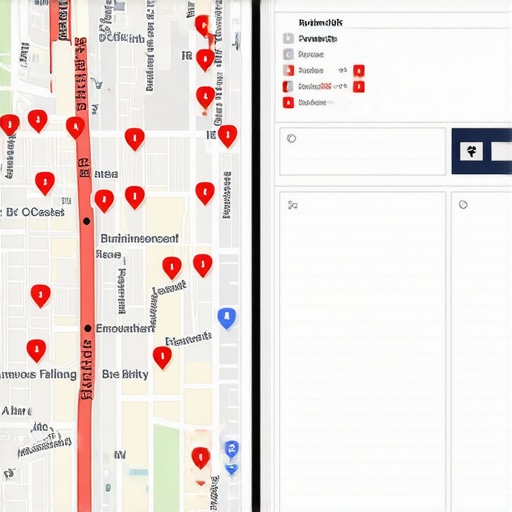
The Hidden Math Behind the Commuter Rule
The IRS is obsessed with ‘commuting.’ This is the distance from your home to your first business stop and from your last business stop back home. Apps are notoriously bad at identifying this shift. You need to manually flag these segments as personal. If you are struggling with messy entries, remember that why manual data entry is the biggest risk to your books often applies to mileage as much as it does to cash flow. By identifying the ‘anchor points’ of your day, you can strip away the fluff that gets flagged in an audit.
Upgrade Your Documentation with the Proper Tactic
To stay safe, use the tactic for categorizing meals and travel without a shoebox of receipt by attaching a digital note or a screen-grab of a meeting confirmation to the specific trip in your software. If you are driving a heavy-duty vehicle for work, you might even be eligible for more significant write-offs under specific tax codes. Ensure you know how to use section 179 for your business vehicle without getting audited before you finalize your vehicle expenses for the year. This level of detail transforms a simple map into a legal document that protects your livelihood.Most entrepreneurs believe that if their software says they are ‘in the green,’ they are safe. In my experience, the ‘set it and forget it’ mentality is exactly what leads to those frantic late-night emails to a professional. Everyone tells you that tax filing simplified is just about the right app, but I’ve seen more businesses fail because of ‘clean’ books that were fundamentally wrong than ‘messy’ ones that were honest. While tax filing efficiency is a great goal, efficiency without accuracy is just a faster way to get audited. The contrarian view I hold is that you should actually increase your manual oversight as you scale, not decrease it. As your revenue grows, the cost of a single miscategorized transaction in your automatic bank categorization grows exponentially. If a fifty dollar meal is mislabeled, it is a rounding error. If a fifty thousand dollar equipment lease is mislabeled as a direct expense instead of a depreciable asset, you have just created a massive liability.
The Myth of the Automated Tax Return
Take the S-Corp reasonable compensation trap. Most people think they can just pick a number that ‘feels right’ to lower their self-employment tax. However, a report by the Treasury Inspector General for Tax Administration (TIGTA) found that thousands of S-Corporation returns are flagged annually because officer compensation does not align with the actual value of the services provided. If you are paying yourself thirty thousand dollars while generating five hundred thousand in revenue, you are not being ‘smart’—you are being a target. You need to understand the truth about s corp reasonable compensation before the IRS defines it for you. This is why why your s corp salary might be too low for the IRS is a conversation you must have in July, not April. 
Why Your Financial Records Are Not a Scrapbook
The ‘Oops’ factor? It is assuming your bookkeeper knows exactly what your tax preparer needs without guidance. I used to think these two roles were interchangeable. They are not. Your bookkeeper records the past; your CPA strategies for the future. If why your bookkeeper and tax preparer need to talk is not a priority, you will end up with a balance sheet that makes no sense to an outside lender or the IRS. When you scale, you also need to look at top payroll management tips for growing businesses to ensure your compensation strategy stays compliant as you hire.
Can Your Current Salary Actually Trigger a Forensic Audit?
Yes, and it usually happens when your distributions drastically outweigh your W-2 wages. Many sophisticated owners try to hide behind ‘distributions’ to avoid payroll taxes, but this is a glaring red flag. Beyond just mileage, your entire tax strategy relies on the harmony between your bank feeds and your legal structure. Just because a transaction is in your ledger does not mean it belongs on a tax return. Have you ever fallen into this trap where you thought your automation had your back, only to find a glaring error months later? Let me know in the comments. We need to stop treating our books like a digital scrapbook and start seeing them as a defensive shield.I stopped treating my ledger like a passive record and started seeing it as a high-performance engine that needs a tune-up every single month. If you are just ‘checking in’ once a year, you aren’t running a business; you are managing a disaster in slow motion. The tech stack I use personally isn’t about fancy bells and whistles; it is about visibility. I rely heavily on cloud-based systems that allow for real-time collaboration because why your bookkeeper and tax preparer need to talk becomes painfully obvious when they are looking at two different versions of the truth. To keep the gears turning, I recommend a ‘hard close’ at the end of every month. This means no more entries for the previous month once the clock strikes midnight on the first. This discipline is the only way to ensure bookkeeping secrets every small business owner should know actually stick. If you don’t lock your periods, your data will drift, and by December, your profit and loss statement will be a work of fiction.
The Tech Stack That Actually Keeps Me Sane
For anyone scaling past the six-figure mark, you need to bridge the gap between your bank and your ledger without losing your mind. I use automated feeds, but I have a strict rule: every single automated transaction must be manually approved by a human eye. This is the only way to avoid how to fix duplicate transactions in your cloud ledger later on. I also insist on a clean foundation. If your categories are a mess, your data is useless. I spent three days last year cleaning up my chart of accounts for better clarity, and it was the best ROI I’ve had all year. It allowed me to see exactly where my margins were shrinking. This level of detail is a requirement, not a luxury. According to the IRS Revenue Procedure 98-25, taxpayers using computerized accounting systems must retain documentation that allows for a clear trail from summary totals back to source documents. If your ‘cool app’ doesn’t do that, it’s a liability. 
How do I keep my financial records clean as I scale?
The secret isn’t more software; it’s more process. As you grow, you should be implementing why you should audit your own books every quarter as a non-negotiable meeting on your calendar. I personally look for ‘ghost entries’—subscriptions I forgot to cancel or vendor overcharges that look like standard bills. When you hire, this becomes even more critical. You need payroll strategies to streamline business operations this year that include a second-set-of-eyes protocol. Never let the person who runs payroll be the same person who reconciles the bank account. That is a recipe for internal theft. Instead, focus on top payroll management tips for growing businesses in 2025 that prioritize security and audit trails over mere convenience.
Where the Future of Your Ledger is Heading
I predict that within the next twenty-four months, ‘tax season’ will effectively disappear for smart business owners. We are moving toward a world of real-time tax liability tracking. Imagine knowing your exact tax bill on a Tuesday afternoon in July. That is the level of tax filing efficiency in 2025 we are aiming for. The trend is shifting away from retrospective ‘reporting’ and toward proactive ‘positioning.’ If you aren’t using your data to make weekly pivots, you are leaving money on the table. Stop being a historian of your own business and start being the architect. Go into your accounting software today and delete every category in your Chart of Accounts that hasn’t been used in twelve months—it’s the first step toward the clarity you actually need.
What I Finally Realized About Defensible Record Keeping
It isn’t about being perfect; it’s about being explainable. I used to think the app was my savior, but the real power came from the ‘Why’ column in my spreadsheet. I realized that the real difference between a bookkeeper and a strategic partner is that a partner asks about the business context, while a bookkeeper just files the receipt. Always remember: if you can’t explain a transaction to a third grader, you probably can’t explain it to an IRS agent.
Another lightbulb moment was recognizing that my ‘automated’ system was actually a ‘semi-automated’ system. The technology handles the data entry, but the human handles the classification. If you remove the human, you are just automating your own audit risk. I stopped looking for the ‘perfect app’ and started looking for a better routine.
Tools and Resources for Your Proactive Strategy
To get your house in order, I highly recommend looking into tools that bridge the gap between your bank and your brain. Don’t just settle for standard bank feeds; use software that allows for granular tagging. I trust resources that emphasize tax filing simplified through preparation rather than just fancy software. For mileage, apps like MileIQ or Everlance are great, but only if you sync them with a dedicated business calendar like Google Calendar or Outlook to provide the ‘why’. Check out IRS Publication 463 for the actual rules on travel, and make sure why you should audit your own books every quarter becomes your new operational mantra.
Take Control of Your Financial Future Today
You have the power to turn your financial records from a source of anxiety into a competitive advantage. By applying these bookkeeping secrets every small business owner should know, you are building a fortress around your assets. Don’t wait for tax season to find out you’ve been doing it wrong. Start today, and make sure why your bookkeeper and tax preparer need to talk is the first conversation you facilitate this week. Have you ever found a major mistake in your ‘automated’ records just before filing? Let me know in the comments below!