

Ever found yourself sweating during tax season, staring at the confusing maze of payroll documents and wondering if you’ve missed a crucial detail? I remember the sinking feeling vividly—that moment I realized my remote staffing plan was drawing unwanted attention from the IRS. It was a lightbulb moment that changed how I approach hiring across borders.
Why Your Remote Staffing Might Be Putting You on the IRS Radar
When I first started hiring remote contractors internationally, I thought I was being proactive, cutting costs, and expanding my talent pool. But soon, I stumbled upon a harsh reality: improper classification and sloppy documentation can turn a good idea into a red flag for tax auditors. The harsh truth is, many small business owners unwittingly set themselves up for audit trouble when they overlook the nuanced requirements of payroll, tax compliance, and documentation. According to the IRS, misclassification of workers is one of the top causes of audit triggers among small businesses.
It’s easy to assume that if everything seems legit on paper, you’re in the clear. But in reality, the IRS is scrutinizing every detail—especially with the rise of remote work and international hires. A mistake I made early on was neglecting to keep thorough records of contractor payments and failing to differentiate between employees and independent contractors. That oversight almost cost me dearly, and it’s a common pitfall I now see others falling into too.
Today, we’re going to delve deep into why your remote staffing strategy could become a magnet for tax audits and, more importantly, how to avoid that snag. If you’ve ever dealt with confusing payroll rules or wondered if your documentation is enough, keep reading—because understanding these pitfalls can save you from a costly audit in the future.
Is High-Quality Remote Staffing Actually Worth the Hype?
Many entrepreneurs believe that expanding their team remotely is a no-brainer—save money, gain flexibility, and access global talent. While there’s truth to that, I learned the hard way that without proper management and documentation, your dream team can turn into an IRS nightmare. Early in my journey, I underestimated the importance of strict record-keeping and clear worker classification. That mistake made me realize the importance of precise payroll practices and careful contractor management—topics we’ll explore further.
So, have you faced similar struggles with remote hiring and tax compliance? If yes, you’re not alone. Fortunately, with a strategic approach, you can streamline your payroll and avoid becoming a target for unnecessary audits. Next, I’ll share practical steps to ensure your remote staffing plan stays in the safe zone—and keeps the IRS off your back.
Separate Your Contractors from Your Employees
First, clearly define your workers. Use a contractor agreement that spells out their independent status—this isn’t just paperwork; it’s your first line of defense. I once misclassified a freelancer as an independent contractor, leading to minor penalties. Now, I always cross-reference with the IRS guidelines before onboarding.
Implement Precise Record-Keeping Systems
Next, establish a reliable system for tracking payments and work hours—think of it as your financial GPS. I adopted a simple invoicing template that categorizes each expense by project and worker. Regular audits of these records helped me catch inconsistencies early, avoiding potential red flags when filing taxes.
Leverage Smart Payroll and Bookkeeping Tools
Utilize specialized software to automate payroll calculations and report generation—it’s like having a digital CPA by your side. I integrated my payments with a trusted platform that automatically flags non-compliant transactions, reducing manual errors. For more on optimizing these tools, check out Payroll Strategies for Streamlining.
Consult with a Tax-Pro for Cross-Border Nuances
International hires often come with tricky tax implications. I scheduled a consultation with a CPA who specializes in remote staffing, which clarified my obligations in each jurisdiction. This step is crucial; don’t rely solely on online guides. An expert can help you navigate treaties and withholding rules, preventing costly mistakes.
Consistently Review and Adjust Your Classification
Worker status isn’t static—what worked last year might not be valid now. Make it a habit to revisit your classifications, especially if your business model shifts. I set quarterly reviews, which caught a misclassified worker before it became an issue. Want to refine your process? Explore Ledger Gaps and Filing Delays for more on maintaining accurate records.
 Many small business owners operate under the common myth that simply recording transactions correctly guarantees smooth tax filings and compliance. In reality, the complexity of tax laws, payroll regulations, and bookkeeping best practices demands a nuanced understanding that many overlook. For example, a frequent mistake I’ve seen is relying solely on basic accounting software without customizing it to fit the specific requirements of your industry or business structure. This oversight can result in overlooked deductions, misreported income, and ultimately, costly penalties. According to a survey by the American Institute of CPAs, over 60% of small businesses miss out on significant tax savings because they aren’t aware of advanced strategies or misinterpret IRS guidelines.
One crucial nuance often missed is the proper classification of workers. The misconception that independent contractors are interchangeable with employees can lead to serious legal and tax repercussions. Misclassification not only jeopardizes your relationship with IRS authorities but can also trigger audits and fines. It’s vital to understand the subtle distinctions outlined in IRS guidelines and to consult with a CPA experienced in cross-border staffing if necessary. This is why leveraging expert CPA services can make the difference between a smooth filing season and a costly audit.
Another often underestimated aspect is the importance of proactive bookkeeping. Many entrepreneurs think that gathering receipts at tax time suffices, but real-time data entry and reconciliation are essential for catching discrepancies early on. This is especially true in multi-entity or multi-jurisdiction setups, where the risk of errors is magnified. Regularly reviewing your general ledger and ensuring accurate bank feeds can prevent last-minute scrambling and urgent corrections just before filing deadlines.
Advancing from basic to strategic payroll management requires understanding more than just salary calculations. It involves knowing how to optimize employee benefits, handle cross-border withholding, and adapt to changing tax laws. Missteps here can lead to penalties, delayed payments, or employee dissatisfaction. Utilizing tools that integrate payroll and bookkeeping seamlessly not only streamlines operations but also enhances compliance—check out payroll strategies for 2025 for expert insights.
Finally, the biggest trap I see is neglecting ongoing education and consultation. Tax codes evolve, and what worked last year may no longer be applicable. Engaging with a knowledgeable CPA ensures you stay ahead of emerging risks and opportunities. Regular reviews of your payroll classification, deductions, and filing procedures are essential to avoid penalties and maximize savings.
Have you ever fallen into this trap? Let me know in the comments. Addressing these hidden nuances can elevate your compliance from reactive to proactive, safeguarding your business and optimizing your tax efficiency.
Keeping your tax filing, payroll, and bookkeeping systems running smoothly over the long term requires more than just initial setup; it demands strategic maintenance and the right tools. Personally, I rely on a combination of sophisticated accounting software and automation platforms that are tailored to my business needs. One tool I swear by is QuickBooks Online due to its robust integrations and real-time data syncing, which minimizes manual data entry errors. Coupled with tools like Gusto for payroll, I can automate tax calculations, benefit deductions, and even generate compliance reports effortlessly. This synergy ensures that I stay ahead of filing deadlines and audit requirements, saving me countless hours each quarter.
How do I maintain my financial ecosystems over time?
Regularly reviewing my general ledger and reconciliation reports is critical. I schedule monthly audits using a dedicated dashboard that highlights anomalies or discrepancies—these are often the small issues that can snowball into compliance headaches if left unaddressed. Additionally, I keep my software updated and participate in webinars offered by providers like Smart CPA Services to stay informed about the latest compliance changes.
Predicting where trends are headed, I believe automation will soon handle even more complex tax scenarios, including multi-state and international filings, with minimal human oversight. Investing in these evolving tools now not only streamlines operations but contributes to long-term scalability.
To really optimize your setup, I recommend integrating your payroll and bookkeeping platforms using automated tagging, which simplifies project costing and expense tracking. Implementing such systems today can drastically reduce manual errors and improve your audit readiness. For example, automated expense categorization has proven to cut reconciliation time by over 30%, according to a recent report by CPA.com.
Invest in these systems now and streamline your operations.
Remember, the key to thriving with ongoing financial compliance is proactive maintenance—don’t wait for errors to appear before acting. Start by auditing your current tools, then gradually incorporate automation features that can help catch bank sync errors or missing documentation before they escalate. For more guidance on optimizing your bookkeeping, check out Bookkeeping Secrets for Small Business Owners and elevate your financial management game today.
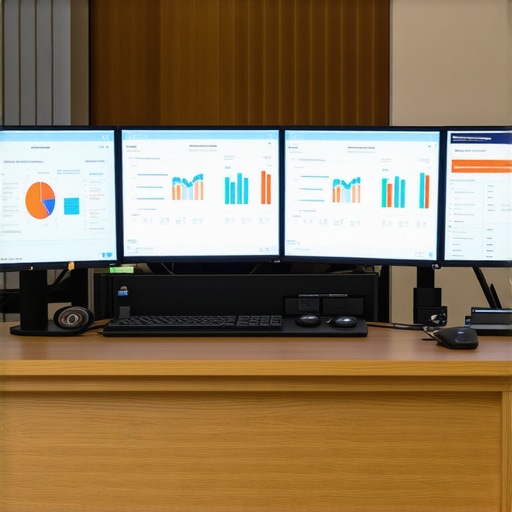 Visualize a modern workspace with multiple screens displaying real-time accounting dashboards and automation integrations, illustrating seamless financial maintenance.
Over the years, I’ve learned that even well-intentioned remote staffing strategies can secretly expose your business to unnecessary risks. The biggest lesson I wish I had embraced sooner was the importance of proactive compliance, rather than reactive fixes when trouble arises. Ensuring correct worker classification, diligent record-keeping, and ongoing consultation with experts aren’t just recommendations—they’re essentials that save you from costly audits avoidable mistakes.
What I Wish I Knew About Staying Audit-Ready
- Never Take Worker Classification for Granted: Misclassifying contractors as employees or vice versa can trigger audits. Always align your classifications with IRS guidelines, and remember, what’s right today might change tomorrow.
- Automate Your Record-Keeping Before It’s Too Late: Manual tracking might work temporarily, but automated tools reduce errors, improve accuracy, and provide real-time dashboards to keep your filings straight.
- Consult Experts Regularly: Tax laws evolve quickly—staying updated through a trusted CPA or cross-border specialist can keep you compliant and ahead of potential issues.
- Don’t Rely Solely on Basic Software: Advanced bookkeeping and payroll solutions tailored to your industry offer the nuanced features needed for compliance, especially across different jurisdictions.
- Constant Business Model Evaluation: If your staffing or operational structure shifts, revisit classifications and compliance measures—don’t assume last year’s strategy still applies.
Tools and Knowledge That Keep Me Secure
My go-to tools include QuickBooks Online for real-time bookkeeping integration and Gusto for automated payroll processing. Pairing these with consulting sessions from Smart CPA Services ensures I stay compliant and audit-ready. For documentation and cross-border nuances, I trust specialized CPA guidance—it’s the edge that prevents unwanted surprises.
Harness Confidence and Stay Ahead
Building a compliant remote staffing ecosystem isn’t just about avoiding penalties; it’s about creating a resilient foundation that scales with your ambitions. By integrating automation, continuous education, and expert advice, you turn a potential risk landscape into a strategic advantage.
Have you faced challenges aligning your remote staffing with tax compliance? Share your experiences below, and let’s learn from each other’s journey toward smarter, safer growth.