

I still remember the sinking feeling in my stomach three years ago when my accountant sat me down and asked a simple question: “Where is the receipt for the five thousand dollar laptop donation you made in July?” I felt my face flush. I had the thank-you email, sure, but I hadn’t realized that the IRS requires much more than a digital high-five to let you keep those tax savings. I spent three days digging through trash folders and calling non-profits, feeling like a total failure. That was my lightbulb moment. I realized that being generous as a business owner is only half the battle; the other half is proving it to the penny. Today, I am going to show you how to turn your business’s generosity into a bulletproof tax strategy without spending hours on admin work.
Stop Losing Your Tax Breaks to Messy Paperwork
If you are like I was, you probably think that a quick check or a Venmo payment is enough. It isn’t. Without a solid system, you are essentially leaving money on the table that could be reinvested into your growth. Today, I want to walk you through the system I built so you never have to scramble like I did. We are going to look at the exact records you need to keep to ensure your tax filing is simplified and your deductions are safe. We will cover everything from cash donations to those tricky non-cash assets that usually cause the most headaches during an audit. Just like learning bookkeeping secrets for your daily expenses, mastering your charitable records is a non-negotiable skill for any serious founder. Listen, I made the mistake of thinking my intent was enough, but the government requires proof. I missed out on nearly two thousand dollars in deductions that year simply because I didn’t have the right letters from the charities I supported. It was a painful, expensive lesson.
Is the IRS really checking my small donations?
The short answer is a resounding yes. According to the IRS in Publication 526, you cannot deduct any single contribution of two hundred and fifty dollars or more unless you obtain a contemporaneous written acknowledgment from the donee organization. I made the classic mistake of thinking my bank statement was enough. It wasn’t. The auditor doesn’t care how much you meant to help; they care about the formal paperwork. If you’ve ever felt that cold sweat when looking at your records, have you ever actually lost a deduction because you couldn’t find a receipt? I would love to hear your story so we can fix this together. This is just as critical as knowing how to document business meals without a shoebox full of paper. If you don’t have a process, you’re just gambling with your cash flow and your peace of mind.
Create a Paper Trail That Even an Auditor Would Love
The secret isn’t just keeping receipts—it’s keeping the right ones at the right time. You need a system that integrates with your workflow so it happens automatically. I used to think I could handle it all at the end of the year, but that is a recipe for disaster. Whether you are using professional CPA services or handling things yourself, your documentation needs to be contemporaneous. That is just a fancy tax word for do it now, not later. When I started treating my donations with the same rigor as my payroll management, my tax season transformed from a nightmare into a victory lap. You want to make sure your records include the name of the organization, the date, the amount, and a statement of whether you received any goods or services in exchange for the gift. Without that last part, the whole deduction could be disqualified.
Capture the Proof Before the Ink Fades
Think of your donation documentation like a dashboard camera for your business. You don’t hope you’ll remember the details of an accident six months later; you record it in real-time. The same applies to your generosity. The moment you hand over a check or drop off equipment, you need to digitize that record. I used to let receipts pile up in my glove box, but thermal paper fades, and my memory fades even faster. Now, I use a mobile scanning app the second I leave the non-profit’s office. This simple habit is the cornerstone of how I keep my tax filing simplified and my stress levels low. If you wait until tax season, you aren’t documenting; you’re forensic accounting, and that is a much more expensive hobby.

The 250 Dollar Paperwork Trap You Need to Avoid
There is a specific line in the sand the IRS draws at $250. Below this, a bank record might suffice, but once you cross that threshold, the rules change completely. You need a formal letter from the charity that includes a very specific phrase: ‘No goods or services were provided in exchange for this contribution.’ I once lost a hefty deduction for a silent auction item because the receipt didn’t specify the fair market value of the dinner I ate versus the donation I made. It’s like trying to document business meals without a shoebox of receipts; if the breakdown isn’t clear, the auditor will simply disqualify the whole thing. Don’t let a missing sentence cost you thousands in tax savings.
Separate Your Personal Giving from Your Business Ledger
One of the fastest ways to trigger an audit is ‘commingling’ your charity work. I remember a year where I wrote a check for a local youth soccer team from my personal account, then tried to claim it as a business marketing expense. My CPA caught it, but it taught me a valuable lesson. If the business is giving, the money must come from the business account. Mixing these funds creates a mess that looks suspicious to the IRS, much like why using personal credit cards for business is a tax nightmare. Keep your lanes clear. If you want the business to get the credit, use the business card, and ensure the receipt is made out to your LLC or Corporation, not you personally.
The Move to Digitize Your Physical Assets
Donating physical items—like my old office laptops—is a documentation minefield. I once donated five high-end monitors and thought a grainy photo was enough. I was wrong. For non-cash items over $500, you need to file Form 8283. If the value exceeds $5,000, you often need a qualified appraisal. I had to go back to the charity three months later to get them to sign off on the condition of the gear, which was embarrassing and unprofessional. Now, I include a detailed inventory list with every physical donation, which makes the checklist for closing your books in record time a breeze. Treat your donated assets with the same rigor you use for payroll management; if you can’t track the value, you can’t claim the win.
Sync Your Records to Your Accounting Software Immediately
The final piece of the puzzle is integration. Your donation records shouldn’t live in a separate folder; they should be attached directly to the transaction in your ledger. When I made how to transition from a spreadsheet to professional software a priority, my charitable tracking became automated. By attaching the PDF of the acknowledgment letter to the bank transaction in my software, I created a permanent link. This means if an auditor ever asks about that specific five-thousand-dollar gift, I can pull up the proof in two clicks. This level of organization is the same ‘secret sauce’ I use for bookkeeping secrets that keep my cash flow transparent and my mind at ease.
While I am a huge advocate for digital record-keeping, there is a dangerous myth circulating in the entrepreneurial world: the idea that software replaces your judgment. In my experience, the ‘set it and forget it’ mindset is exactly what gets founders into trouble. You might think your automated scanner is capturing everything perfectly, but why your automated sales tax tool still requires human eyes is the same reason your charitable records need a manual double-check. Software doesn’t know if a receipt is for a personal donation or a business marketing sponsorship; it just sees a dollar amount. If you rely solely on the machine, you are essentially asking for a mismatch that the IRS will flag during a routine cross-check.
The Automation Trap No One Tells You About
The ‘oops’ factor usually hits when a founder assumes that every ‘non-profit’ transaction is automatically deductible. I once worked with a client who had automated their giving, but several of their ‘donations’ were actually to 501(c)(4) social welfare organizations, which are generally not tax-deductible. Because they didn’t have a human review the tax-exempt status of the donee, they over-claimed their deductions by eight thousand dollars. This is why tax filing is simplified only when you combine great tech with professional oversight. Have you ever fallen into this trap of assuming a local club was a deductible charity? Let me know in the comments below.
Stop Your S-Corp Generosity from Triggering an Audit
If you are a business owner who has utilized the secret to reducing self-employment taxes via S-corp election, you have to be even more careful. A common, sophisticated mistake occurs when you donate from the corporation but don’t account for your ‘basis.’ If your business has a loss for the year, your ability to deduct that charitable gift might be suspended. This nuance is often ignored by general advice blogs, but it’s a critical piece of why your S-Corp distribution strategy is triggering red flags. The IRS looks for owners who try to pass through large deductions without having enough ‘skin in the game’ (basis) to support them. Treating your business like a personal piggy bank for charity, without checking your equity levels, is a fast track to a desk audit.

Can you actually write off the hours you spend volunteering?
This is the question I get asked most by high-impact founders. The short, painful answer is no. You cannot deduct the value of your time, even if you normally bill out at five hundred dollars an hour. However, the advanced strategy lies in the expenses *surrounding* that time. While your labor is ‘free’ in the eyes of the IRS, the mileage, the supplies you bought, and even the specialized uniforms you wear for the non-profit are fair game. Much like the truth about paying your kids to lower your tax bracket, the IRS allows you to shift costs if you have the right trail. According to a study by the Tax Foundation, the IRS has become significantly more aggressive in demanding contemporaneous logs for these unreimbursed expenses. If you spent forty hours building a website for a charity, you can’t deduct the hours, but you can certainly deduct the hosting fees and the travel to their office, provided you don’t fall for the trap of missing the documentation. If you are feeling overwhelmed by these nuances, it might be time to contact us and let a professional clean up the mess before tax season arrives.
I have learned that the biggest threat to your tax deductions isn’t actually an aggressive auditor—it is your own busy schedule. When you are focused on scaling, the last thing you want to do is hunt for a buried PDF or a faded receipt. I personally use Adobe Scan because its OCR (Optical Character Recognition) is significantly more accurate than standard camera apps; it means I can search my entire cloud drive for the word ‘Habitat for Humanity’ and find the exact acknowledgment letter in three seconds. This is a critical component of the fast way to audit your own books for common errors without sacrificing your entire weekend to a spreadsheet. Once the scan is clear, I immediately upload it to a dedicated ‘Tax Evidence’ folder that my accounting team can access in real-time.
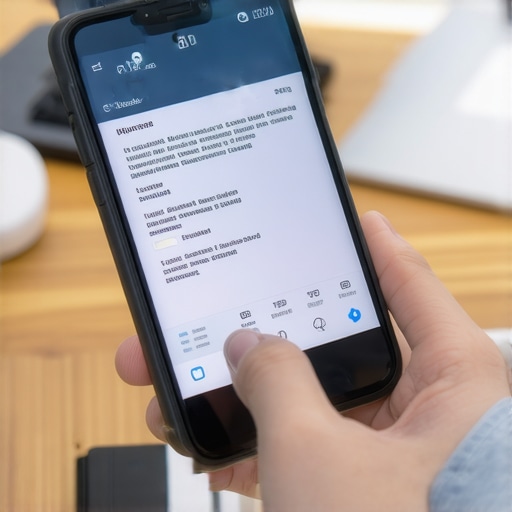
As your business grows, you will eventually need to sync your payroll with your general ledger automatically to ensure that even the fringe benefits you offer your staff—like corporate matching for their charitable contributions—don’t get lost in the shuffle. I predict that by 2026, the IRS will shift toward a real-time reporting model for large non-cash donations, which will make your digital paper trail even more vital than it is today. If you are still relying on a folder in your email inbox, you are already behind the curve.
How do I maintain clean records over time?
The secret to long-term success is what I call the ‘Sunday Sweep.’ Every Sunday evening, I take exactly ten minutes to reconcile any ‘loose’ transactions that occurred during the week. If you are in the process of learning how to transition your business from cash to accrual reporting, you need to know exactly when a liability was incurred, not just when the cash left the bank. This habit ensures that no donation letter goes missing for more than seven days. For the coming year, you should look to maximize your tax filing efficiency in 2025-expert cpa tips by setting up a dedicated ‘Tax-Charity’ vault in your cloud storage and granting your CPA ‘view-only’ access from day one. This removes the friction of the ‘end-of-year’ data dump.
Don’t just take my word for it. The AICPA’s Journal of Accountancy emphasizes that ‘digital-first’ documentation is no longer a luxury but a requirement for businesses looking to survive multi-year audit lookbacks. The standard for legibility is higher than ever, and a blurry photo from a smartphone just won’t cut it anymore. Stop guessing and start building a repository that actually protects your cash flow. I challenge you to try the ‘Sunday Sweep’ this weekend—just ten minutes of focused filing—and see how much lighter your mental load feels on Monday morning.
What I Learned After the IRS Questioned My Generosity
Reflecting on my own journey, I have realized that charity is an investment in your community, but documentation is an investment in your business survival. A simple thank-you card or a digital shout-out on social media is not a receipt in the eyes of the government. If your acknowledgment doesn’t explicitly state ‘No goods or services were provided,’ it is essentially just a souvenir, not a tax document. I also learned the hard way that donating to a 501(c)(4) social welfare organization feels great but does absolutely nothing to lower your tax bill; always verify the 501(c)(3) status before you write the check. Finally, remember that tax filing is simplified only when you stop viewing documentation as a chore and start viewing it as a shield for your hard-earned profits. It is much easier to scan a paper today than it is to defend an empty folder three years from now.
The Tools That Keep My Ledger Clean and My Mind Calm
I don’t rely on luck to stay organized; I rely on a specific stack of resources that remove the friction from the process. First, I use Adobe Scan for its superior OCR capabilities, which turns my physical receipts into searchable, professional PDFs. Second, I keep IRS Publication 526 bookmarked as my ‘donation bible’ to quickly check the rules for non-cash contributions without guessing. Third, I maintain a dedicated ‘Tax Evidence’ vault in Dropbox that is shared with my accounting team, which is a major part of the secret to reducing your year-end audit prep time. Lastly, having access to experienced CPA services is the only way to ensure that high-level strategies, like donating appreciated stock, are handled correctly. If you find yourself stuck, don’t hesitate to contact us for a professional review of your current systems.
Build a Legacy Without the Administrative Headache
You started your business to solve problems and make a difference, not to get lost in a sea of spreadsheets and faded thermal paper. By implementing the ‘Sunday Sweep’ and digitizing your records in real-time, you ensure that your business’s legacy is one of impact rather than one of audit anxiety. You have the power to maximize your tax filing efficiency in 2025-expert cpa tips by simply committing to a digital-first workflow today. Let your generosity be a source of pride, and let your bulletproof records be the proof that you ran your business with excellence. Have you ever found yourself scrambling to find a receipt at the last minute during tax season? Share your story in the comments below!