

I remember the exact moment I realized my business was flying blind. It was 2 AM, two days before my tax filing was due, and I could not tell you if I had made five thousand dollars or lost ten thousand the previous month. My Chart of Accounts (COA) looked like a digital junk drawer—bursting with “Ask My Accountant” entries and redundant categories for every single vendor I had ever paid. I thought I was being detailed, but I was actually just burying the truth. If you feel like your Profit and Loss statement is more of a riddle than a financial report, you are not alone. We are going to roll up our sleeves and fix that today, one category at a time.
Your Ledger is a Map Not a Junk Drawer
The trouble with a cluttered COA is not just that it is ugly; it is that it fuels bad business decisions. When you finally stop letting your bookkeeper categorize miscellaneous expenses and actually look at the data, you often find your margins are way thinner than you suspected. Years ago, I made the classic mistake of creating a new account for every single software tool I used. Zoom had its own line. Slack had its own line. Pretty soon, my report was ten pages long and told me absolutely nothing. According to a study by U.S. Bank, a staggering 82% of small businesses fail because of poor cash flow management, which almost always starts with a lack of financial clarity. You simply cannot manage what you cannot see. We are going to start by properly categorizing software subscriptions and other overhead to get your numbers back under control.
Do I actually need a degree to fix this?
You might be worried that you will accidentally break something and end up with a massive bill for CPA services to untangle the mess. I felt the same way until I realized that an accountant is only as good as the data I give them. While professional help is vital for the heavy lifting, you are the one in the driver’s seat of your daily operations. Have you ever stared at your balance sheet and felt like you were reading a foreign language? Drop a comment and tell me if you have been there, because that feeling of being overwhelmed is the biggest hurdle to a profitable business. Today, we are going to walk through how to clean up a year of messy bookkeeping without having to start from scratch. We want to ensure your P&L statement actually matches your tax return, giving you a foundation that finally makes sense.First, we need to gut the house. You cannot organize a room if you are still bringing in more clutter. Cleaning your Chart of Accounts (COA) is not about perfection; it is about building a lens that lets you see where your money is actually going.
Hunt Down the Ghost Accounts First
Your first move is a ruthless audit. I recommend you audit your own books in 30 minutes or less by looking for duplicates. If you see ‘Travel,’ ‘Travel Expenses,’ and ‘Airfare’ as separate parent accounts, you are essentially creating three different languages for the same story. I once helped a client who had four different accounts for their payroll management expenses—one for the net pay, one for the tax, and two for different platforms they had used years ago. It was a nightmare. We merged them into one clean header, and suddenly, they realized they were overpaying for workers’ comp because the data was finally visible in one spot. This is exactly why you need to identify ghost assets on your depreciation table as well; if an asset doesn’t exist in your office, it shouldn’t exist on your ledger. 
Merge Your Way to a One-Page P&L
The goal is density, not length. Think of your Profit and Loss statement like a dashboard on a car. You do not need a separate dial for every spark plug; you just need to know if the engine is running hot. I remember a specific July where I spent six hours trying to reconcile Stripe fees without losing my mind because I had split them by product type. It was a massive waste of time. Now, I group all merchant fees into one bucket. This simplifies things when it comes time for tax filing. You should also properly categorize software subscriptions under a single ‘Dues and Subscriptions’ umbrella. This consolidation makes it much easier to see if your ‘hidden’ costs are eating your revenue.
Fix Your Bank Feeds Before They Break You
Most owners rely on automation, but why automated expense categorizing is failing your books is usually due to bad software ‘rules.’ If your software sees ‘Amazon’ and automatically puts it in ‘Office Supplies,’ you might be missing thousands in inventory or cost of goods sold. I once saw a founder lose $15,000 in deductions because their bank feed mislabeled a major equipment purchase as a simple repair. You have to fix the data gap by reviewing every transaction manually for one month. It sounds tedious, but it is the only way to ensure your bookkeeping secrets actually serve your growth. Use this time to properly document travel deductions as they happen, rather than playing detective next April. If you have been paying employees through Venmo or Zelle, stop immediately and move those into a formal system like those found in payroll strategies to streamline business operations to avoid the ultimate audit headache.Most people will tell you that the more granular your bookkeeping is, the better. I am here to tell you that is a flat-out lie that leads to analysis paralysis. In my years of providing CPA services, I have seen multimillion-dollar companies nearly collapse because they could not see the forest for the trees. They had thousands of sub-accounts but no clear view of their actual burn rate. The real difference between a bookkeeper and a strategic partner is that the latter knows when to aggregate data to reveal the story behind the numbers. When you over-categorize, you create noise, and noise is where financial leakage happens.
Stop Playing Guessing Games with Your S-Corp Salary
One of the most dangerous traps for growing businesses is the shift in entity structure. Many founders rush into the tax consequences of switching from a sole prop to an S-corp without understanding the IRS’s favorite weapon: ‘Reasonable Compensation.’ I see it all the time—owners taking a tiny salary to avoid self-employment taxes while pulling massive distributions. This is an immediate audit trigger. According to the AICPA, the IRS has significantly increased its focus on S-corp officer compensation to ensure owners aren’t dodging their fair share of social security and medicare taxes. If you are setting up new S-corp payroll, you cannot just pick a number out of a hat. You need to base it on actual data for your role and region, or you risk your S-corp salary being flagged as too low. 
Is your ‘reasonable compensation’ actually just a red flag for an audit?
It is a question that keeps many founders up at night. The nuance lies in the ‘facts and circumstances’ test the IRS uses. If you are a CEO but your salary is lower than your administrative assistant’s, you are inviting trouble. This is why you need to dig into the truth about S-corp reasonable compensation before you sign your next return. Have you ever fallen into this trap of underpaying yourself to save on taxes? Let me know in the comments, because this mistake often costs ten times more in penalties than the initial tax savings.
The Accrual Trap That Bleeds Your Cash Flow
Another common advanced mistake is failing to understand why your accrued liabilities do not match your actual bills. You might see a ‘profit’ on your screen, but your bank account is empty. This ‘paper profit’ often comes from a failure to reconcile the timing of when you owe money versus when you pay it. This is a core part of bookkeeping secrets that high-level firms use to maintain liquidity. If you do not master this, you will face payroll management hurdles that can sink a healthy company during a slow month. Before your next tax filing, ensure you have a firm grasp on your actual cash position, not just what your software says. To truly protect yourself, look at payroll strategies to streamline business operations that integrate your tax liabilities in real-time, so you aren’t hit with a surprise bill you can’t afford.I used to think I could just ‘catch up’ on my books every December. That was a recipe for a massive tax bill I hadn’t prepared for and a week of sleepless nights. To move from surviving to scaling, you need a workflow that resists financial entropy. The first step is to keep personal and business expenses separated for good by using a partitioned banking system. I personally use a four-account structure: one for operating expenses, one for owner’s pay, one for profit, and most importantly, one for taxes. This is why your business bank account structure matters for taxes—it forces you to set aside money before you can ever spend it.
Build a Workflow That Actually Sticks
Consistency beats intensity every single time. If you wait until the end of the quarter, you’ve already lost the battle against the ‘data gap.’ I recommend setting a ‘Finance Friday’ ritual where you spend just twenty minutes reviewing your bank feed. This prevents the backlog that leads to errors, because why manual data entry is the biggest risk to your books is that human memory is incredibly fallible after thirty days. When you see a charge from ‘Amazon’ three months later, you won’t remember if it was for a new office chair or a gift for your niece. 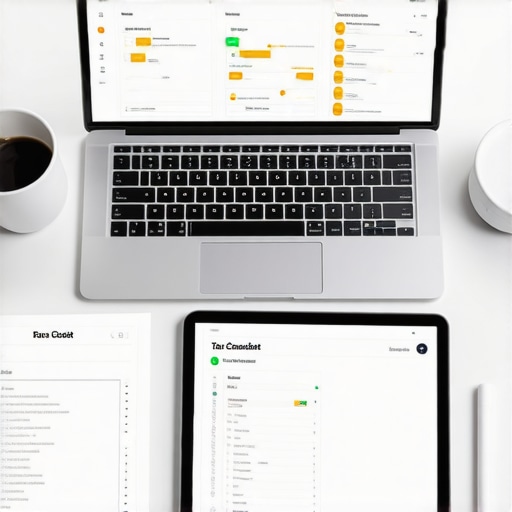
Ditch the Spreadsheets for Your Fixed Assets
If you are still using a manual tracker for your equipment, you are inviting a headache during your next tax filing. You should stop using Excel for your fixed asset tracking and move to an integrated module within your accounting software. This ensures your depreciation schedules are calculated automatically, rather than relying on a formula you wrote three years ago that might be broken. According to a report in the Journal of Accountancy, firms that utilize integrated cloud-based ecosystems reduce reporting errors by nearly 40% compared to those using fragmented manual systems. This accuracy is what allows you to make big moves, like hiring or investing, with total confidence.
How do I keep my books clean for the long haul?
The secret is the quarterly self-audit. You should audit your own books every quarter to spot trends before they become catastrophes. This is the move that cuts your quarterly estimated tax anxiety entirely. When you have a clear picture of your net income every 90 days, you stop wondering why your quarterly tax estimates are always off. Looking ahead, I predict we are moving toward a ‘self-healing’ ledger. AI tools are already beginning to flag anomalies in real-time—like a utility bill that is 20% higher than average—before the bill is even paid. To get ahead of this trend, try this one tip: Create a separate ‘Tax Savings’ high-yield savings account today and automate a transfer of 25% of every deposit. It’s the single most effective way to protect your cash flow.
After cleaning up the mess, the biggest challenge is not falling back into old habits. I used to think a clean ledger was a once-a-year task for my accountant, but it is actually a daily mindset. If you keep your data clean, you stop fearing your numbers and start using them as a weapon for growth.
Hard Truths About Your Ledger I Learned the Hard Way
Reflecting on years of financial management, a few lightbulb moments changed everything for me. First, over-categorization is a form of procrastination. When you spend three hours deciding if a notebook is an ‘office supply’ or a ‘printing expense,’ you are losing focus on revenue-generating activities. One of the most important bookkeeping secrets I have embraced is that grouping similar costs into broad, meaningful buckets is almost always better than micro-managing pennies. Second, your ‘Miscellaneous’ account is where tax deductions go to die. If you cannot name it, the IRS probably will not let you deduct it. Finally, a clean Chart of Accounts is not for your accountant; it is for your own peace of mind. When your reports make sense, your anxiety levels drop instantly.
Build a Toolkit for Long-Term Profitability
To keep your finances streamlined, you need more than just software; you need a system. I rely on a handful of resources to stay ahead of the curve. For payroll, I look toward payroll strategies to streamline business operations that automate the heavy lifting. I also recommend keeping a physical or digital copy of the checklist for every business owner before their first CPA meeting to ensure every conversation with your advisor is high-value. These tools move you from being a passive observer of your bank account to an active architect of your wealth. Investing in CPA services that prioritize strategy over just data entry is the best investment you can make for your future self.
#IMAGE_PLACEHOLDER_E#
Take Control of Your Financial Narrative Today
You have worked too hard to let a messy ledger hold you back. By simplifying your categories and reclaiming your time, you are setting the stage for a much easier tax filing season next year. Do not be afraid to gut the system and start fresh if it is no longer serving you. Your business deserves a foundation of clarity, not a junk drawer of data. What is the one ‘mystery’ category on your Profit and Loss statement that always confuses you? Let me know in the comments below!