
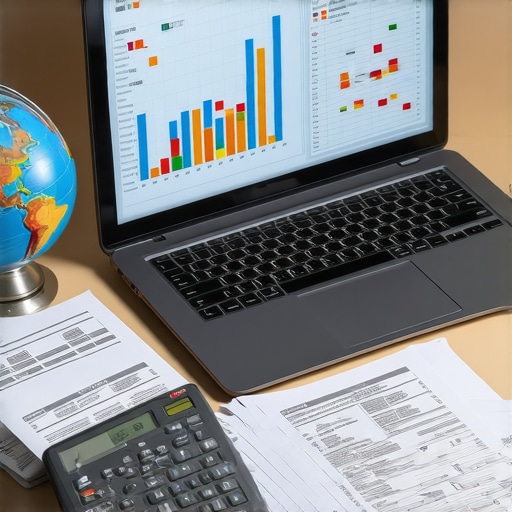
I remember the day vividly. I was sipping lukewarm coffee, feeling pretty smug about a massive ‘tax-free’ online haul of office equipment from a vendor across the country. Then, my accountant called. He didn’t sound happy. ‘You know you still owe the state for those monitors, right?’ My stomach dropped. I thought I had saved hundreds; instead, I had just created a messy trail of unpaid use tax that could have easily invited a sales tax audit without panic. It was a classic rookie mistake. I assumed that if the seller didn’t collect tax at checkout, the transaction was invisible to the state. I was wrong. Today, I want to show you exactly how to stop that sinking feeling and master the best way to track use tax so your books stay clean and your stress stays low.
Why Your ‘Tax-Free’ Purchases Are a Ticking Time Bomb
Most of us have been there. You find a great deal from an out-of-state vendor who doesn’t have nexus in your state. You click buy, pay the subtotal, and move on. But here is the cold, hard truth: the state where you live or operate still wants its cut. This is called use tax. Early in my business journey, I completely ignored these small out-of-state invoices, thinking they weren’t worth the hassle. That was until I saw how we fixed a multi-state sales tax error in two days for a colleague who almost lost their business over it. According to the Tax Foundation, 45 states and D.C. levy general sales taxes, and every single one of them has a corresponding use tax to ensure they get their revenue, regardless of where the seller is located. If you aren’t self-reporting these, you are essentially leaving a breadcrumb trail for auditors to follow.
Is Use Tax Actually Worth the Hype?
You might be thinking, ‘Does the state really care about my $50 printer ink purchase?’ In isolation, maybe not. But when you add up software subscriptions, equipment, and supplies over a year, the numbers get scary. I learned some bookkeeping secrets every small business owner should know the hard way: it is never the big mistakes that sink you; it is the dozens of tiny ones that indicate poor record-keeping. Have you ever been blindsided by a tax bill you didn’t see coming because of an online purchase? It’s a frustrating spot to be in, but it’s totally avoidable.
Setting Up a System That Actually Works
Tracking this manually is a nightmare. I spent far too many Friday nights digging through email receipts, trying to remember if I paid tax on a random 2 a.m. Amazon order. To fix this, you need to integrate a check into the checklist for closing your books every month. It isn’t just about paying the bill; it’s about having the documentation to prove you handled it correctly. When you use tax filing simplified by a CPA service, they can help you flag these out-of-state transactions automatically so you aren’t scrambling at year-end. Let’s look at the specific steps I use now to keep my out-of-state purchases from becoming a liability.
Spot the Missing Line Item Before It Becomes a Problem
The first thing I changed was my triage process for new invoices. I used to just look at the total. Now, I look specifically for the ‘Tax’ line. If it is $0.00 and the vendor is in another state, I immediately flag it. I remember a specific instance where I bought three high-end workstations for my remote design team. The vendor was in a state where we did not have nexus, so they did not charge a dime in tax. I thought I was being efficient by saving that upfront cost, but I was just delaying the inevitable. I had to manually calculate my local 8% rate and set that money aside. If I hadn’t, I would have been scrambling during tax filing for 2025 when my accountant asked for the records.
Set Up a Use Tax Accrual Account
Think of your chart of accounts like a filing cabinet. If you do not have a folder specifically for ‘Use Tax Payable,’ these liabilities just float around in the ether. I created a specific liability account in my ledger. Every time I get an invoice without sales tax, I record the expense for the item and a credit to the Use Tax Payable account. It is like putting money in a jar on the counter. When it comes time to file your state return, you aren’t guessing; the balance is sitting right there. This is one of those bookkeeping secrets every small business owner should know—you have to create the bucket before you can fill it.
Stop Guessing and Start Scanning
I used to keep physical folders, but they were a disaster. I once spilled coffee on a stack of invoices, making them unreadable for a state reviewer during a routine check. Now, I use the fix for messy receipts using modern scanning apps to digitize everything immediately. When you scan an invoice, most modern software can OCR the tax field. If it is zero, some apps can even be programmed to suggest a use tax entry automatically. 
Don’t Rely Solely on Automation
Automation is a great assistant, but why your business bank feed still needs human oversight is simple: the bank feed only sees the total amount spent. It does not know if that $500 to an out-of-state vendor included tax or not. You need a human eye—or a very well-trained process—to verify.
Build the Paper Trail Before the Auditor Knocks
I once had a small dispute over a software subscription where the vendor claimed they had collected tax, but my records showed otherwise. Because I had digitized the original invoice and kept a clear log, I avoided a messy back-and-forth. This is the paper trail that protects your business during a surprise audit. If you cannot show the auditor exactly how you calculated the tax for a specific purchase, they will do the math for you, and usually, their math is never in your favor.
Review Your Monthly Close Every Single Time
Part of the checklist for closing your books every month should be a quick ‘Out-of-State Purchase Review.’ I spend 15 minutes scanning my ledger for vendors I know do not charge tax. It catches the things that slip through during the mid-month rush. If you find a gap, you can handle missing invoices during your monthly close before the trail goes cold. It is much easier to fix a mistake from three weeks ago than it is to fix one from three quarters ago.
Most business owners assume that because they have a high-end cloud accounting suite, their use tax is ‘handled.’ I’m here to tell you that’s a dangerous myth. In my experience, relying solely on software automation is the quickest way to end up with a massive liability. Software is binary; it sees what is there, but it rarely flags what is missing. The cold truth is that the truth about why small businesses fail their first audit often boils down to a fundamental misunderstanding of how software processes—or ignores—use tax. You can’t automate a process you don’t fully control.
Your Accounting Software Is Lying to You
Everyone says that AI and auto-syncing bank feeds have solved bookkeeping. I disagree. While these tools are great for speed, they are terrible for nuance. If you buy a $2,000 server from an out-of-state vendor, your bank feed only sees a $2,000 withdrawal. It doesn’t know that the vendor failed to charge you 8.5% sales tax. If you just ‘match’ that transaction, you have effectively hidden a tax debt from yourself. This creates a false sense of security that shatters the moment you realize the reason your estimated tax payments are never accurate is that you are ignoring these mounting liabilities throughout the year. You need to verify every large out-of-state invoice manually, or you are just building a house of cards.
How Do I Handle Use Tax When My Employees Work Remotely?
This is where it gets incredibly messy. If you have a remote team, your nexus footprint expands. You might think you only owe use tax in your home state, but if you are shipping equipment directly to an employee in a different state, you might be triggering obligations you didn’t anticipate. I’ve seen founders struggle with how to fix your payroll nexus when your employees move states, only to realize the sales and use tax implications are just as severe. According to the Tax Foundation, the post-Wayfair landscape means that even small physical presences—like a single remote employee—can change your tax profile. If you aren’t tracking where your assets are physically located, you are essentially guessing at your tax liability.
The Trap of Assuming Every Vendor Tracks Nexus Correctly
A common ‘oops’ factor I see involves trusting the vendor’s invoice as the ultimate source of truth. Just because a vendor didn’t charge you tax doesn’t mean you don’t owe it. Conversely, I’ve seen vendors charge tax when they shouldn’t have, or at the wrong rate. If you don’t have a system to double-check these rates, you’re either overpaying or underpaying—both of which make your books unreliable. This is why tax filing simplified by a CPA service is so valuable; they provide the human oversight that catches these discrepancies before they become red flags. When you maximize your tax filing efficiency in 2025, you aren’t just filing forms; you are auditing your own processes to ensure every dollar is accounted for. Have you ever fallen into this trap of trusting the invoice total blindly? Let me know in the comments below.
I eventually realized that my ‘set it and forget it’ attitude was why I was constantly stressed during the month-end close. You have to realize that why your current accounting software is slowing down your growth often comes down to its inability to handle granular tax rules across over 10,000 different jurisdictions. I eventually invested in a dedicated sales tax engine that plugs directly into my ledger. These tools are far superior to basic bank feed matches because they cross-reference your shipping addresses against real-time tax maps. It is the only reliable way to manage how to handle multi-state nexus without hiring a full team of accountants just to watch your inbox.
The Tech Stack That Actually Catches What Your Bank Misses
For me, the game-changer was moving away from manual entry and toward a specialized OCR (Optical Character Recognition) tool specifically tuned for tax headers. This software doesn’t just read the total; it compares the ‘tax charged’ line against the expected rate for the delivery zip code. If there is a discrepancy, it puts the transaction into a ‘needs review’ bucket rather than just dumping it into your general ledger. This is a critical step in how to use AI for expense management without creating chaos. By the time I sit down for my monthly review, I am only looking at the exceptions, not every single boring invoice. This type of precision also helps how to spot a double payment in your accounts payable because the software flags duplicate invoice numbers that simple bank feeds often ignore.

How do I keep my use tax records clean for years?
Maintenance is about building a routine that values evidence over memory. You need to take the risk of not having a retention policy for financial records seriously. Use tax audits are notorious for looking back three, five, or even seven years. If you don’t have a digital archive of the original vendor invoice showing $0 tax paid, the auditor will assume you simply didn’t pay it, even if you recorded it in your ledger. I use a cloud-based filing system where every invoice is tagged with the state it belongs to. This ensures that the move that prevents duplicate vendor payments also serves as your primary defense during a state review. As noted by the Council on State Taxation (COST) in their latest administrative scorecards, states are increasingly using data-mining to find uncollected use tax, meaning your digital paper trail is your only true protection.
Predictive Tax Analytics Is the Future
I predict that within the next few years, we will see ‘Real-Time Tax Reporting’ become the norm. Instead of filing monthly or quarterly, your accounting software will communicate directly with state revenue APIs at the moment of purchase. This will eliminate the ‘accrual’ headache but will require even more precise bookkeeping. To stay ahead of this curve, my advanced tip for you today is this: Go into your ledger and run a report for ‘Vendors by State.’ Identify your top five out-of-state vendors and manually verify their tax collection status. If you find even one error, it is time to upgrade your process. It is much better to find that error now than to have a CPA find it for you during tax filing efficiency in 2025 when the clock is ticking.
Why Self-Reporting Use Tax Is Actually a Growth Move
Looking back at my coffee-stained spreadsheets, I realized that use tax isn’t just a chore—it’s a litmus test for how serious you are about your business. One of the bookkeeping secrets every small business owner should know is that precision creates scalability. When you know your numbers are 100% accurate, including those pesky out-of-state taxes, you make better investment decisions. I stopped seeing it as a ‘loss’ and started seeing it as a safeguard for my future cash flow. It avoids the crushing weight of the reason your estimated tax payments are never accurate, allowing you to breathe easy when April rolls around. This level of detail ensures your profit and loss statement stays reliable and investor-ready.
My Toolkit for Bulletproof Tax Records
If you want to move beyond manual entry, I recommend building a stack that handles the heavy lifting. I personally suggest using tools like Dext or Hubdoc for invoice extraction, combined with a dedicated monthly review of the checklist for closing your books every month. But the most important ‘tool’ is expert human oversight. Even the best software can’t replace tax filing simplified by a CPA service, which provides the strategic layer AI simply lacks. These resources ensure that the paper trail that protects your business during a surprise audit is always ready to go. #IMAGE_PLACEHOLDER_E#
Build a Business That Can Stand Up to Any Audit
You don’t have to live in fear of a letter from the state revenue department. By taking control of the best way to track use tax today, you are telling the world that your business is built on a foundation of organization. It feels like a small detail now, but these habits are what separate the founders who struggle from the ones who soar. Remember, you’ve worked too hard to let a few out-of-state monitors or software subscriptions put your dream at risk. Take the first step during your next monthly close, and you’ll never look at a ‘tax-free’ invoice with dread again. Have you ever found a surprise tax bill hiding in your out-of-state invoices? Let me know in the comments below!