
I remember the exact moment the panic set in: a thick, official-looking envelope from the state of New York sat on my desk, addressed to an employee I thought lived in Florida. It turns out, she’d been spending six months a year at her parents’ place up north without mentioning a word to me. I was blindsided. Suddenly, my clean small business bookkeeping looked like a crime scene of unpaid state taxes and missed filings. It was a wake-up call that remote work isn’t just about Slack pings; it’s a jurisdictional minefield. Today, I’m going to show you how to build a paper trail that satisfies even the grumpiest auditor and why your current setup might be a ticking time bomb.
When Your Favorite Developer Becomes a Tax Liability
The biggest mistake I made early on was assuming that ‘remote’ meant ‘borderless.’ I figured if the work got done, the location didn’t matter. I was wrong. The moment someone logs on from a different state, you’ve likely triggered a state nexus issue that requires specific registrations. According to a report by the Tax Foundation, even a single day of work in certain states can technically create a tax obligation, making the hidden tax cost of workcations a very real threat to your bottom line. I spent weeks scrambling to prove my team member hadn’t actually established residency elsewhere, all because I didn’t have a policy in place. Have you ever actually checked the IP logs or mailing addresses of your staff this year? If not, you’re flying blind.
Is this much record-keeping actually worth the headache?
I get it. You’re trying to run a business, not a private investigation firm. You might think that tax filing through a CPA service is enough to keep you safe, but even the best accountant can’t help if the underlying data is wrong. The fear of ‘micromanaging’ often stops owners from asking the tough questions about where their employees are actually sleeping. But trust me, a few awkward conversations are much cheaper than the back-taxes and penalties I had to negotiate. By the time I finished my audit, I realized that efficiency in your tax filings starts with knowing exactly where your payroll dollars are landing. If you’re feeling overwhelmed, you can always reach out to us for a sanity check. Now, let’s get into the actual documentation you need to start gathering before the state sends you an envelope of your own.
Draft a Policy That Protects Your Bottom Line
The first thing I did after the New York debacle was rewrite my employee handbook. You can’t hold people accountable for a standard that doesn’t exist. Your remote work policy should be as ironclad as your privacy policy. It must explicitly state that moving across state lines—even for a ‘workcation’—requires prior approval. Think of it like a flight plan; if the pilot changes course without telling air traffic control, they’re in trouble. In the business world, the state tax board is your air traffic control, and they have very little patience for unannounced landings.
Demand Immediate Updates for Physical Addresses
One of the most effective payroll management tips for growing businesses is to mandate a physical address verification every six months. I now require my team to confirm their primary residence twice a year through our payroll portal. This isn’t about being nosy; it’s about preventing a payroll tax liability higher than expected due to local withholdings you didn’t know you owed. If you aren’t sure where to start, you can audit your own books in 30 minutes by cross-referencing your payroll roster against the zip codes on your latest invoices.
Register in the New State Immediately
If you find out an employee has moved, don’t wait until year-end to fix it. I once let a developer stay in Colorado for four months before I bothered with the paperwork. By the time I tried to catch up, I owed penalties that wiped out my profit margin for that entire quarter. The moment a new state enters the picture, you need to look into how to handle state nexus. This usually involves registering with that state’s Department of Revenue and their unemployment office.  It feels like a lot of red tape, but it’s the only way to ensure your tax filing through a CPA service stays clean and predictable.
Create a Digital Breadcrumb Trail
Auditors love documentation, and they hate ‘vibes.’ If you tell an auditor an employee was only in a state for ten days, you better have the logs to prove it. I started using our project management software to track the ‘login location’ of my staff. When we faced a follow-up inquiry last year, I didn’t have to guess. I produced a report showing exactly when and where work was performed. This level of detail is the secret to passing a payroll audit with zero fines.
Gather the Proper Five Year Paperwork
I learned the hard way that ‘deleting old emails’ is a recipe for disaster. You need a centralized folder for every remote hire. This should include their original W-4, any state-specific withholding forms, and a log of their physical work location changes. Keeping the paperwork you need for five years or more is a non-negotiable part of modern small business bookkeeping. I keep these in a secure cloud drive labeled by fiscal year, so if a state ever questions a specific filing, I can pull the evidence in seconds rather than days.
Watch Out for Multi-State Overpayments
While you’re busy worrying about underpaying, don’t ignore the risk of paying double. If you don’t adjust your withholdings correctly when an employee moves, you might keep paying the old state while the new state also demands their cut. I’ve had to chase down payroll tax overpayments that the government was more than happy to keep. It’s much easier to implement payroll strategies to streamline operations now than it is to beg a state government for a refund two years later.
I often hear business owners brag that their payroll software ‘handles everything’ for their out-of-state hires. In my experience, this is the most dangerous myth in the industry. Software is a calculator, not a compliance officer. If you haven’t manually configured the specific local tax requirements for a new jurisdiction, your software will happily process payments while you unknowingly accumulate thousands in unpaid local obligations. This is why automation is failing your books more often than not; it gives you a false sense of security while the underlying data rots. The nuance most people miss is that state-level registration is only the beginning. Many cities and counties have their own specific payroll taxes that general platforms often overlook until an auditor knocks on your door.
The Automation Trap That Most Founders Fall Into
The ‘Oops’ factor here is a silent killer: the State Unemployment Insurance (SUI) rate. When you hire in a new state, you aren’t just assigned a flat tax rate. Your rate is dynamic, based on your company’s history and the state’s current fund balance. I’ve seen businesses overpay by thousands because they never updated their software with the new rate notice sent via snail mail. According to the American Institute of CPAs (AICPA), payroll errors are one of the leading causes of IRS and state penalties for small businesses, largely due to mismatched data between software and actual state records. If you’re struggling to keep up, comparing the internal bookkeeping versus outsourcing costs might reveal that a professional is actually the cheaper option when you factor in these hidden penalties. 
Can I just treat everyone as a contractor to avoid this mess?
It’s the most common question I get from stressed-out founders looking for a shortcut. The short answer? Only if you want to invite a Department of Labor investigation. The IRS is cracking down on the 1099 workers acting like W-2s because they lose out on payroll tax revenue. If you control when they work, how they work, and what tools they use, they are employees—no matter what your contract says. Misclassification isn’t a ‘hack’; it’s a high-interest loan from the government that they will eventually collect with interest. I’ve seen companies nearly go under because they had to pay back-taxes for three years of ‘contractors’ who were actually full-time staff. Have you ever fallen into the trap of thinking a 1099 form is a shield against payroll laws? Let me know in the comments below.
Why Your SUI Rate is a Moving Target
Another nuance that escapes most owners is how layoffs or high turnover in one state can spike your costs across the board. You need to know how to manage state unemployment insurance rates proactively, rather than just reacting to the bill. Every time an ex-employee files for benefits, your ‘experience rating’ can change, leading to a payroll tax liability higher than expected in the following quarter. This is why tax filing simplified through a CPA service is about more than just filling out forms; it’s about strategic oversight of these moving parts. Don’t let a single remote hire in a high-tax state ruin the margins for your entire operation. By staying ahead of these registrations and rate changes, you ensure that your tax filing through a CPA service remains a smooth, predictable process rather than a quarterly emergency.
I learned the hard way that a fancy dashboard doesn’t mean your business is safe. If you’re serious about staying compliant, you need a tech stack that talks to itself. For my money, I’ve found that combining a robust payroll provider with a dedicated tax advisory service is the only way to sleep at night. If you’re currently feeling restricted by your setup, checking out a checklist for moving from Gusto to ADP might be your first step toward a more enterprise-grade solution that handles multi-state filings with more precision. Don’t just switch for the sake of it; switch because your current tool can’t tell the difference between a workcation and a permanent move. I personally use a combination of automated tracking and human oversight because, as I’ve said before, why automated expense categorizing is failing your books is a reality most founders ignore until it’s too late. You need that human touch to catch the nuances that an algorithm misses, especially when it comes to state-specific labor laws.
The Monthly Routine That Keeps the Auditors Away
Maintenance isn’t a year-end activity; it’s a monthly ritual. Every third Thursday, I sit down for ninety minutes to reconcile everything. This isn’t just about matching receipts; it’s about verifying that my state registrations actually match my current headcount. I’ve found that you can audit your own books in 30 minutes if you’re organized, but for a deep dive into nexus issues, you need to be more methodical. If this sounds like a nightmare, you should seriously calculate the real cost of internal bookkeeping versus outsourcing. Often, the hours you spend wrestling with spreadsheets are worth three times what you’d pay a professional to just handle it for you. This proactive approach is how you maximize your tax filing efficiency in 2025 without the usual April 14th panic attack.
How do I keep my multi-state payroll from breaking as I scale?
The secret is a clean chart of accounts and a zero-tolerance policy for messy data. If your categories are a disaster, your reports will be too. I recommend taking the exact steps to fix a messy chart of accounts yourself before you add more complexity to the mix. According to the Multistate Tax Commission (MTC), the lack of uniform standards across states means that a ‘one-size-fits-all’ approach is the quickest way to trigger an inquiry. They emphasize that ‘nexus’ is an ever-evolving target, often triggered by activities as minor as having a single server or an independent contractor in a state. 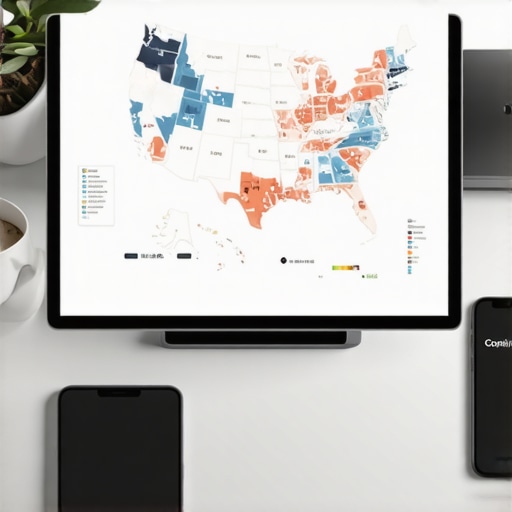 Keeping your ledger tidy is the secret to scaling your business without increasing audit risk.
The Future of Remote Work is Hyper-Local Taxation
Looking ahead to the next few years, I predict we’re going to see ‘Jurisdiction-as-a-Service’ becoming a major trend. States are getting hungrier for revenue, and remote workers are an easy target. We are moving toward a world where your payroll software might need to track GPS data (with consent, of course) to calculate taxes in real-time based on where a laptop is physically opened. It sounds dystopian, but it’s the logical conclusion of our current trajectory. To stay ahead, you need to stop thinking about tax filing through a CPA service as a once-a-year chore and start seeing it as a continuous compliance stream. My advanced tip for you today? Go into your payroll settings right now and pull a ‘Residency vs. Work State’ report. If those two columns don’t match for every single employee, you have a 24-hour window to find out why before it becomes a permanent record. If you’re stuck, you can always reach out to us for a professional review of your nexus exposure.
Lessons Only a Surprise Audit Can Teach You
First, never trust a ‘standard’ software setup to handle your liability. Every state has a unique quirk—like a city-specific transit tax or local occupational license—that your basic payroll sync will often ignore. You have to be the one to double-check the local jurisdiction codes manually or hire a pro. Second, your nexus risk follows your physical assets too. If you sent a high-end company laptop or specialized equipment to a worker in a new state, that physical property can sometimes be enough to establish a tax footprint. It’s about more than just where the person is sitting; it’s about where your business presence is felt. Third, the cost of fixing an error retroactively is always five times higher than the cost of doing it right the first time. I learned that after paying for tax filing through a CPA service specifically to clean up a multi-state mess that should have been prevented from day one.
The Resources I Lean on to Sleep at Night
Staying compliant requires a toolkit that balances automation with human expertise. Here is what I personally recommend to keep your ledger clean: The Multistate Tax Commission (MTC) is my first stop for tracking which states are getting aggressive about remote work nexus and identifying upcoming tax holidays. For those outgrowing basic payroll tools, I recommend following a checklist for moving from Gusto to ADP to ensure no historical data or local registrations are dropped during the transition. Finally, you need a proactive partner who understands the bookkeeping secrets every small business owner should know to catch residency errors before they become expensive penalties. #IMAGE_PLACEHOLDER_E#
The Future of Your Borderless Team
Remote work is a superpower for small businesses, but only if you manage the administrative weight. Don’t let the fear of paperwork stop you from hiring the best talent in the country, regardless of where they live. By building these systems now, you can maximize your tax filing efficiency in 2025 and focus on growing your company instead of answering auditor emails. If you ever feel like you’re drowning in state-level requirements, don’t hesitate to reach out to us for a compliance review that protects your bottom line.
Have you ever been surprised by a tax bill from a state where you don’t even have a physical office? Share your story in the comments below.