

I still remember the cold sweat that broke out when I realized the $14,000 deduction I had claimed for a major equipment purchase was backed by nothing but a fading thermal receipt that had turned completely white in my glovebox. It was a total disaster. I had the gear, I had the expense, but I didn’t have the proof. This moment of panic was my wake-up call that flying by the seat of my pants with financial records was a recipe for a meltdown. It is the kind of the paper trail that protects your business during a surprise audit you never think about until the IRS sends a friendly letter that feels like a gut punch. Today, I am going to show you why a retention policy is not just corporate red tape—it is your business’s suit of armor.
Why I Stopped Treating My Receipts Like Old Newspapers
My biggest mistake early on was thinking that if I had a digital bank statement, the physical records didn’t matter. I once shredded three years of project invoices because my office felt cluttered, only to realize my bank only kept digital copies for twenty-four months. When a vendor disputed a payment from three years prior, I was defenseless. We often overlook bookkeeping secrets every small business owner should know, like the fact that the IRS can actually look back much further than you think. According to the IRS, while the standard window is three years, they can actually audit you up to six years later if they identify a substantial error in your reported income. Without a set-in-stone policy, you are basically playing Russian Roulette with your tax returns. You need to stop chasing receipts and use these three apps instead to digitize everything immediately, but even then, you need a plan for how long those digital files live.
Is a formal policy really worth the extra paperwork?
You might be thinking that you are too small for a formal policy or that your cloud storage has you covered. Trust me, it doesn’t. A real policy tells you exactly when to hit ‘delete’ and when to move files to long-term archives, so you aren’t paying for endless storage or, worse, losing the one document that saves you from a massive fine. If you are feeling overwhelmed by the sheer volume of paper on your desk, contact us and let’s get your systems sorted before tax season hits. Have you ever found yourself frantically digging through a shoebox at 11 PM on a Sunday? I want to hear your horror stories—it makes me feel a lot better about my white-receipt fiasco. [IMAGE_PLACEHOLDER] This guide is going to walk you through the exact timeline you need to follow to stay compliant without turning your office into a filing cabinet museum.
Three Years Is the Floor Not the Ceiling
Many business owners cling to the ‘three-year rule’ like a security blanket, but in the world of tax compliance, that blanket is often too short to cover your feet. While it is true the IRS generally has three years to audit a return, that window stretches to six years if they suspect you underreported income by 25% or more. Think of your records like a parachute; you do not need it every day, but when you do, any hole in the fabric is a catastrophe. To stay safe, you need to know the paperwork you need to keep for five years or more, including bank statements and cancelled checks. I once worked with a founder who thought his bank’s online portal was his archive. When we needed a specific 2018 statement for a loan application, the bank told us they only kept digital records for five years. He ended up paying $75 per statement to have them pulled from deep storage. That was a $900 lesson in why you must own your own data.
Map Your Data Flow Before You Delete Anything
You cannot build a policy if you do not know where the information lives. Most of us have data scattered across Shopify, Stripe, Gmail, and physical shoeboxes. Your first actionable step is to create a ‘Data Map.’ List every platform that touches your money. For each one, determine how to extract the data and where it will be stored permanently. This is the only way to how to keep personal and business expenses separated for good without losing sleep. If you are using multiple payment processors, you should also learn how to reconcile stripe fees without losing your mind so your archives actually match your bank deposits. 
Digital Backups Need a Physical Heartbeat
I once had a situation where a remote developer we hired in 2021 triggered a state residency audit two years later. The state claimed we hadn’t withheld enough because they disputed where the work was actually performed. Because I had archived not just the payroll records, but the specific IP logs and nexus documentation, we were able to prove our case in forty-eight hours. That is the secret to passing a payroll audit with zero fines: having the proof before they even ask for it. You need a system that automatically backs up your cloud accounting software to a secondary location, like an encrypted hard drive or a different cloud provider. This ‘redundancy’ is your fail-safe against account lockouts or service outages.
Stop Treating Your Ledger Like a Junk Drawer
A retention policy is useless if you are archiving garbage. If your ‘Miscellaneous’ category is the largest expense on your Profit and Loss statement, you are essentially waving a red flag at the IRS. You need to follow exact steps to fix a messy chart of accounts yourself before you start the archiving process. Clean data makes for a clean audit. Use the fix for messy receipts using modern scanning apps to ensure every entry in your ledger has a corresponding image attached to it. When you hit the seven-year mark and finally get to purge those files, you want to be confident that what remains is a lean, mean, compliant machine.
Stop Blindly Trusting Your Bank Feed
Most people believe that linking their bank account to QuickBooks or Xero solves 90% of their problems. In reality, it often creates 90% more work during tax season. I see this myth everywhere: the idea that ‘automated’ means ‘accurate.’ In my experience, relying on AI to guess your intent is a dangerous game. According to a study by the National Federation of Independent Business (NFIB), nearly one in three small businesses face penalties due to misclassification errors—many of which stem from ‘smart’ suggestions made by software. This is exactly why automated expense categorizing is failing your books and leaving you exposed. You must know how to spot the errors in your automated bank feed before they bake themselves into your permanent records. 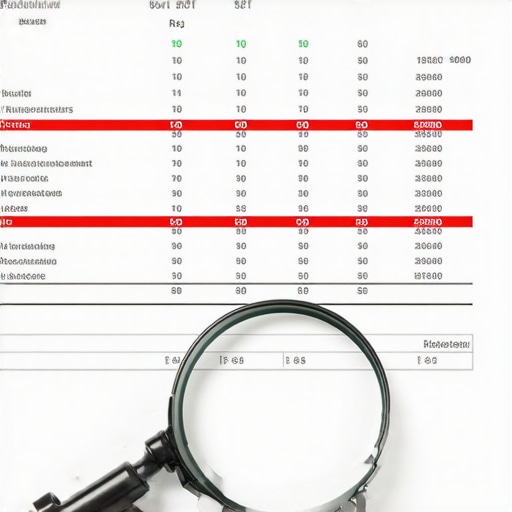
The Stealth Trap Hidden in Your Merchant Fees
One of the biggest ‘oops’ factors for e-commerce owners involves how they record revenue from platforms like Shopify or Stripe. If you are only recording the net deposit that hits your bank, you are underreporting both your gross income and your deductible expenses. This doesn’t just mess up your margins; it makes you look suspicious to the IRS. You need to learn how to reconcile stripe fees without losing your mind to ensure your top-line revenue matches what the processor reports on your 1099-K. Have you ever fallen into this trap? Let me know in the comments, because catching this early can save you thousands in ‘phantom’ income taxes.
Can You Really Write Off That Huge Software Purchase All at Once?
Advanced readers often ask about timing deductions for maximum impact. While the standard advice is to expense everything immediately, that isn’t always the smartest move for your long-term tax bracket. We need to talk about the truth about section 179 deductions for small businesses. Sometimes, taking a slower depreciation schedule is the secret to lowering your self-employment tax liability over a multi-year period rather than just getting a one-time win. Most entrepreneurs think a CPA is just for filing forms, but the real value is in the ‘what-if’ analysis. For example, if you’re considering a pivot, bookkeeping secrets every small business owner should know include how to forecast tax debt before the quarter ends. Failing to do this is a classic mistake. If you’ve been managing everything through a basic spreadsheet, you’re likely missing the hidden gaps in your general ledger that lead to filing delays. These delays aren’t just annoying; they are expensive. A proactive approach means looking at your balance sheet monthly, not annually. This is why your balance sheet is the key to your next loan and your next phase of growth. If you’re unsure if your current setup is helping or hurting, contact us to review your strategy. Mastering these nuances is what separates a business that survives from one that actually thrives under scrutiny.
What Happens When Your Spreadsheets Start Breaking
I used to be the king of the custom Excel macro. I thought that by building the perfect ‘master sheet,’ I could outmaneuver any accounting software on the market. But as my business grew, the errors started compounding. A broken cell reference here, a forgotten row there, and suddenly my tax projections were off by $12,000. That is the moment I realized why your manual spreadsheet accounting is costing you more than a cpa. It’s not just about the hours you waste; it’s about the massive invisible risks you take. Scaling requires a shift from ‘tracking’ to ‘systems.’ You need the secret to scaling your business without increasing audit risk, which starts with moving your data into a stack that talks to itself. For me, that meant integrating a heavy-duty payroll engine with my ledger. If you are still using the basic payroll tier, you might not realize why your payroll providers basic plan is hurting your growth by failing to automate state-specific tax filings as you hire remote workers.
The Stack That Actually Protects Your Time
My current ‘holy trinity’ of tools involves an AI-driven receipt fetcher, a high-end cloud ledger, and a payroll provider that handles the heavy compliance lift. When looking at payroll, don’t just look at the interface; look at their security audits. According to the American Institute of Certified Public Accountants (AICPA), a provider with a SOC 1 Type II report is the gold standard for ensuring they have the internal controls to handle your tax funds without error. This is the move that eliminates late fees on payroll taxes because the system assumes the responsibility for the deadlines. Before you sign up, check the checklist for onboarding a new payroll provider to ensure they can handle your specific corporate structure. 
How to Keep Your Financial Engine Purring Month After Month
Maintenance is where most founders fail. They set up a system in January and don’t look at it again until December. To avoid the year-end scramble, you have to master the ‘Monthly Close.’ This is the process where you verify that every single transaction in your bank matches your ledger. You need to know how to streamline your month-end close using automation so it takes thirty minutes instead of five hours. During this process, you will inevitably find gaps. Knowing how to handle missing invoices during your monthly close is the difference between a clean audit trail and a mess of ‘miscellaneous’ expenses.
The Future of Your Ledger is More Predictive Than You Think
Looking ahead to 2025 and beyond, I predict that ‘passive bookkeeping’ will become the norm. We are moving toward a world where your software won’t just tell you what you spent, but will proactively suggest maximize your tax filing efficiency in 2025 expert cpa tips based on real-time legislative changes. For the solo founder, this means the move that simplifies year-end tax reporting for freelancers will be fully automated. However, technology will never replace the human eye for ‘ghost assets’—those things you are still paying for or depreciating that don’t actually exist anymore. This week, I challenge you to try one advanced tactic: go into your books and see how to identify and remove ghost assets from your ledger. It’s the fastest way to lean out your balance sheet and stop paying taxes on property you don’t even own.
Lessons from the Audit Trenches
Looking back at the mountain of receipts I used to balance, I realized that the hardest part of business growth wasn’t the math—it was the underlying fear of being found lacking during a review. Here is what I have learned through years of trial and error. First, ‘organized’ is just a relative term until a third party starts asking for physical proof of a three-year-old software purchase. Your future self will thank you for the five minutes you spend scanning today far more than the five hours you would spend panicking during a surprise inquiry. Second, the cost of ‘good enough’ is often higher than the cost of a professional. I learned that tax filing simplified how a cpa service can save you money by preventing the kind of documentation gaps that lead to automatic disallowances. Third, you must stop the leakage at the source. This means you should definitely why you should stop using personal cards for business lunches immediately to keep your data stream pure and easy to archive.
My Financial Defense Toolkit
Building a resilient business requires more than just grit; it requires a stack of tools that act as your silent partners. I personally trust a high-end cloud ledger that integrates directly with my bank, but only if it is paired with a dedicated receipt-fetching app. To keep these systems running smoothly, I recommend going through the checklist for every business owner before their first cpa meeting. This ensures your data is actually usable for strategy, not just storage. Furthermore, as you scale, you need payroll strategies to streamline business operations this year that automate the filing of state and local taxes, which are the most common places for retention errors to occur. These tools don’t just save time; they create an ironclad archive that stands up to any level of scrutiny.
Build a Business That Outlasts the Paperwork
Taking control of your records isn’t just about staying out of trouble; it is about building a foundation of confidence. When you aren’t haunted by the ghost of a missing invoice or an unverified deduction, you have the mental space to focus on what actually matters: your customers and your vision. Professional bookkeeping and proactive tax filing are the fuel for your long-term growth, not the brakes. If you feel like you are still treading water in a sea of thermal receipts, remember that it is never too late to pivot toward a cleaner, more automated system. You have the tools, you have the knowledge, and now you have the plan to protect what you’ve built. Have you ever lost a major deduction because of a lost or faded receipt? Let me know your story in the comments below.