

I remember the first time I collected a $1,500 refundable security deposit for a client. I felt like a genius. I watched that money hit the bank, saw my ‘revenue’ spike, and promptly treated it like a bonus. Six months later, when the client moved out and it was time to cut them a check, my Profit & Loss statement looked like a crime scene. I was short on cash and had to explain to my spouse why we couldn’t go out to dinner that weekend. That was the day I realized that my bookkeeping secrets every small business owner should know were actually just a recipe for a cash flow nightmare. I had made the classic amateur move: I confused a liability with income. Today, I want to make sure you never feel that stomach-sinking dread when a customer asks for their money back.
Stop Treating Deposits Like Your Own Cash
Look, I get it. When you are running a small business, every dollar that hits your account feels like a win. But a refundable deposit isn’t a win; it is a debt you owe to someone else until the contract is fulfilled. If you keep logging these as sales, you are creating the errors that make your profit and loss statement unreliable. You are essentially lying to yourself about how much money you actually have to spend. According to the Financial Accounting Standards Board (FASB), these funds must be recorded as a liability on your balance sheet because they represent a future sacrifice of economic benefits. Have you ever looked at your bank balance and wondered why you feel broke even though your reports say you are profitable?
Does My Software Actually Know the Difference?
You might be thinking that your software is smart enough to handle this for you automatically. I thought the same thing. I assumed that if I labeled a transaction as a ‘Deposit,’ the computer would just know where to put it. Spoiler alert: it doesn’t. You have to be the pilot. If you don’t clean up your chart of accounts without deleting data and set up a specific ‘Customer Deposits’ liability account, your year-end tax filing is going to be a disaster. We are going to walk through the exact steps to fix this workflow, keep the IRS happy, and make sure your balance sheet actually reflects reality. Have you ever accidentally spent a customer’s deposit and realized it too late?
Create a Liability Account Right Now
Think of your chart of accounts like a tool chest. If you throw your screwdrivers in with your wrenches, you will never find what you need when a pipe bursts. Most business owners dump every incoming check into a generic ‘Sales’ account. To fix this, you must create a specific account in your General Ledger categorized as an ‘Other Current Liability’ and name it ‘Customer Deposits’ or ‘Security Deposits Held.’ When you clean up your chart of accounts without deleting data, this is the most critical bucket you can add. By doing this, the money sits on your balance sheet as a debt—which is exactly what it is—rather than inflating your income. I remember a grueling weekend in 2019 where I had to manually re-map forty-two separate transactions because I had lazily tagged them as ‘Miscellaneous Income.’ My tax bill that year would have been thousands of dollars higher for money I didn’t even own if I hadn’t caught the error during a late-night audit.
Map the Transaction to the Balance Sheet
When that deposit hits your bank feed, do not hit the ‘Confirm’ button if it is trying to match to an invoice marked as ‘Service Income.’ You need to manually point that transaction toward your new liability account. If you are using platforms like Stripe, this can get messy fast because of the way fees are deducted before the money hits your bank. You need to learn how to reconcile Stripe fees without losing your mind so that the net amount recorded in your liability account actually matches the gross deposit the customer gave you. 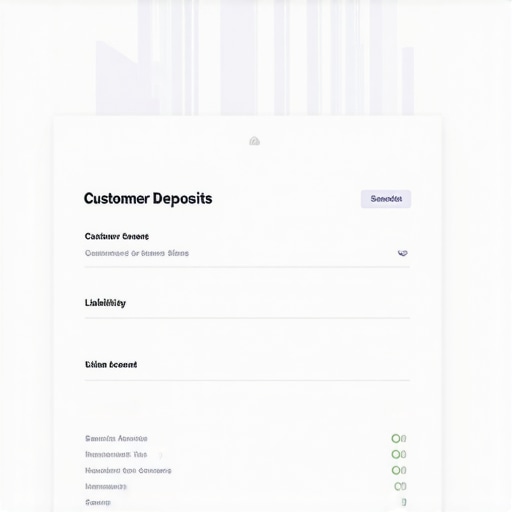
Reconcile Your Bank Feed Correctly
Your bank feed is a mirror, not the source of truth. If you see a $1,000 deposit, your software might guess it is a sale based on past behavior. You have to override that instinct. This is the only way to avoid the trap where your PL statement is making you feel broke despite sales. By keeping these funds separate, your Profit and Loss statement only shows what you have actually earned, giving you a crystal-clear view of your actual margins.
Transitioning from Sales to Liabilities
The magic happens at the end of the project. When the work is done and you have ‘earned’ that deposit, you create a journal entry to move the funds from the ‘Customer Deposits’ liability account into your ‘Sales’ income account. This is a clean, professional way to handle your bookkeeping secrets every small business owner should know. It ensures that your income is recognized in the correct period, which is vital for tax filing efficiency in 2025. If you skip this step and just leave the money in the liability account forever, you are essentially hiding income from yourself (and the IRS), which is a major red flag. I once worked with a contractor who had $20,000 sitting in ‘Deposits’ from three years prior; he thought he was failing, but he actually just had a massive pile of unearned revenue he never moved to his income statement. Don’t let your own records lie to you about your success.Most business owners assume that ‘Cash Basis’ accounting means they don’t have to worry about these ledger gymnastics. But here is the hard truth: staying in ‘Cash Basis’ mode for your internal management is like driving with a fogged-up windshield. You might think you’re saving time, but you’re actually making it impossible to see the road ahead. A common myth is that only big corporations need to track unearned revenue. In my experience, even a solo freelancer should be doing this to avoid a massive, unexpected tax bill. The ‘Oops’ factor here is the phantom tax liability. If you record a $5,000 deposit as income today, the IRS expects their cut of that $5,000 this year. If the actual work—and the associated expenses—don’t happen until next year, you’ve just front-loaded your tax burden. This is exactly why tax filing simplified how a cpa service can save you money is so valuable; they see these timing differences before they hit your wallet. According to a study by the AICPA, timing errors in revenue recognition are among the most common triggers for IRS inquiries in small businesses. You aren’t just ‘organizing’; you are protecting your cash flow from unnecessary drainage.
Should You Keep Deposit Cash in a Separate Bank Account?
This is the question that separates the amateurs from the pros. While your software can track different ‘buckets’ of money within one account, many high-growth businesses find that a physical separation is the only way to stay disciplined. If you struggle with the temptation to dip into that ‘revenue spike,’ open a secondary ‘Customer Escrow’ account. This makes it impossible to accidentally spend money that isn’t yours. It also ensures that why your accountant needs access to your pos system data becomes a non-issue, as the transfers between accounts provide a clear, undeniable audit trail. 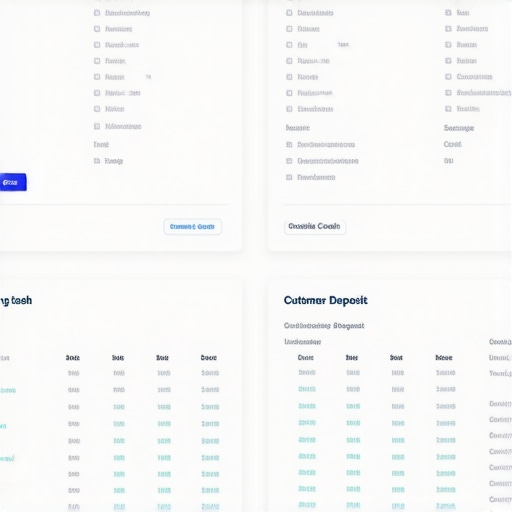 Beyond just physical accounts, you need to master how to handle prepaid expenses without messing up your PL. If you’re buying materials for a job using a customer’s deposit, those materials shouldn’t hit your expense report until the job is actually live. Otherwise, your margins will look terrible one month and suspiciously high the next. This is how the move that cuts your quarterly estimated tax anxiety works—it aligns your taxable income with your actual output. When you audit your own books in 30 minutes or less, this is the first thing you should check. Look for ‘lumpy’ profit margins; they are the smoking gun of poorly managed deposits. Have you ever fallen into this trap? Let me know in the comments.Maintaining this level of detail isn’t about working harder; it’s about choosing better tools. I used to think my Excel workbook was a masterpiece of engineering, but eventually, I realized that why your manual spreadsheet accounting is costing you more than a cpa comes down to the simple fact that spreadsheets don’t talk to your bank. They are static, and static data is dead data. I now exclusively use cloud-based platforms that allow for real-time reconciliation. If you are still manually entering transactions, you aren’t a business owner; you’re an underpaid data entry clerk. You should also stop using excel for your fixed asset tracking if you want your balance sheet to actually survive a professional review.
How do I maintain these clean books month after month?
The secret is the ‘Sunday Sweep.’ Every Sunday evening, I spend 15 minutes reviewing the week’s deposits and expenses. This habit prevents the ‘lumpy’ margins I mentioned earlier and ensures why your business needs a monthly cash flow review becomes part of your company’s DNA. I also look ahead to future tax liabilities. According to the IRS Publication 538 on Accounting Periods and Methods, choosing the right accounting method is a binding decision that affects how you report income for years, so I treat my weekly maintenance as a way to ensure I’m still aligned with my long-term strategy. If I see a large deposit that hasn’t been moved from the liability account, I flag it immediately. 
Software Is the Secret Weapon for Growing Teams
As you grow, the complexity of your books doesn’t just add up; it multiplies. This is especially true when you start hiring. You need to implement top payroll management tips for growing businesses in 2025 to keep your sanity. I personally moved to an automated payroll system that handles the tax withholdings automatically because the risk of a manual error is simply too high. When you use payroll strategies to streamline business operations this year, you’re not just saving time; you’re buying insurance against IRS penalties. I predict that in the next three years, AI will handle 90% of the categorization we currently do by hand, but it will still require a human to verify the ‘intent’ behind the cash. The future belongs to the business owners who understand the logic of the ledger, even if a machine is doing the heavy lifting. I want you to try this: tomorrow morning, go into your accounting software and look at your ‘Uncategorized Income’ bucket. If it’s anything other than zero, set a timer for 10 minutes and clear it out. That small act of maintenance is the first step toward a scaleable, stress-free business.
The Hard Truth About My Early Accounting Ego
Looking back, my biggest mistake wasn’t just a technical error; it was an ego problem. I wanted my sales numbers to look high to impress myself and feel successful. But professional bookkeeping isn’t about vanity metrics; it’s about protection. I learned that real profit is what you keep after everyone else is paid, not just what hits your bank account on a Tuesday. One lightbulb moment for me was realizing that every deposit is a promise. If you can’t keep that promise because you already spent the cash, your business is built on sand. Before you dive into the deep end of professional accounting, check out the checklist for every business owner before their first cpa meeting to make sure you’re asking the right questions about your liability accounts.
Another lesson? The IRS doesn’t care about your ‘intent.’ They care about your ledger. If you miscategorize a deposit as income, you’re essentially painting a target on your back for an audit. This is why understanding the tax consequences of switching from a sole prop to an s corp is so vital; the stakes for accuracy only get higher as your entity evolves. I eventually stopped seeing accounting as a boring chore and started seeing it as a defensive strategy for my future wealth.
My Go-To Kit for Bulletproof Finances
You don’t need a hundred complex tools to stay organized; you need three that actually work in sync. First, a dedicated Cloud-Based Accounting Software (like QuickBooks or Xero) is non-negotiable. It allows for the real-time tracking of those pesky deposits so they don’t get lost in the shuffle of daily operations. Second, I highly recommend keeping a Digital Document Vault. Whether it’s Hubdoc or a simple secure cloud folder, you need the paper trail that protects your business during a surprise audit. If a customer ever disputes a deposit return, your ledger is your only credible witness.
Third, don’t underestimate the power of a Secondary Escrow Savings Account. Physically moving that deposit cash out of your main operating account removes the ‘spend-it’ temptation instantly. When you eventually realize why your balance sheet is the key to your next loan, you’ll be incredibly glad you kept your liabilities and assets clearly separated from day one. #IMAGE_PLACEHOLDER_E#
Your Roadmap to Financial Clarity
Starting this process might feel like you’re untangling a giant knot of yarn, but I promise you, the clarity on the other side is worth every minute of effort. You deserve to look at your bank balance and know—with 100% certainty—how much of that money is actually yours to keep and reinvest. By implementing these bookkeeping workflows, you’re not just ‘doing math’; you’re building a foundation that can actually support your long-term growth. Don’t let a simple deposit error be the reason your business feels like a burden instead of a blessing. Take control of your numbers today, and you’ll find that the stress of tax filing starts to evaporate naturally. How do you currently track your customer deposits—do you use a spreadsheet or do you have a dedicated account in your software? Let me know below.