
I remember sitting in my home office three years ago, staring at a glossy contract for a new server rack. I felt like a genius. “It’s just a monthly expense,” I told my partner. “No debt, no mess, just a simple line item.” Boy, was I wrong. By the time tax season rolled around, my CPA looked at me like I’d just admitted to eating soup with a fork. It wasn’t just a lease; it was a capital lease—essentially a loan in a tuxedo. I had unknowingly inflated my debt-to-equity ratio, and suddenly, my plans for a small business loan were in jeopardy. We are going to peel back the label on your equipment contracts so you stop accidentally burying your business in debt. I’ll show you how to spot the difference between a simple rental and a financial obligation that could scare off future investors.
Stop Treating Your Lease Like a Monthly Utility
For years, business owners treated equipment leases like a Netflix subscription. You pay the fee, you use the service, and you move on. But that world changed with the implementation of FASB ASC 842, which fundamentally altered how we report these agreements. According to the Financial Accounting Standards Board, almost all leases—even those previously considered ‘operating leases’—must now be recognized as assets and liabilities on your balance sheet. This is a massive shift. I made the classic mistake of thinking that as long as I wasn’t ‘buying’ the gear, it didn’t count as a liability. This is exactly why your cash basis reporting is hiding your true debt and making your financial health look far rosier than it actually is. If your lease looks like a loan, smells like a loan, and has a $1 buyout at the end, the IRS and your bank will treat it as a loan.
Is this just an accounting technicality that doesn’t affect my actual cash?
You might be thinking this is just paperwork, but it affects your ability to scale. When your fixed asset ledger is probably outdated, you lose track of depreciation and tax benefits. Have you ever signed a ‘lease’ only to realize months later that you’re stuck with a massive liability you can’t easily cancel? That realization is often the real cost of neglecting your monthly close process. We are going to dive into the specific ‘red flag’ clauses that turn a flexible lease into a rigid loan. Have you checked your latest equipment contract for a ‘bargain purchase option’ lately?
Identify the Debt Traps Hidden in Your Contracts
To stop the bleeding, you need to conduct a forensic audit of your current agreements. When I finally sat down with my server rack contract, I realized I hadn’t just signed up for a service; I had signed away my balance sheet health. The first thing you must look for is the transfer of ownership. If the contract states that the equipment automatically becomes yours at the end of the term, or if you have a ‘bargain purchase option’ (like buying a $10,000 piece of gear for $1), you are looking at a capital lease. This isn’t just a monthly bill; it’s a loan. To stay ahead, you need to apply some bookkeeping secrets every small business owner should know to identify these liabilities before they surprise you during an audit.
Compare the Lease Term to the Equipment Life Span
A major red flag is a lease term that covers 75% or more of the equipment’s estimated useful life. I once leased a set of high-end laptops for three years, only to realize that after thirty-six months, those machines were effectively paperweights. Because the lease covered nearly their entire functional life, the accounting rules forced me to treat them as an asset I owned and a debt I owed. This nuance is why why your burn rate is higher than your dashboard shows; you are committing to the full value of the asset upfront, even if the cash leaves your bank account in small drips.
Run the Present Value Test on Your Payments
This is where most owners get tripped up. If the total of your lease payments (at their present value) equals or exceeds 90% of the equipment’s fair market value, it’s a capital lease. I remember trying to explain this to a client who was leasing a commercial oven. He thought he was being savvy by avoiding a bank loan, but the present value of his ‘rent’ was actually 110% of the oven’s cost. He was paying loan interest disguised as ‘leasing fees.’ 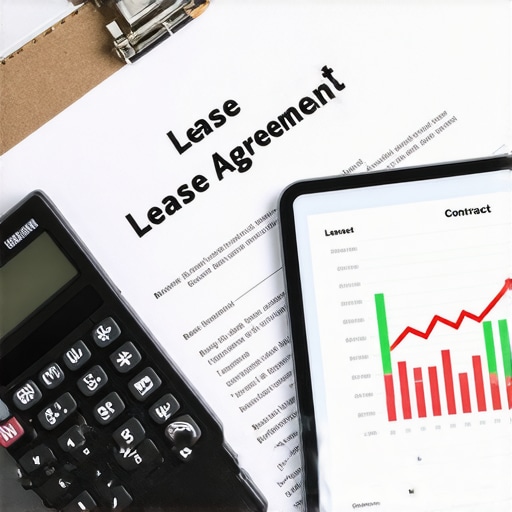 If you find yourself in this position, you need the checklist for closing your books in record time to ensure these figures are moved from the expense column to the liability column correctly.
Update Your Ledger to Reflect Reality
Once you’ve identified a lease as a capital obligation, you must record the asset and the liability on your books immediately. If you don’t, your financial ratios will be completely skewed, which is a massive red flag for any lender or investor. This process often requires the move to transition your business from cash to accrual reporting, as simple cash-basis tracking cannot accurately capture the long-term debt of a capital lease. I’ve seen businesses lose out on major expansion loans because their debt-to-equity ratio looked perfect on paper, but their hidden lease obligations made them a high-risk gamble in the eyes of the bank’s underwriters. You have to treat your fixed asset ledger like a living document, not a static list of things you bought five years ago. If you haven’t touched that ledger in months, it is likely that why your fixed asset ledger is probably outdated, and you are flying blind into your next tax season.
The Dangerous Myth of the Infinite Lease Deduction
Most entrepreneurs I talk to are convinced that leasing is a ‘tax-proof’ strategy because you get to deduct the entire payment. In my experience, this is often a lazy oversimplification that costs you money. While you are busy writing off monthly checks, you might be missing out on a massive immediate benefit from Section 179 deductions. If you purchase the equipment or use a qualifying capital lease, you could potentially deduct the entire purchase price in the first year. By opting for a standard lease simply to ‘keep things simple,’ you are essentially giving the government an interest-free loan of your tax savings. This is a crucial part of the move to lower your corporate tax rate legally that many ‘standard’ bookkeepers simply ignore because it requires more than just basic data entry.
Why does your automated software miss these liability shifts?
The most dangerous ‘oops’ factor in modern accounting is the blind trust in automation. I recently audited a client who used a top-tier software for their equipment management, only to find three ‘ghost assets’—equipment they had returned months ago but were still depreciating. These are the red flags in your depreciation schedule the IRS hates. Software is great for math, but it is terrible at context. It doesn’t know you traded in the copier; it just sees a recurring payment and assumes the asset is still sitting in your lobby. According to a study by the Journal of Accountancy, nearly 25% of small business balance sheets contain ‘ghost’ or ‘zombie’ assets that skew valuations and invite audit scrutiny. #IMAGE_PLACE_HOLDER_C#
The Hidden Tax Nexus Triggered by Your Equipment
Here is the nuance that separates the pros from the amateurs: where your equipment lives matters as much as what it is. If you lease a fleet of vehicles or remote server hardware that sits in a different state, you might have just accidentally triggered a ‘nexus.’ This means you suddenly owe taxes in a state where you don’t even have an office. I’ve seen businesses get blindsided by five-figure tax bills because why your automated sales tax tool still requires human eyes to catch these jurisdictional shifts. It’s the same reason why your payroll software is missing local tax credits; automation follows the path of least resistance, not the path of maximum savings. To truly master your finances, you need to apply the bookkeeping secrets every small business owner should know, which involves a monthly review of where your assets are physically located. Have you ever fallen into this trap of ‘set it and forget it’ with your equipment contracts? Let me know in the comments. It’s a mistake that even seasoned CFOs make, but catching it early can save your business from a disastrous audit down the road.
Stop Fighting Your Tech Stack and Start Automating
For the longest time, I was a ‘spreadsheet warrior.’ I thought that by manually entering every line item, I had a better pulse on the business. I was wrong. I was just wasting ten hours a week on tasks that a $20 plugin could do in seconds. If you are still manually reconciling sales, you need how to transition from a spreadsheet to professional software before you lose another weekend to math. I specifically recommend using direct API connections for your merchant accounts because it is the only way to stop letting stripe fees eat your net profit margins. Your time is better spent on growth than on manual data entry that is prone to human error.
Sync Your Payroll Before You Drown in Manual Entries
Scaling your team is exciting until you realize your bookkeeping hasn’t kept up. I’ve seen many founders try to ‘eyeball’ their labor costs, but that’s a dangerous game that leads to cash flow surprises. To keep your sanity, you must make the move to sync your payroll with your general ledger automatically. This isn’t just about saving time; it’s about accuracy. When your payroll and ledger talk to each other, you can finally implement payroll strategies to streamline business operations this year that actually move the needle. Without this sync, you are just guessing your true cost of labor, and a guess is never a good basis for a tax strategy. 
How do I maintain these clean books as I scale?
Consistency is the only ‘secret’ in accounting. You don’t need a PhD; you need a system. I personally use the checklist for closing your books in record time every single month without fail. It prevents the ‘pile-up’ effect where three months of messy data becomes an insurmountable mountain. If you feel overwhelmed, remember that even the IRS emphasizes precision over speed. According to the IRS Publication 946, property must be depreciated using specific recovery periods based on asset class, and missing these nuances during a scale-up can lead to massive tax penalties or missed deductions.
The Future of Your Balance Sheet is Predictive
Looking ahead, I predict we are moving away from ‘historical’ reporting toward predictive financial modeling. In the next few years, your software won’t just tell you what you spent last month; it will use AI to predict your tax liability based on real-time spending patterns. This is bookkeeping secrets every small business owner should know for the modern era. You won’t be looking in the rearview mirror; you’ll be looking through the windshield. My advanced tip for you: Spend 30 minutes this week auditing your ‘auto-sync’ settings. If your bank feed hasn’t been refreshed or your payroll isn’t mapping to the right accounts, fix it now. Don’t wait for tax season to discover your automation has been broken for six months.
The Most Expensive Mistakes I Made With My Lease Agreements
Reflecting on my own journey, the hardest pill to swallow was realizing that I was my own worst enemy when it came to documentation. I treated my accounting software like a magic box, but garbage in always means garbage out. One major lightbulb moment was discovering that the red flags in your depreciation schedule the IRS hates usually start with a single misclassified equipment lease. Don’t assume your vendor has your best interests at heart; their goal is to move equipment, not to protect your debt-to-equity ratio. Another key takeaway is that waiting until December to look at your assets is a recipe for disaster. I now use the checklist for closing your books in record time to ensure every new contract is vetted the moment the ink is dry. Being proactive here is the difference between a smooth audit and a financial nightmare.
The Resources I Use to Keep My Ledger Clean
You don’t have to do this alone. I’ve found that a few specific tools and sources make a world of difference. First, I always keep a copy of the IRS Publication 946 handy for depreciation basics to ensure I am not guessing at recovery periods. Second, for the actual heavy lifting, I rely on bookkeeping secrets every small business owner should know to keep my team focused on high-level strategy rather than manual data entry. If your current system feels like a mess, it might be time to learn how to fix a ledger that has not been balanced in months before the next tax season hits. Professional help isn’t a luxury; it’s how you maximize your tax filing efficiency in 2025 with expert CPA tips and ensure your balance sheet remains an asset, not a liability.
#IMAGE_PLACEHOLDER_E#
Build a Foundation That Future Investors Will Love
Taking control of your equipment leases and financial reporting isn’t just about staying out of trouble with the IRS—it’s about building a business that has real, verifiable value. When your books are transparent and your liabilities are clearly marked, you speak the language of banks and investors with absolute confidence. You aren’t just a business owner; you are a savvy financial steward. Don’t let a ‘loan in a tuxedo’ hold you back from the growth you’ve worked so hard to achieve. Start today by reviewing just one contract and verifying its place on your ledger. Have you ever found a hidden liability in your equipment leases that took you by surprise? Let me know in the comments below!