

I’ll never forget the cold sweat that hit me when I opened a notice from the New Jersey Division of Taxation while sitting at my desk in Texas. I was sipping a lukewarm coffee, feeling proud that my small e-commerce venture was finally scaling, when that thin white envelope changed everything. It was a “Failure to File” notice for a state where I thought I only had a handful of customers. My heart sank. I realized right then that I’d fallen into the classic trap of ignoring sales tax nexus. It is a mistake I made early on, thinking “out of sight, out of mind” applied to state lines. It definitely does not. Today, I am going to show you exactly how we triaged this mess, identified the exposure, and started the correction process in just 48 hours without losing our collective minds.
The Moment We Realized the Nexus Monster Was Real
I spent that first night spiraling. I had been so focused on how to maximize your tax filing efficiency for my federal returns that I completely overlooked the complex web of state-level requirements. If you have ever felt that pit in your stomach, you are not alone. Most of us start businesses to create, solve, or sell—not to become amateur forensic accountants. The truth is, surviving a sales tax audit or a misfiling notice is not about luck; it is about the speed of your response. According to the Tax Foundation, the complexity of state sales tax rules has increased significantly since the Wayfair decision, with many states now enforcing economic nexus thresholds that catch small businesses off guard.
Is fixing a multi-state error really possible in two days?
You might think I am being overly optimistic. After all, government agencies are not exactly known for their lightning-fast response times. But the “fix” in this timeframe is not about getting the state to send you a thank-you note; it is about your internal audit and disclosure strategy. I had to learn how to recover from a missed tax deadline fast. We are going to walk through the exact 48-hour sprint we used to identify the leak, calculate the damage, and get the right paperwork moving before the penalties started compounding like a bad credit card balance. I have seen so many people try to hide from these notices. They stuff them in a drawer and hope the state forgets. Pro tip: they do not. I once let a small bookkeeping error slide for six months, and it turned a minor issue into a multi-thousand-dollar headache. Have you ever opened a tax notice and felt your heart skip a beat? Before we dive into the spreadsheets, we need to address the root cause, which usually leads back to whether or not you recover from a misfiled sales tax return fast enough to avoid the heavy hand of the IRS or state auditors.
Pull Every Transaction Into One Single Sheet
The first eight hours of my 48-hour sprint were spent doing what I call the ‘Digital Data Dump.’ Think of it like emptying a massive, tangled box of Christmas lights onto the living room floor. You cannot fix the knots until you see the whole string. I pulled every single report from my Shopify store, Amazon account, and Stripe dashboard. This is where most people trip up because they rely on their automated software to ‘just handle it.’ I learned the hard way that why your business bank feed still needs human oversight is a lesson usually taught by a penalty notice. I exported everything into a master spreadsheet, filtering by shipping address. I wasn’t just looking for total sales; I was looking for the exact moment we crossed the ‘economic nexus’ threshold in each state—which is often 200 transactions or $100,000 in sales. 
Identify Your Physical and Economic Triggers
Once the data was in front of me, I had to play detective. Physical nexus is easy—it is where your office or warehouse sits. But economic nexus is the silent killer. I remember a specific instance where a single influencer campaign in Georgia pushed us over their transaction limit in just three days. We went from zero exposure to a full filing requirement overnight. This is why you need to know bookkeeping secrets every small business owner should know to keep these thresholds on your radar before the state sends a letter. If you are shipping goods or even providing digital services, you need a heatmap of your customers.
Don’t Let Remote Staff Create Hidden Liabilities
Another trap I fell into involved a freelance developer I hired. I thought of him as a 1099 contractor, but because he was working from his home in New Jersey using my company equipment, the state saw it differently. This created a physical nexus I hadn’t planned for. You must how to fix your payroll nexus when your employees move states immediately because that one remote hire can trigger sales tax requirements for your entire revenue stream in that state. It is a domino effect that can bankrupt a small margin business if left unchecked.
Run Your Own Forensic Audit
By the 24-hour mark, I was running my own internal audit. I compared what I had actually collected from customers versus what I should have collected. It was a sobering moment. To keep the panic at bay, I used a simplified version of how to audit your own books in 30-minutes or less to categorize the damage by quarter. If you find a massive gap, do not just start filing back-dated returns immediately. That is the ‘red flag’ that triggers an official investigation. Instead, look into a Voluntary Disclosure Agreement (VDA). This is the professional way to say, ‘I messed up, I’m coming clean, please don’t crush me with penalties.’ When you are in the thick of it, the moves to make when your business is audited for sales tax become your roadmap to survival. I spent the final 12 hours of my sprint preparing the VDA paperwork for the two states where our exposure was highest, ensuring our maximize your tax filing efficiency strategy for the upcoming year included these new jurisdictions. It was exhausting, but by the end of day two, the ‘nexus monster’ was finally back in its cage.Most entrepreneurs assume that if they use a platform like Shopify or Amazon, the “Marketplace Facilitator” laws take all the liability off their plate. That is a dangerous half-truth. While these platforms collect and remit sales tax for many transactions, they don’t cover every state, and they certainly don’t cover your direct-to-consumer wholesale deals or invoice-based sales. I’ve seen businesses coast for years thinking they were covered, only to realize that the errors that make your profit and loss statement unreliable often stem from these unmonitored revenue streams. You cannot outsource the ultimate responsibility for your compliance. 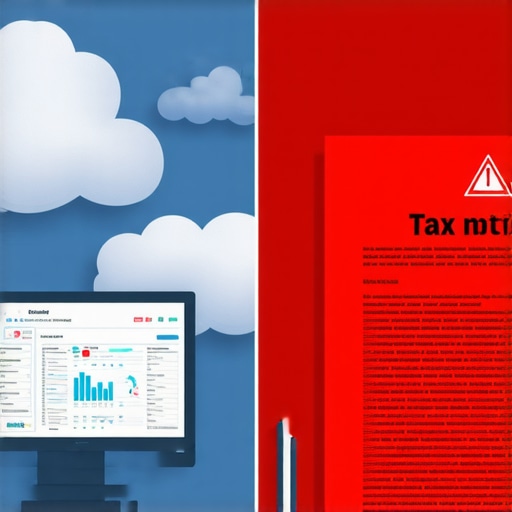
The Dangerous Myth of Automated Compliance
Everyone tells you to just “plug in an app” and forget about it. In my experience, relying solely on automated tax software without periodic human review is a recipe for disaster. Software is great at math, but it is terrible at context. It doesn’t know if a specific SKU should be exempt under a new state legislative update unless you tell it. According to a study published in the Journal of Accountancy, over 40% of small business owners spend more than 80 hours a year on federal taxes alone, often missing the state-level nuances that lead to audits. If your software miscategorizes a product for twelve months, you aren’t just looking at a filing error; you are looking at a systemic failure that requires you to how to audit your own books in 30-minutes or less to even begin to see the scale of the damage.
Can Your Remote Employees Trigger a Surprise Audit?
This is the advanced trap most scaling businesses fall into. You hire a talented designer in California or a VA in Florida, and suddenly, you have created physical nexus. This doesn’t just impact sales tax; it ripples into your payroll obligations. You must master the secret to managing multi-state payroll tax withholding before the state’s labor department comes knocking. Many founders also ignore the liability shift when your 1099 workers act like w-2s, which is a massive red flag for state auditors looking for unpaid unemployment taxes.
Watch Out for the Marketplace Facilitator Trap
Another nuance is the “double-dip” error. I once worked with a client who was accidentally paying sales tax on their Amazon sales twice—once through the platform and once manually because their bookkeeper didn’t know how to reconcile the report. This is why you must why your business bank feed still needs human oversight. Without it, you’re just throwing margin away. You also need to how to identify and remove ghost assets from your ledger that might be skewing your business valuation during these audits. If you aren’t careful, you’ll find the reason your 1099-nec filings are likely wrong is the same reason your sales tax is a mess: a lack of centralized data integrity. Have you ever fallen into this trap? Let me know in the comments.Once you have survived the initial shock of a nexus discovery, the real challenge is building a system that ensures you never have to repeat that 48-hour panic. I have refined a toolkit that actually works for a scaling business, moving beyond simple apps to a robust check-and-balance workflow. First, I stopped relying on basic POS reports. I started using a dedicated bridge to my accounting software because how to reconcile stripe fees without losing your mind is only possible when your data flows automatically. I also finally committed to stop chasing receipts and use these three apps instead, specifically tools like Dext or Hubdoc, which feed directly into my ledger. This creates a bulletproof paper trail before I even have a chance to lose the documentation. 
How do I maintain multi-state compliance over time?
The secret is not just a better app; it is a better routine. I have implemented a strict month-end close that mirrors the checklist for closing your books every month. On the third of every month, I review my nexus heat maps. If a state is creeping toward that 200-transaction limit, we pre-register. This proactive approach is exactly the secret to scaling your business without increasing audit risk. I also perform a monthly cash flow review to ensure we are setting aside the tax we have collected so it does not accidentally get spent on inventory. According to the Streamlined Sales Tax Governing Board (SSTGB), businesses that utilize Certified Service Providers can significantly reduce their administrative burden and audit liability in participating states.
Growth should not mean more paperwork
As you scale, you will find that payroll strategies to streamline business operations this year must evolve alongside your sales tax systems. You cannot just keep adding more manual steps. I am predicting that within the next 24 months, we will see the rise of AI-driven tax guardians—software that provides real-time alerts the second a legislative change in a tiny municipality affects your specific SKU list. We are not quite there yet, but you can get close by ensuring the move that keeps your llc compliant with state laws is a recurring task on your calendar, not a once-a-year surprise. My challenge to you is to log into your primary sales platform today and export a sales by state report for the last 12 months. Compare it to your current registrations immediately; you might be surprised where you are currently living in the eyes of the law.
Why I Stopped Fearing the Multi-State Letter
Looking back at that New Jersey notice, I realize the panic was a byproduct of a lack of visibility. The biggest lightbulb moment for me was realizing that compliance isn’t a destination—it’s a hygiene factor. I learned that the red flags that suggest your accountant isnt proactive enough usually appear long before the audit letter does. If you aren’t talking about nexus every quarter, you’re already behind. I also discovered that the secret to scaling your business without increasing audit risk is simply building the cost of compliance into your margins from day one. Don’t treat tax as an ‘after-the-fact’ expense; treat it as a cost of goods sold. Finally, I stopped assuming my tech was smarter than me. Even the best software needs a human to verify the data integrity.
Tools That Keep My Ledger Clean and My Stress Low
If you’re tired of the manual grind, I highly recommend looking into a few key resources. For document management, the fix for messy receipts using modern scanning apps like Dext or Hubdoc is life-changing because it creates a permanent audit trail. I also never go into a new year without going through the checklist for every business owner before their first cpa meeting to ensure my registrations match my reality. For staying up-to-date on state changes, the Streamlined Sales Tax (SST) website is a goldmine of free information. These tools don’t just save time; they protect your peace of mind.
Take Control of Your Business Future Today
It is easy to feel overwhelmed by the complexity of sales tax nexus, but remember that every giant was once a small business facing these same hurdles. By taking action now, you are ensuring that your hard-earned profit stays in your pocket rather than going toward avoidable penalties. If you’re feeling stuck, don’t hesitate to reach out and contact us for a professional review of your exposure. Your business is too important to leave to chance. #IMAGE_PLACEHOLDER_E# Have you ever discovered a surprise nexus trigger you didn’t know existed? Share your story in the comments below!